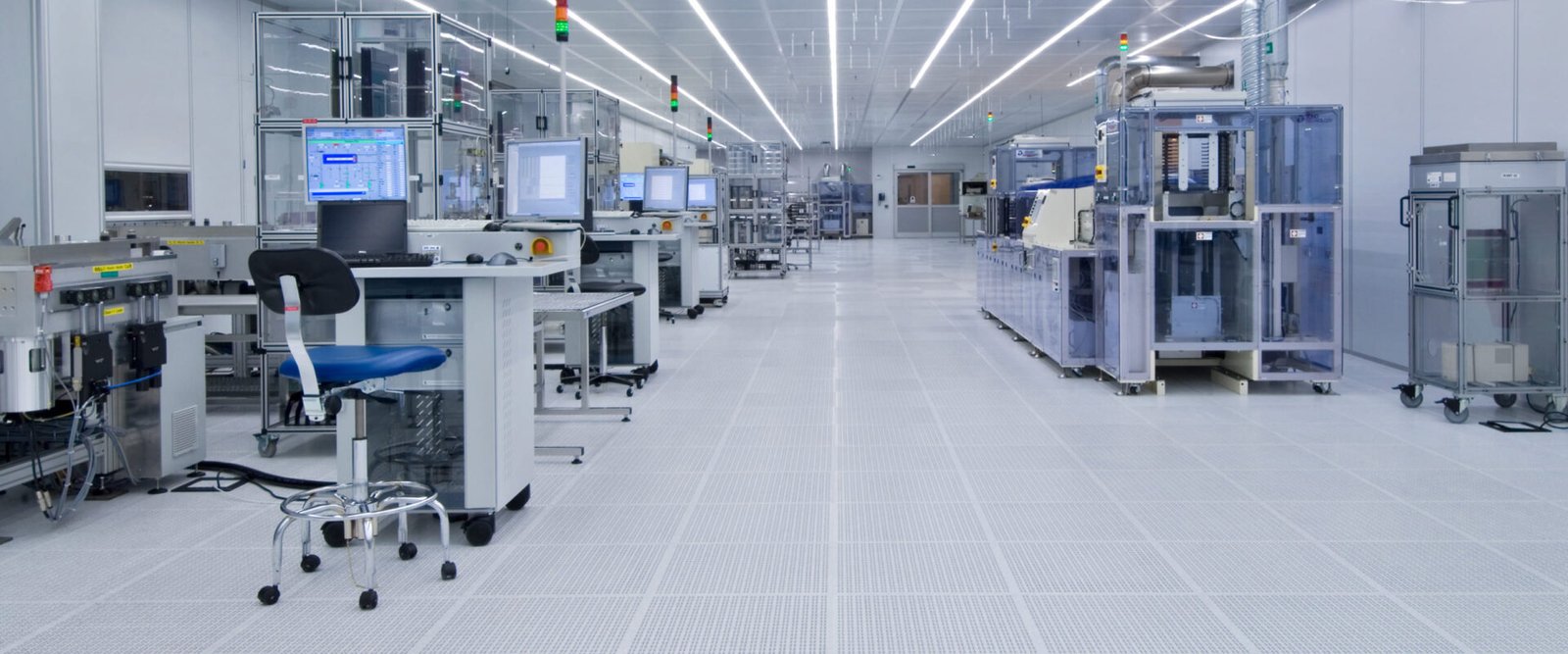
Tool install dates drive everything in a precision manufacturing project, and the building has to be ready the day the first crate arrives. We build the shells, support yards and utility corridors for New Mexico manufacturers whose equipment schedules were fixed before anyone turned a shovel. The person we usually work with is a plant manager or an engineering lead holding three dates at once: a tool delivery, a utility interconnection and a hiring start. Our job is to make the construction calendar agree with all three.
The state's recent record shows how wide the range is. Intel opened Fab 9 in Rio Rancho on January 24, 2024 as part of a $3.5 billion advanced packaging investment that supported over 3,000 construction jobs, which tells an owner what a precision program asks of the regional trades. At a smaller scale, the state announced in January 2026 that a manufacturer would renovate an existing 45,050 square foot building on 15 acres at the Las Cruces Innovation and Industrial site, and a June 2026 announcement described a machining firm expanding onto 16 acres north of Farmington with a renovated building plus a new 11,000 square foot facility.
We describe the work gate to gate, because that is how the owner experiences it: the pre-bid site walk, the permit to work for every field crew, the laydown area, the first pour, the tie-in to power and process utilities, and the turnover walk with your maintenance group.
Where New Mexico Manufacturers Are Expanding
Advanced manufacturing here does not cluster in one metro. The Rio Rancho work grows from a long semiconductor presence, where Intel's Fab 11X opened in 2002 as its first plant to make 300 mm wafers and the company is described as by far the largest employer in the city. Suppliers and service firms that sit behind that kind of campus need cleaner, taller and more electrically capable buildings than a typical flex project delivers, and they usually need them close to NM 528 and NM 550.
In the south, Las Cruces offers an industrial park at the junction of I-10 and I-25, next to the city's international airport, with 400 acres listed as shovel ready and Foreign Trade Zone 197 coverage. In the northwest, Farmington is adding machining capacity on a 16 acre property just north of town. Each of these sites asks for a different civil package, so we price the dirt before we price the steel.
What We Build for a Production Owner
Our scope for manufacturers starts with the site: clearing, caliche excavation where it is present, stormwater routing that respects arroyo drainage, and a stabilized laydown yard so equipment vendors can stage rigging without tearing up the finished subgrade. From there we erect the building shell, place equipment pads and isolated foundations to the vendor's loading and vibration tolerances, and pour floors flat enough for the production line they will carry.
Inside the shell we coordinate the rough-in for process utilities, compressed air, chilled water and power distribution, and we leave tie-in points clearly marked so your process contractor can connect without cutting into completed work. Where the project is a renovation of a standing building, the same discipline applies, with demolition sequenced around the equipment that has to keep running. Work inside an operating plant follows the phased construction approach we use on occupied sites.
Codes and Permits for a Production Building
Statewide, the 2021 New Mexico Commercial Building Code adopts the 2021 International Building Code as amended and took effect July 14, 2023. The 2020 New Mexico Electrical Code adopts the 2020 National Electrical Code and took effect March 28, 2023, and the 2021 Commercial Energy Conservation Code took effect January 30, 2024. We confirm which edition governs your permit set at the start of design, because production buildings often straddle several disciplines at once.
Permitting for a manufacturing plant usually adds a process safety review, fire protection submittals for hazardous or high-piled storage, and a separate path for any air or wastewater discharge your process creates. We ask the owner early for equipment cut sheets and electrical load letters, since the plan reviewer will want them before approving the power distribution drawings. A missing cut sheet costs more calendar time than almost any design change.
How We Keep the Tool Date
We work backward from your tool delivery date. The turnover of a clean, dry, powered room is the milestone we protect, and every other date in the schedule is set relative to it. That means procuring switchgear, transformers and overhead cranes first, issuing early release packages for the slab and the structural steel, and holding a weekly look-ahead that names each item on the critical path. Our long-lead procurement management tracks those orders against the schedule, not just the budget.
Safety is the second constraint. Before any crew breaks ground, the owner's environmental, health and safety lead receives our site plan, our permit to work process and our crane and excavation plans. If your plant has a lockout and tagout program, everyone on our site is briefed on it before they enter. Early coordination also helps with neighbors in the corridor, which is why we talk with the data center and automotive and EV projects nearby about shared haul routes.
Sequencing From Groundbreaking to First Production
A typical sequence runs from mass grading and utility tie-ins to foundations, then the structural frame, the envelope, slab pours inside a closed building, and finally the interior fit-out and commissioning. The most common loss of time comes from letting the slab wait for the envelope, or the envelope wait for steel that was ordered late. We stage the work so the roof dries in before the first floor pour whenever the equipment layout allows.
Commissioning begins before the building is finished. We bring your process contractor onto site as soon as utilities are live, so tools can be set and tested while finishes are completed in adjacent bays. The closeout package, including as-builts, test records and warranty paperwork, is assembled as we go rather than at the end. For manufacturers weighing a new plant against an expansion, our manufacturing plant experience helps frame the choice.
Plan Your Production Facility
Send us your tool list, your utility needs and your target start date, and we will walk the site with your team and return a sequenced preconstruction plan.
Common Questions
How early should we involve a contractor if the equipment is still being selected?
As early as the equipment short list exists. Foundation loads, floor flatness, crane capacity and utility sizes all depend on the final tool choice, and each can change the structural and electrical design. We can carry allowances for undecided equipment and update the budget each time a vendor submits a cut sheet. That is far cheaper than redesigning a slab after the pour.
Can you build while our current plant keeps running?
Yes, and it is a common request for expansions. We separate the work zone with fencing and dedicated gates, schedule noisy or dusty work outside your sensitive production shifts, and plan every utility shutdown with your maintenance staff days ahead. Each shutdown has a written tie-in procedure and a rollback plan.
What causes the most delay on a New Mexico manufacturing project?
Electrical gear and permit review are the two repeat offenders. Transformers and switchgear can ship long after the structure is complete, so we order them first. On permits, an incomplete equipment package is the usual reason a review comes back with comments, so we assemble it before submission.
Do you handle sites with caliche or poor drainage?
We treat both as normal conditions. Caliche can be rippable or require hammering, so we probe it before pricing excavation. Arroyo drainage and sheet flow are routed through detention or swales designed with the civil engineer, and we protect the pad with a stabilized perimeter so it stays dry during monsoon weather.
How do you coordinate with the owner's process contractor?
We assign one point of contact on our side and hold a weekly coordination meeting with them. Tie-in points, rigging routes and shared laydown are agreed in writing, and we revise the drawings when conditions change in the field.
Related
Related Services
Related Building Types
Related Industries
Related Service Areas
Ready to talk about your project?
Request a Project ReviewOne project team for the whole sequence
Industrial Contractors of New Mexico reviews the site, the loads, the schedule and the approvals before pricing, then schedules, coordinates and inspects the specialty trade partners from preconstruction through closeout.