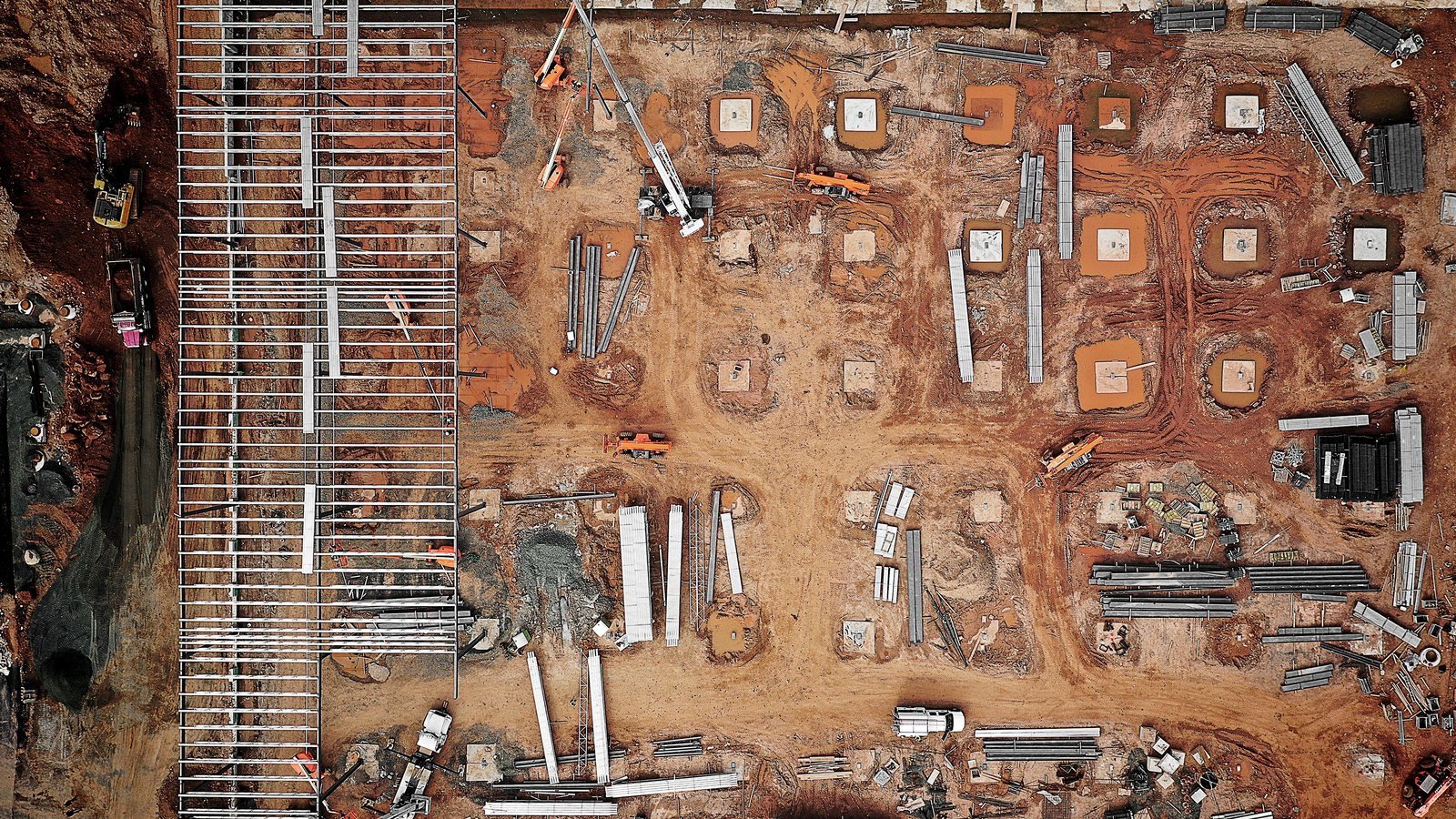
A transformer on order can decide the opening date of a plant more surely than any foundation pour. On industrial projects in New Mexico, the items that set the calendar are rarely the ones a site crew can see: medium-voltage switchgear, transformers, structural steel, overhead cranes, dock equipment, process vessels and controls. We manage those orders from the moment they are identified until they are set in place, and we report on them every week in the same plain format.
Procurement fails in small ways. A submittal sits in review for two weeks, a vendor changes a lead time without telling anyone, a delivery arrives before the foundation is ready or a pallet is damaged on the long haul across the state. Our job is to make each of those events visible early and to give the owner choices while there is still time to use them.
We work with the owner's purchasing group and engineers rather than around them. Where the owner buys equipment directly, we coordinate delivery dates, receiving, storage and set-in-place. Where we buy, we show the owner the quotes, the lead times and the release dates and we get approval before an order is placed.
Where procurement money is won or lost
Price moves with timing, and timing moves with design maturity. Releasing steel or electrical gear on partial drawings can lock in a delivery slot, but it also risks change orders if the design shifts. We lay out the trade-off for each item with a recommended release point, the money at risk and the schedule saved, so the owner chooses with the numbers in view.
Freight and handling are also part of the cost. A large transformer or a long-span steel member needs permits, escorts and sometimes seasonal road restrictions on the way to a remote site, and receiving a heavy load needs the right crane and a firm laydown pad. We price delivery to the actual gate, not to a warehouse hundreds of miles away, and we plan a receiving inspection with photos and a written condition report.
Constraints that are particular to this state
Distance sets the pace of everything. A site in Eunice, near the state's eastern border, is far from the Rio Grande corridor, and deliveries to the southwest or northwest corners of the state travel long highways with few alternatives. Urenco announced on June 2, 2026 that it will install 2.1 million separative work units of new enrichment capacity at Eunice, expected to support 300 to 600 U.S. jobs at peak construction, and its August 18, 2026 groundbreaking put the investment at substantially more than $8 billion. Projects of that size draw on the same equipment suppliers and craft pools as everyone else in the region.
A busy sector shortens quote validity and stretches slot availability. We ask vendors for firm delivery dates in writing, track their shop drawing returns and confirm freight arrangements before dates are promised to the owner. In Eunice and the rest of Lea County, the combination of energy-sector projects and long hauls makes this discipline especially valuable.
The procurement log, release dates and expediting
Every long-lead item goes onto a single log with the specification section, supplier, submittal status, release date, promised delivery, freight method, receiving date and set-in-place date. The log is reviewed weekly with the owner and engineer. Items that fall behind get a recovery note: a substitute manufacturer, an alternate configuration, partial shipment or a revised construction sequence.
Expediting is a phone-call activity, and we do it. Our procurement lead contacts each supplier at defined intervals, visits the shop when the contract calls for it and reports what was seen. When a supplier offers a date, we ask what has to happen for it to hold. That small habit uncovers many problems, such as a component waiting on a sub-supplier, before they become delays on the owner's schedule.
Regional builders and suppliers competing for the same slots
Industrial demand in the south of the state adds to the pressure. Reports from the Santa Teresa area describe a cargo-only runway and new hangars planned at the airport, federal funds for the Port of Entry, and private builders constructing speculative warehouses of 365,000 and 135,000 square feet. Each of those projects needs steel, doors, dock equipment, electrical gear and concrete, and each competes for subcontractors with the owner who wants to start next month.
When we work in Santa Teresa and across the border-region market, we keep a current picture of what is on order and what is freely available. That is why we like to be involved in the design stage, through our design and build process, so that specifications can allow alternates and avoid a single-source trap.
Procurement connects to nearly every other scope
Procurement tracking is most useful when it is tied to erection and installation. The trade partners for structural steel erection coordinate fabrication release, delivery sequence and laydown so that members arrive in the order they will be set. For projects with many buildings, our multi-site rollout practice buys common items under a master schedule and distributes them by site.
Owners in utilities and power and in data center work know that electrical equipment is the longest item. We make it the first line on the log, and we hold weekly calls with the supplier until it is on a truck. The cost of a late transformer is measured in weeks of idle crews and rental equipment, so we treat it that way.
Put your long-lead list in front of us early
Send the equipment list, even if it is rough. We will return a procurement log with release dates, risk notes and a set of questions for your engineers and purchasing team.
Common Questions
Which items should be released before drawings are complete?
Usually electrical distribution gear, structural steel and any custom process equipment with a long fabrication cycle. We recommend a release at a design milestone where the item's size, load and location are fixed, and we outline what could change after release. The owner approves the trade-off in writing.
What happens if a supplier slips?
We tell you the day we know, and we present options: partial shipments, an alternate manufacturer, a temporary solution or resequencing the work around it. Each option comes with its cost and schedule effect. We do not hold bad news for the next meeting.
Can you manage owner-furnished equipment?
Yes. We coordinate delivery dates, receiving inspection, storage and set-in-place with the owner's team. We also document condition on arrival so any claim with the carrier or manufacturer starts from a clean record.
How do you handle deliveries to remote sites?
We plan the route, check weight and width limits, arrange escorts when required and confirm the receiving crew and crane before the truck leaves the shop. For remote sites, we also keep a spare window in the schedule, because a single closed road can move a delivery by a day or more.
Do you add a markup on procured items?
Our fee structure is set in the contract and shown openly. For items we buy, you see the supplier quote, our handling cost and any bonding or insurance effect. If you prefer to buy directly and have us coordinate, that option is available.
Related
Related Services
Related Building Types
Related Service Areas
Ready to talk about your project?
Request a Project ReviewOne project team for the whole sequence
Industrial Contractors of New Mexico reviews the site, the loads, the schedule and the approvals before pricing, then schedules, coordinates and inspects the specialty trade partners from preconstruction through closeout.