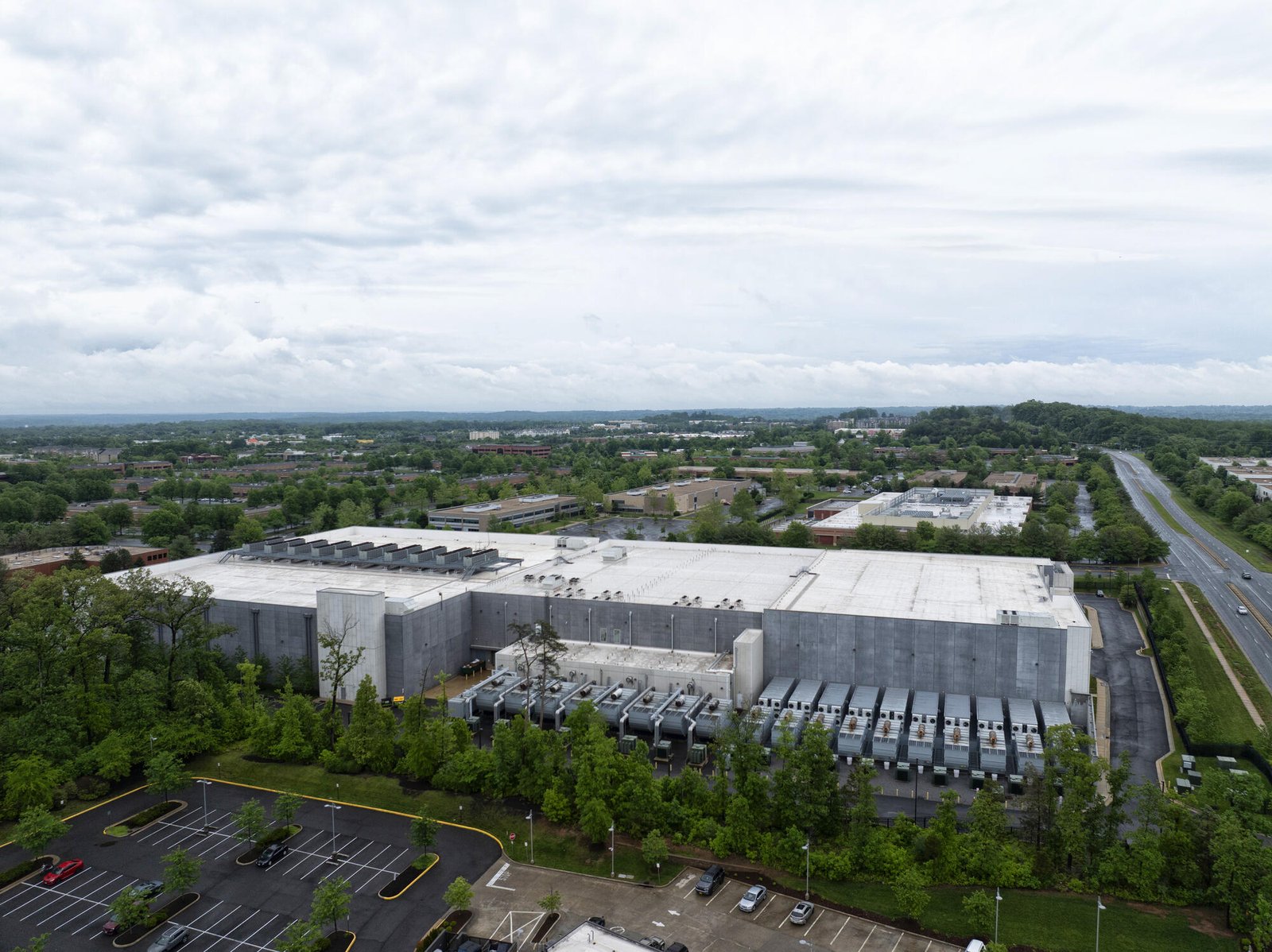
By July 2025 the data center campus in Los Lunas had passed 4 million square feet, with seven operating buildings and three more under development. A campus that grows in building-sized steps teaches owners and builders the same lesson: the first phase has to be planned so the tenth can be added without disturbing the ones already running. We build data center shells and supporting site infrastructure in New Mexico with that repetition in mind, and we treat every building as part of a longer plan.
The owner's priorities are power, cooling, security and speed, in an order that changes by project. We start by asking for the electrical one-line, the cooling approach, the security perimeter and the target energization date. From those we build a schedule that works backward from energization, because the long-lead equipment, not the shell, governs the date.
Our scope on a data center project is the site, the structure, the envelope and the underground. Mechanical and electrical rooms are built to the owner's specification, and we coordinate with the owner's equipment vendors so each room is ready when the gear arrives.
Where data center sites are forming in New Mexico
A July 2025 report on Los Lunas says the campus employed more than 1,000 construction workers at peak and is projected to support 400 operational jobs once the expansion is complete. A November 2021 report added $800 million of investment to bring the total to $2.2 billion for nearly 3.8 million square feet of data center space. Those numbers describe a state where a single campus can occupy a regional labor market for years.
Other sites are forming. A 1,400 acre data center is reported under construction in Santa Teresa, and a marketed 365 acre parcel at Highway 304 and Navarro Drive near Belen sits next to the Valencia Power Generation Station and is zoned for business manufacturing and heavy industrial use. On the west side of Albuquerque, a planning brochure for the Paseo del Volcan corridor names data centers among the facilities that the new road is meant to serve. We study the power, fiber and road access for each of these before recommending a pad.
Scheduling from energization backward
Four items control a data center schedule: utility service, transformers and switchgear, chillers or other cooling plant, and the structure. The first three are long-lead items that must be ordered early, so we run long-lead procurement in parallel with design instead of after it. We maintain a procurement log showing order date, factory release, delivery window and the room it feeds.
The work then flows from mass grading to underground, slab and shell, then power and cooling rooms, then commissioning. Underground electrical is the first critical path item, since the duct bank has to be in before the slab and the yard, and our electrical duct bank work includes concrete encasement, spacing, spare ducts and pull boxes sized to the owner's feeders. Each phase closes with a documented inspection before the next trade starts.
Choices that shape the building
Structure type is chosen for speed and loads. A tilt-wall building gives a heavy, robust shell with good fire resistance and security, while a pre-engineered metal building can serve support structures such as generator yards, warehouses for spare parts or administration space. Slab-on-grade or elevated floors, roof loads for rooftop equipment and the path for future expansion each need an answer before design is frozen.
Site security is another early choice. Perimeter fencing, gates, vehicle barriers, lighting and camera conduit are cheaper to include in the first civil package than to add later, and our fencing and security integration scope coordinates with the owner's security consultant. Drainage, dust control and spill prevention for diesel generators are planned at the same time, since a leak in a generator yard is a site issue as well as an operational one.
Approvals and electrical rules
The electrical code is central. The 2020 New Mexico Electrical Code (14.10.4 NMAC) adopts the 2020 National Electrical Code as amended and took effect March 28, 2023, and permits can only be issued under it now. The building shell falls under the 2021 New Mexico Commercial Building Code, and the energy envelope falls under the 2021 Commercial Energy Conservation Code, which took effect January 30, 2024.
Utility approvals run alongside building permits. The utility study, the interconnection agreement and the service date can take as long as the structure, so the owner starts those first. We keep a combined permit and utility log that shows submission date, reviewer and next action for each item, and our permitting coordinator updates it weekly.
Safety and access on a secured site
A data center site restricts who may enter and what they may carry. We plan worker badging, gate hours, vehicle inspection and laydown location at the permit to work stage, and we brief every subcontractor on those rules before mobilization. Hot work near equipment rooms, energized electrical work and crane picks over completed roofs each require a written plan.
Cleanliness also matters. Dust from concrete or grading can damage equipment later, so we stage finishing work, seal rooms and control dust before equipment is set. Our superintendent walks each room with the owner's commissioning agent before it is handed over.
Services that support the campus
Data center owners often combine the shell contract with civil and utility packages. We handle the data center construction package and the supporting buildings, and the same team coordinates with data center owners and with utility and power clients whose substation work lands on the same property line.
Start from the energization date
Tell us the target energization date, the power demand and the site. We will return a schedule built backward from that date and a list of what must be ordered first.
Common Questions
What controls the schedule on a data center?
Long-lead electrical and cooling equipment and the utility service usually control the schedule, not the shell. Switchgear, transformers and chillers can take many months to arrive, and the utility may need its own studies and construction. We order early, track each item and sequence the building so rooms are ready when the equipment is.
Can you build in phases so the campus can grow?
Yes. We plan the first phase with utilities, duct banks, drainage and roads sized for the full campus, then build each hall as a repeatable package. Future buildings should not require tearing up completed work. We also reserve space for generators and yards in the master plan.
How is water handled for cooling?
The cooling approach is the owner's decision, and it changes water demand, site utilities and permits. A closed-loop or air-cooled design needs less water than evaporative cooling. We build to the selected design and ask for water supply capacity early, since it can affect where the campus is sited.
Who is responsible for commissioning?
The owner usually hires a commissioning agent, and we support that work by preparing rooms, providing access and correcting punch list items quickly. Commissioning is staged: component checks, system tests and integrated tests. We include time for each stage in the schedule so energization is not squeezed.
Related
Related Services
Related Building Types
Related Industries
Ready to talk about your project?
Request a Project ReviewOne project team for the whole sequence
Industrial Contractors of New Mexico reviews the site, the loads, the schedule and the approvals before pricing, then schedules, coordinates and inspects the specialty trade partners from preconstruction through closeout.