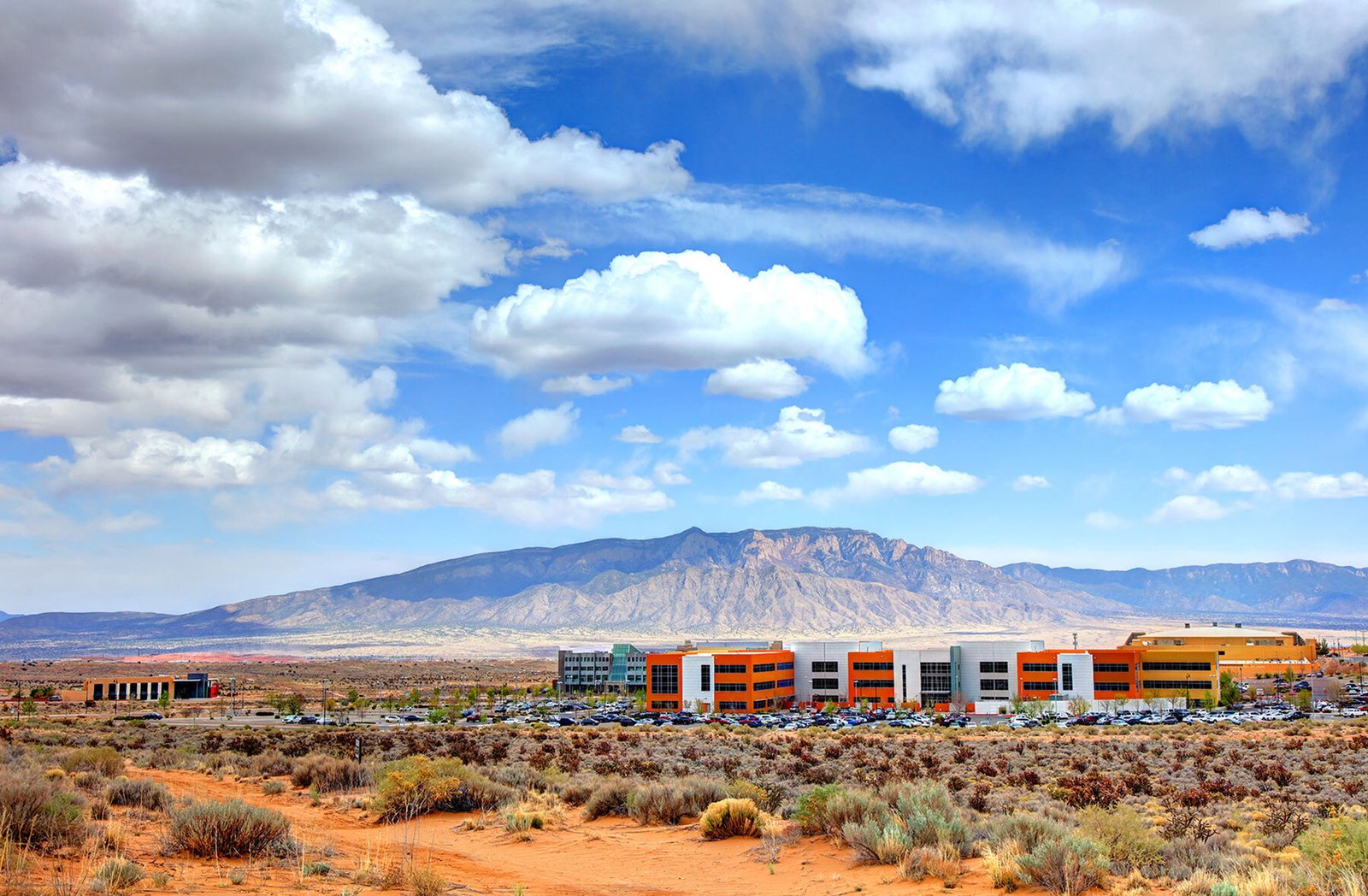
Suppliers to a semiconductor campus build differently from a typical warehouse owner. Their buildings carry heavy electrical service, process gases and chemical storage, vibration-sensitive floors and strict contamination control during construction. In Rio Rancho we build the support side of that world: equipment pads, chemical and gas yards, shipping and receiving, and light manufacturing space that has to meet a customer's audit before the first order ships.
The reason is simple. Intel opened Fab 9 in Rio Rancho on January 24, 2024, part of a $3.5 billion New Mexico advanced packaging investment that supported more than 3,000 construction jobs. The company's presence in the city dates to 1980, with more than $16 billion invested cumulatively, and its Fab 11X facility opened in 2002 as its first plant to make 300 mm wafers. A campus of that size creates a supplier ring that needs industrial space close to the road network, and it keeps the local trade labor market busy.
We plan around that competition for labor and materials. When an owner asks for a schedule, we state which trades we expect to be tight and which long-lead items to order first.
Clean construction habits on supplier sites
Owners that supply a semiconductor customer often ask for construction practices that protect later production: sealed slabs, controlled dust, documented material handling and a closeout package that matches their quality system. We write those requirements into a project-specific plan before mobilization, then walk the building with the owner's quality lead at each major turnover.
Our field team keeps haul routes, tool lay-down and waste handling separate from areas that will become clean spaces. Cutting and grinding happen outdoors where we can, and interior work follows the owner's housekeeping rules. For buildings with tight tolerances, we integrate those expectations through industrial design-build so the structure, slab and mechanical systems are coordinated from the first sketch.
Unser Gateway, NM 528 and the west-side land question
At a March 6, 2025 NAIOP roundtable, Mayor Gregg Hull said Rio Rancho had seen $6 billion in investment over the previous ten years, with the Unser Gateway area around Unser and Westside boulevards drawing retail, housing and commercial pads. That growth increases traffic on NM 528 and NM 550, and it puts demand on utilities and water that industrial buildings share with new neighborhoods.
A City of Albuquerque planning brochure describes a planned Paseo del Volcan corridor of roughly 30 miles with termini at I-40 and US 550, intended to open thousands of acres on the west side for manufacturing, distribution, data center and warehouse facilities. Its cost estimate was based on July 2014 data, so we treat it as a planning idea, not a schedule. Owners considering west-side land should ask us for a build-ready scenario today and a second one that assumes better road access later.
Electrical load and the permit sequence
Process buildings are decided by their electrical service. The 2020 New Mexico Electrical Code adopts the 2020 National Electrical Code and applies to all new permits, and the 2021 Commercial Energy Conservation Code, effective January 30, 2024, now governs envelope and lighting decisions. We review both with the design team before pricing a shell.
Switchgear and transformers have long lead times, so the order of submittals matters. We coordinate the utility service request, the building permit and the electrical gear order in parallel rather than in sequence, and we keep a log of each approval. The trade partners for electrical duct bank and underground install conduit and concrete encasement ahead of paving so the gear is not delayed by a trench left open.
What we build around the fabs
Our work for Rio Rancho owners tends to fall into four groups. Support buildings for equipment, gases and chemicals are built with containment, ventilation and clear separation from the main process area. Warehouse and receiving space is detailed for cart traffic and pallet handling. Light assembly buildings are laid out like a manufacturing plant in miniature, with a dock, a controlled core and offices. Utility yards hold generators, chillers and tanks on engineered pads.
For each group we deliver a gate-to-gate sequence: survey and staking, grading and drainage, underground utilities, foundations, shell, interior rough-in, commissioning and turnover. The owner receives a written list of tie-ins and shutdown windows before we open ground.
Moving material through a busy labor market
When a large investment is under construction nearby, electricians, ironworkers and concrete finishers have choices about where they work. We secure crew commitments before bid day, confirm material lead times in writing and give owners a milestone calendar that shows when deliveries must arrive. That reduces the surprises that cost owners the most, such as a late transformer or a missed steel slot.
Rio Rancho sits at an elevation of 5,509 feet, so concrete placements and curing windows are planned for cold mornings and wide temperature swings. We use blankets and heated enclosures when needed, and we move placements to the afternoon in winter when the forecast allows.
Services owners add to a Rio Rancho shell
Most supplier buildings need more than the shell. Owners typically add a data center support building for backup power and cooling, a mezzanine for equipment, or a fenced yard with security integration. We scope those items together so the structural, electrical and civil designs agree.
For corporate owners with several sites, we also coordinate programs across more than one city, using the same standards, inspection lists and closeout forms. That consistency helps when a facility team has to accept buildings in more than one jurisdiction.
Reaching the rest of the Rio Grande corridor
From Rio Rancho we work in neighboring communities such as Bernalillo, Corrales and the Albuquerque basin. A Rail Runner station at US 550 and a park-and-ride near the NM 528 and NM 550 corner help workers reach sites without driving every day. Material deliveries still arrive by truck, so we study the approach for each parcel before agreeing to a schedule.
If your project involves advanced manufacturing or a future data center campus, tell us early so we can compare utility capacity, access and cost across the options.
Start with the electrical load
Tell us the service size, the process loads and the date your customer expects product. We will return a building and utility outline and a list of the long-lead items to order first.
Common Questions
Can you build to a semiconductor customer's quality requirements?
We can follow a customer's written requirements for housekeeping, documentation and turnover. Send us the supplier manual and any audit checklist before bid day. We will price the extra protection, inspection and paperwork separately so you can see what it adds.
How tight is the construction labor market near a major fab?
It can be tight, especially for electricians and ironworkers. We reserve crews early, order long-lead gear at award and avoid stacking critical tasks in the same month. Owners should expect us to tell them which trade is the risk.
Should I plan around the Paseo del Volcan corridor?
Treat it as a possibility, not a promise. The published brochure uses 2014 cost data and describes a planned road. We help you evaluate land on today's access and show what changes if the corridor is built.
What does a support building for chemicals or gases require?
Expect containment, ventilation, spill control and separation distances, plus review by the fire authority. Your process engineer sets the requirements, and we coordinate the structure, slab slope and drains to match.
How long do switchgear and transformers take to arrive?
Lead times vary, so we ask suppliers for current quotes during preconstruction. We order against that date and sequence everything else so the gear is the only thing the schedule waits for.
Related
Related Services
Related Building Types
Related Industries
Related Service Areas
Ready to talk about your project?
Request a Project ReviewOne project team for the whole sequence
Industrial Contractors of New Mexico reviews the site, the loads, the schedule and the approvals before pricing, then schedules, coordinates and inspects the specialty trade partners from preconstruction through closeout.