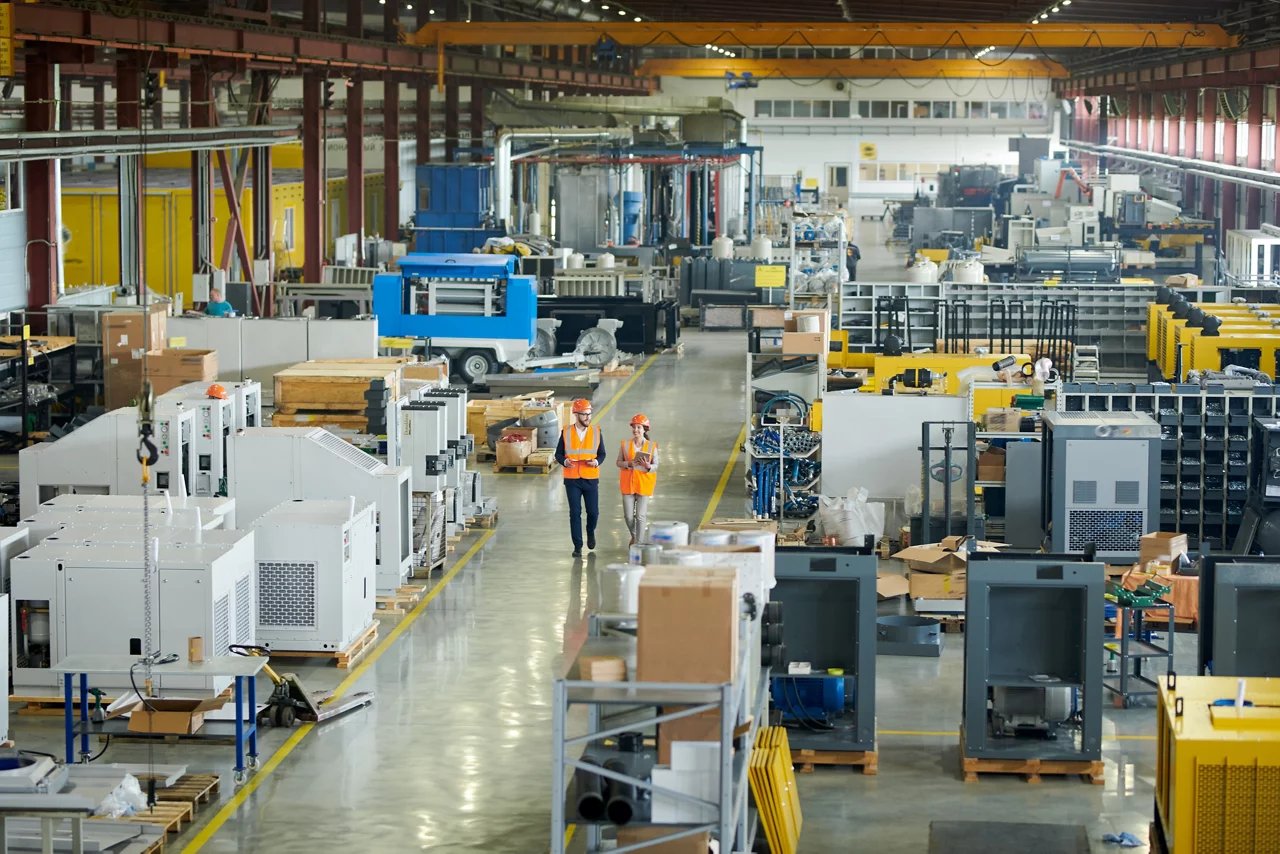
On January 24, 2024 Intel opened Fab 9 in Rio Rancho as part of a $3.5 billion advanced packaging investment that supported over 3,000 construction jobs. That scale is unusual, but the lesson applies to a plant of any size: a manufacturing building is judged by what it lets the process do, and construction is sequenced around equipment, utilities and people who keep working. We build and expand plants in New Mexico with that in mind, and we explain each step the plant manager will see from first mobilization to production release.
A plant project has more than one client inside the owner's organization. Operations wants uptime, engineering wants correct equipment pads and utility stubs, safety wants clean separation of work zones, and finance wants a firm number. We keep those four interests in one schedule and one set of weekly meetings, so a decision made for the equipment does not surprise the people running the floor.
What the process asks of the building
The process sets the building. Heavy presses, furnaces, wet processes, clean areas and robotics each ask for different slab thickness, vibration limits, drainage, ventilation and ceiling height. We ask for equipment lists, weights, utility demands and maintenance clearances during preconstruction, then carry those numbers into the structural and mechanical design instead of waiting for the shop drawings to arrive.
Floor design is where the process and the building meet. Trenches, sumps, equipment pads and embedded conduit are laid out before the pour, and our equipment pads and foundations work uses the vendor's anchor bolt templates so the machine lands on the pad without chipping. Plants that mix assembly with storage often fit a flex light industrial building, while a food line follows the rules described for food and beverage processing plants.
Codes and approvals that apply
New Mexico's Commercial Building Code, 14.7.2 NMAC, adopts the 2021 International Building Code as amended and applies to the structure. The power system falls under the 2020 New Mexico Electrical Code (14.10.4 NMAC), which adopts the 2020 National Electrical Code as amended and took effect March 28, 2023, and the energy envelope falls under the 2021 Commercial Energy Conservation Code. We confirm which edition each trade submits under at the start.
Process work adds reviews that a warehouse does not carry, such as air permits, wastewater discharge, hazardous materials storage and process safety. The owner's environmental staff leads those, and we coordinate the building permit set so the facility drawings do not contradict what the agencies have approved. Our permitting and entitlements coordination keeps a single log for every review, with dates and open comments.
Work we manage most closely
On plant work we closely schedule and supervise site work, concrete and select structural packages, because those are the trades that set the pace for everyone else. Trade partners we supervise directly can adjust to a changed equipment location quickly when the change reaches them the same day. Process piping, controls and specialty equipment installation are normally handled by the owner's vendors or by qualified subcontractors, and we coordinate their access, laydown and permit to work paperwork.
Managing this work as one sequence also keeps quality records in one place. Concrete placement logs, compaction results, rebar inspections and survey control are collected as the work is done and delivered with turnover. If the plant later needs a change, the owner has the as-built data to start from.
Phasing around production
Plants rarely stop to be built. For an expansion, we separate the construction area from the operating area with fencing and dust control, schedule noisy or vibrating work for planned windows, and plan utility tie-ins for shutdown periods the owner chooses. Each tie-in has a written procedure that names the isolation points, the lockout steps and the person who releases the system back to service.
When the building is an existing shell, our industrial renovations and modernization approach applies. The Las Cruces Innovation and Industrial Park project announced in January 2026 describes a manufacturer renovating an existing 45,050 square foot building on 15 acres, a good example of how a re-use project keeps the structure and replaces the systems around it.
Where plants are being built and expanded
The state's industrial base stretches from the Rio Grande corridor to the southeast. In Las Cruces, the Innovation and Industrial Park is zoned for industrial use at the junction of I-10 and I-25, and the city lists 400 plus acres as shovel ready. A June 2026 state release describes an advanced machining company expanding onto 16 acres north of Farmington, with an existing building to be renovated and a new 11,000 square foot facility.
At the other edge of the state, Urenco held a groundbreaking at Eunice on 18 August 2026 and stated its investment at the site will increase to substantially more than $8 billion. Heavy process work like that uses the same basics we apply to a smaller plant, which are controlled access, documented inspection and a fixed order for utility tie-in.
Safety rules for work inside a plant
Every worker receives the owner's site orientation before entering, and our supervisors attend the plant's safety meeting. Hot work, confined space, excavation, energized electrical and crane lifts each require a permit to work that names the area, the hazards, the supervisor and the closing signature. We keep the permits in a binder at the gate and in the field office.
Our field team keeps construction traffic away from forklift routes and pedestrian paths, and we post temporary barriers where the owner's people need to cross a work area. Housekeeping is a daily item, not a close-out one, because a clean floor is one of the first things a plant manager checks.
Where the budget moves
Utilities and process-driven foundations account for the largest swings. A plant that needs a new substation, a higher-capacity gas service or wastewater pretreatment will see those items outweigh the cost of the shell. We ask the utility for the will-serve date and the design requirements at the start, and we price the shell separately so the owner can see how much is building and how much is infrastructure.
Turnover scope also matters. We list what the contract includes for commissioning, turnover and closeout so the plant is not surprised by training, documentation or start-up support that sits outside the price. For plants in advanced manufacturing, we also price cleanroom-adjacent finishes as options.
Start with the equipment list
Send the equipment list, the utility demand and the target start-up date. We will return a sequence that names the permits, the shutdowns and the first purchases.
Common Questions
Can you build while we run production?
Yes, when the work is phased and the access is controlled. We separate the zones with fencing, schedule noisy or high-risk work for agreed windows and write each utility tie-in as a procedure the owner approves. The owner decides the shutdown dates, and we plan the work around them.
Who handles the process equipment installation?
Usually the equipment vendor or a rigging and millwright specialist, working under the owner. We prepare the pad, the embeds, the utilities and the access, and we coordinate laydown and permit to work paperwork. The handoff is a written readiness check on the pad and the utility stubs.
How do you handle changes after the design is fixed?
We track every change with a short written notice that states the scope, cost and schedule effect before the work starts. Changes that arrive from the vendor, such as a moved bolt pattern or a different utility connection, are the most common. A weekly design coordination call keeps those from reaching the field late.
What drives the cost of a new plant building?
The process itself, the utilities and the site. A heavy-load slab, process drainage, a new service entrance and a long utility extension each add real cost. The shell is usually the most predictable part of the price, so we separate it from the infrastructure.
Which codes will our plant be reviewed under?
The structure is reviewed under the 2021 New Mexico Commercial Building Code, the electrical work under the 2020 New Mexico Electrical Code, and the building envelope under the 2021 Commercial Energy Conservation Code. Plumbing and mechanical work may use the 2021 or 2024 edition until January 1, 2027. Process-specific rules come from the agencies that regulate the operation.
Related
Related Services
Related Building Types
Related Service Areas
Ready to talk about your project?
Request a Project ReviewOne project team for the whole sequence
Industrial Contractors of New Mexico reviews the site, the loads, the schedule and the approvals before pricing, then schedules, coordinates and inspects the specialty trade partners from preconstruction through closeout.