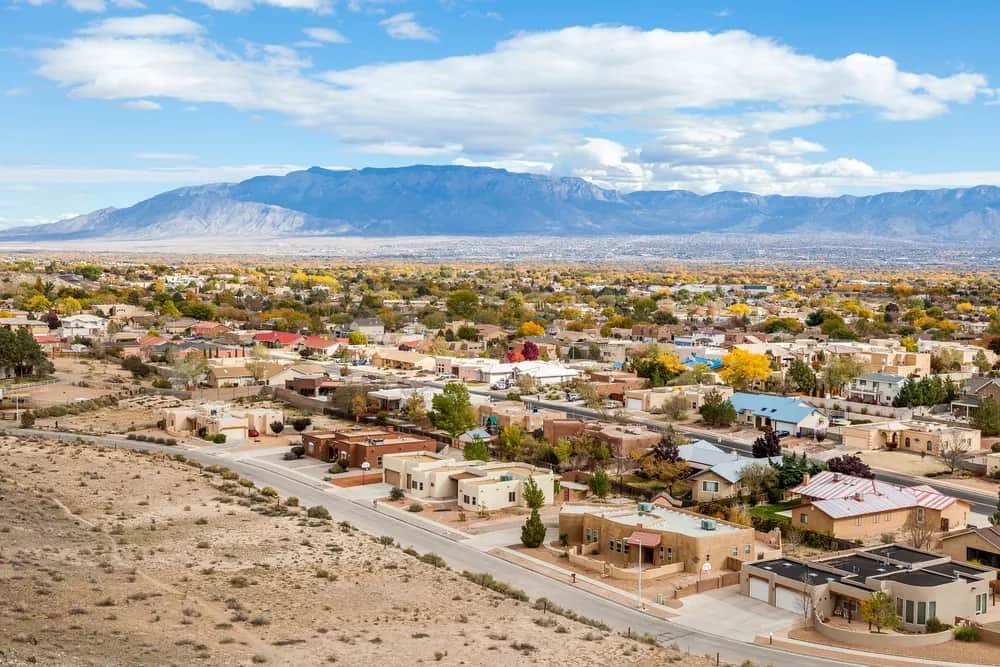
An industrial owner in the Albuquerque Basin who needs a building, a slab or a truck yard finished while the plant keeps running needs a builder who plans the job from the gate inward. We begin with the access route, the permit to work process the site already uses and the laydown space that can be fenced off without cutting a truck court in half. The building itself comes after those decisions, because they decide whether a production schedule survives the construction schedule.
The market gives owners plenty of reasons to build. The Albuquerque International Sunport reports 83,355,710 pounds of cargo for 2025, and the freight that moves around that airfield keeps logistics and distribution users looking for floor space close to the interstates. CBRE's third quarter 2026 industrial report describes vacancy as low by historical standards, with rising rents and no new supply added, so a tenant or owner who needs more square footage often has to build or expand rather than wait for a lease to appear.
Interstate 25 and Interstate 40 cross at the Big-I, and which side of that crossing a site sits on changes how trucks reach it, which utility is nearest and how much grading the lot needs. We work in all four quadrants and write the delivery plan around the actual haul route, not a map average.
What we build across the four quadrants
Most of our Albuquerque work falls into three groups. Owners with open ground want a new shell, floor and yard delivered as one package, which is the scope of our ground-up industrial construction. Owners with an existing plant want a bay added, a process line moved or a dock reworked while shifts continue, which is the scope of industrial renovation and modernization. A third group needs site work only: grading, drainage, paving and utilities ahead of a tenant who has not signed yet.
In every case the field crew runs the job in a fixed order. Underground utilities and drainage go in first, the building pad is proofed and tested next, then the slab and the shell, and paving and striping come last so heavy equipment does not chew up finished surfaces. Tie-ins to live water, power and fire lines are scheduled for the windows the owner names, with a permit to work signed before anyone opens a trench.
Why Sunport freight, Kirtland and Sandia shape demand
Three large institutions set the tone for industrial demand here. Kirtland Air Force Base reported a $7.5 billion contribution to the local economy in fiscal year 2024, a more than 50 percent increase over the figure reported two years earlier, and it hosts more than 20,000 military and civilian personnel. Sandia National Laboratories reports a fiscal year 2025 workforce of 16,320 and a $5.8 billion budget. Work of that scale pulls in suppliers, fabricators and testing firms that need shop space, clean power and secure yards.
That supplier demand lands on advanced manufacturing buildings with higher electrical service, tighter floor flatness and controlled receiving areas. When we price those jobs we ask early about equipment weights, vibration limits and the power the owner expects on day one, because changing any of those after the slab is poured costs far more than a conversation in preconstruction. Owners who cannot find a parcel in the basin sometimes look northwest toward Rio Rancho, and we price both options on the same basis.
Buildings we deliver for local operators
The most common request is a conventional warehouse with dock doors, a truck court and a yard sized for trailer staging. Distribution users ask for the same shell with higher clear heights, more dock positions and a heavier slab, which is the pattern behind a distribution center. Small manufacturers and service firms often want a flexible building with a few dock doors, an office front and a rear yard.
We also build supporting structures that do not fit those labels: canopy-covered loading areas, equipment enclosures, maintenance bays and fenced storage compounds. Each gets the same sequence of survey, geotechnical review, permit, foundation and closeout, scaled to the size of the job.
Codes and permit paths we plan around
New Mexico's 2021 Commercial Building Code, issued under 14.7.2 NMAC, adopts the 2021 International Building Code as amended and took effect July 14, 2023. The 2020 New Mexico Electrical Code adopts the 2020 National Electrical Code and has been the only path for new electrical permits since September 28, 2023. We design the electrical gear schedule and the shell around those editions from the first drawing set.
Inside the city, permit review times and inspection hold points differ by permit type, so we line up our permitting and entitlements coordination with the design team before the pad work is bid. Owners should expect separate submittals for grading and drainage, the building, fire protection and site utilities, and we track each one on a single list.
Elevation, arroyos and the monsoon calendar
Elevations in the city run from about 4,900 feet near the Rio Grande to more than 6,700 feet in the foothills, and the Albuquerque Basin is a fault-bounded valley that slopes toward the river. Water leaves a lot by the shortest path, which usually means an arroyo or a street. We lay out arroyo drainage and retention first, and our stormwater detention and drainage work is sized with the grading plan so the finished site sheds water without scouring the pad.
Summer storms can stop earthwork for days, so we schedule excavation and subgrade proofing early in the year when we can and hold concrete placements to forecast windows. Structural steel arrives on the long lead items first, and we confirm delivery dates before the foundations are poured so the erection crew is not waiting on a truck.
Gate to gate safety on active sites
Owners near Kirtland or the laboratories often carry gate, badging and escort rules set by the facility, and tenants in shared parks have insurance and access requirements of their own. We ask for all of them during preconstruction, then build orientation, daily check-in and tool inventory into the field plan. Every worker is briefed on the owner's rules before the first shovel.
On sites with forklifts, trailers and public truck traffic, we separate construction vehicles from plant traffic with fencing and flagged crossings. Hot work, lockout and excavation each get a permit to work reviewed with the owner's safety lead. For work next to the south valley, Mesa del Sol and the Sunport, the same discipline applies and the coordination list grows longer.
Plan your Albuquerque site
Send us the parcel, the building program and the dates your operations cannot move. We will return a sequence of work, the permits it needs and the access plan for your gate. Start with the parcel and we will build from there.
Common Questions
How should I budget for site work on an Albuquerque industrial lot?
Start with the grading and drainage plan, because it drives earthwork quantities, retention volume and paving. Foothill and mesa sites usually need more cut and fill than flat valley lots. We give owners a site-work allowance early, then replace it with firm quantities once the survey and geotechnical report arrive.
Can the work happen while my plant stays in production?
Yes, if the plan is built for it. We fence the work area, separate construction and plant traffic, and schedule tie-ins for shutdown windows you choose. The hardest part is usually power and fire water, so we confirm those outage dates before anything else is bid.
Which permits does a new industrial building need in the city?
Expect separate reviews for grading and drainage, the building, fire protection, and site utilities. Electrical, plumbing and mechanical permits follow under the state codes. We keep one tracking list so the owner can see which review is holding the schedule.
What does low industrial vacancy mean for a build-to-suit decision?
With vacancy low by historical standards and little new supply, available space is scarce and rents are rising. An owner who builds controls the layout, clear height and yard size. We compare a build and a lease on cost, schedule and flexibility before you commit.
How do monsoon storms change a construction schedule?
They interrupt earthwork and concrete placement. We plan excavation and subgrade proofing for drier months where possible, protect open trenches and slab edges, and keep dewatering equipment on site during storm season so a single event does not set the job back a week.
Related
Related Services
Related Building Types
Related Industries
Related Service Areas
Ready to talk about your project?
Request a Project ReviewOne project team for the whole sequence
Industrial Contractors of New Mexico reviews the site, the loads, the schedule and the approvals before pricing, then schedules, coordinates and inspects the specialty trade partners from preconstruction through closeout.