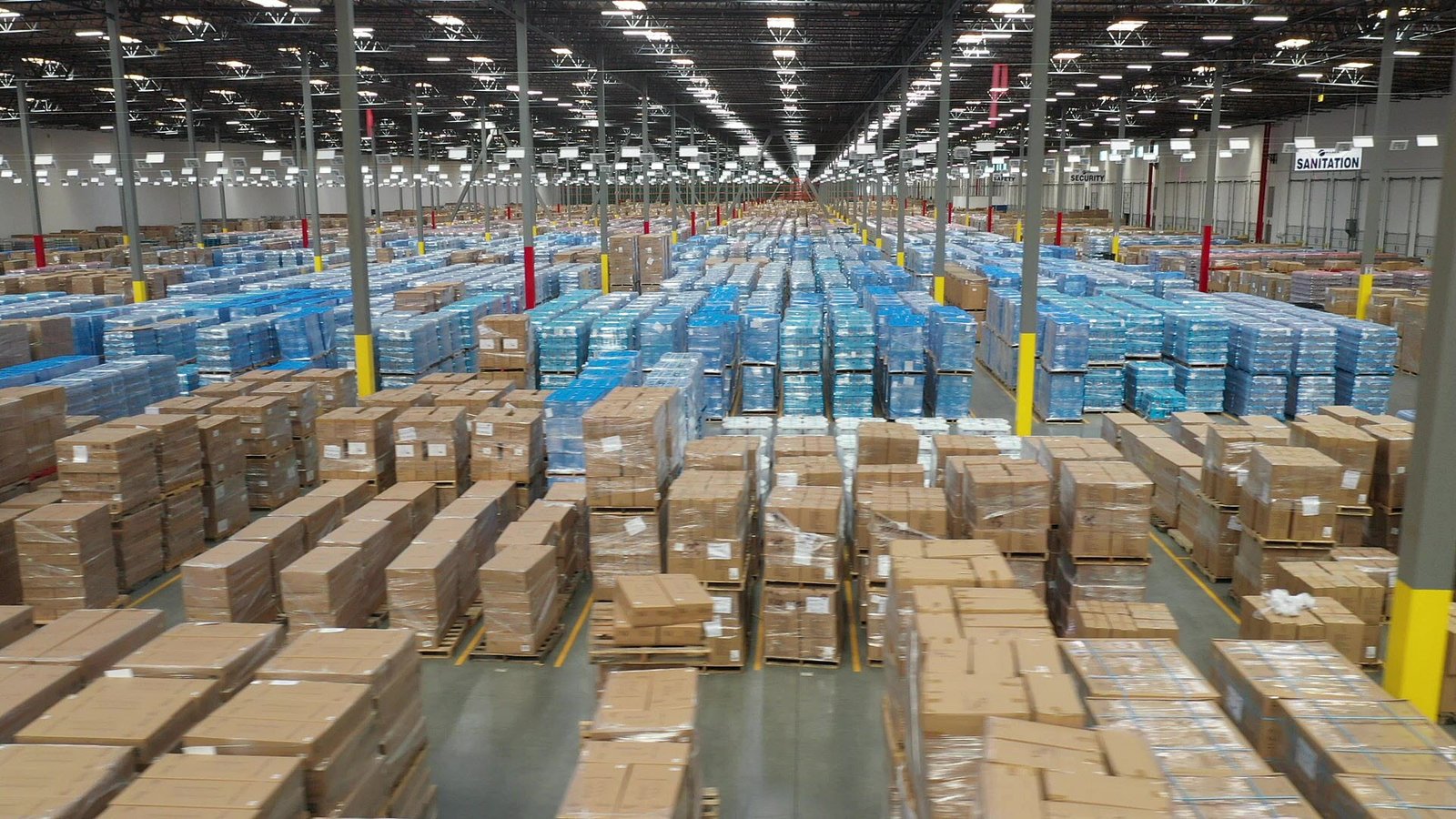
Freight moves through New Mexico on three kinds of corridors: interstate highways that carry trucks east and west, a BNSF mainline that carries intermodal trains across the north of the state, and a port of entry in the south beside a rail park that interchanges with Union Pacific. A distribution owner choosing where to build is really choosing which of those corridors will feed the building. We build warehouses, cross-docks, truck courts and rail-served sites for logistics operators, and we start from the freight path, not the lot line.
The buyer is typically a logistics director, a corporate real estate lead or a third-party warehouse operator, and the first conversations are about trailer counts, dock door ratios, rail car capacity and how the yard will be laid out. Our preconstruction team puts those answers on a drawing, then prices the civil package, which often costs as much as the building. Truck courts, trailer parking, stormwater and utilities all follow from that layout.
We describe the experience gate to gate. Drivers arrive at a controlled entry, queue on stabilized pavement, back into docks that have been graded for drainage, and leave by a route that does not cross the inbound lane. A site that works on paper but jams on the first Monday morning is a failure we have learned to look for in the drawings.
Rail, Interstate and Border Freight
The Santa Teresa intermodal terminal is the clearest example of what freight infrastructure can do for a site. A presentation from the state's border industrial association lists 74,000 feet of trackage expandable to 145,000, 1,266 container and trailer parking stalls expandable to 4,380, and a $500 million-plus investment. The terminal sits beside the Santa Teresa Port of Entry and a 1,100 acre rail park served by a short line that interchanges with Union Pacific. A 2019 report said the industrial complex supports more than 5,000 jobs and described a state-backed plan for a $40 million expansion of a Union Pacific swap yard.
In the central part of the state, Belen holds a BNSF rail yard described as a major division point on the Southern Transcon, and I-25 forms the city's western boundary. At Clovis, BNSF operates a division point and a large classification yard, and the Clovis Industrial Park is certified shovel ready with on-site rail and electric service. Gallup is another rail town, where I-40 runs alongside the BNSF mainline between about exit 16 and exit 26.
Where We Build Logistics Sites
We work wherever freight is stopping. Around Santa Teresa, that means speculative and build-to-suit warehouses near the port of entry, trailer yards, and rail-served lots where the track alignment drives the pad layout. In Clovis the park's on-site rail makes transload and bulk distribution practical, and the BNSF yard makes outbound service predictable.
Around Belen, the combination of a rail yard, I-25 and a Rio Grande industrial park gives owners a central position between the northern and southern halves of the state. Each location comes with different soil, different drainage and a different local review process, so our estimate for each site starts with a site walk, not a unit price. The same crews who build the dock aprons and truck courts also build the pads for conveyors and sorting equipment.
Laying Out the Yard Before the Building
A distribution facility is a yard with a roof. The driveway width, the apron depth, the turning radius for 53-foot trailers and the number of staging spaces all decide whether the site flows. We run turning templates on every concept, check the geometry against the fire department's access requirements, and compare designs for cross-dock and front-load configurations before the building footprint is finalized.
Below grade, we plan stormwater so that arroyo-style flows from adjacent land are intercepted at the perimeter instead of crossing the truck court. Detention basins are placed where they can catch sheet flow before it reaches the pavement, and the grading plan keeps dock pits free of standing water. Our truck courts and trailer yards work covers the pavement section, concrete pad areas for landing gear, and striping, and we pair it with rail spur site improvements when track is in play.
Traffic Control and Permit to Work
Construction beside active freight lanes has its own hazards. We keep haul routes separate from public roads, put flaggers at entry points, and issue a permit to work for any activity near a rail line or in a utility corridor. When the site abuts an operating railroad, we coordinate with the railroad on flagging, clearance distances and track protection before equipment is mobilized.
Inside the fence, we divide the site into work zones with marked pedestrian routes, a designated delivery gate and a daily briefing for field crews. Excavations are barricaded and inspected each shift. If the project is an expansion next to an operating building, the owner's safety lead signs off on the traffic plan before any work begins, and we revise it whenever the layout changes.
Services That Complete a Distribution Site
A finished logistics campus depends on trades that are easy to overlook: yard lighting, fencing, truck scales, utilities and security. We coordinate these with the main building so their conduits are installed before the paving, not cut through it afterward. For owners moving product to consumers directly, the companion page on e-commerce fulfillment describes the different pace of parcel and returns operations.
Many logistics tenants also need refrigerated space for food and healthcare customers, which is a separate construction scope. See our notes on cold storage and refrigerated construction and on the truck terminal and cross-dock building type for what changes when a dock has to handle both dry and temperature-controlled freight.
Start With the Freight Path
Send us your trailer counts, your rail needs and your target location, and we will return a concept layout with a rough site budget and a schedule.
Common Questions
How much of a logistics project is site work?
It depends on the layout, but truck courts, trailer parking, grading, drainage and utilities often rival the building in cost, especially on sites with caliche or poor drainage. We price the civil package separately so you can compare sites on an equal basis.
Can you build a rail-served facility?
Yes. We work with the railroad and the owner's track designer on spur alignment, grade crossings and loading areas. The pad elevation, the dock layout and the track geometry all have to agree, so we settle them together before any concrete is ordered.
What do you do when the site is next to a busy road or rail line?
We separate construction traffic from the public route, add flaggers where needed, and keep a stabilized entrance to prevent tracking mud onto the road. For rail, we coordinate clearances and flagging directly with the railroad.
Can the building be expanded later without closing the docks?
If it is planned from the start. We leave the end wall ready for removal, stub utilities beyond the first phase, and keep the yard geometry able to accept more doors. Later phases then proceed beside live operations.
Related
Related Services
Related Building Types
Related Industries
Related Service Areas
Ready to talk about your project?
Request a Project ReviewOne project team for the whole sequence
Industrial Contractors of New Mexico reviews the site, the loads, the schedule and the approvals before pricing, then schedules, coordinates and inspects the specialty trade partners from preconstruction through closeout.