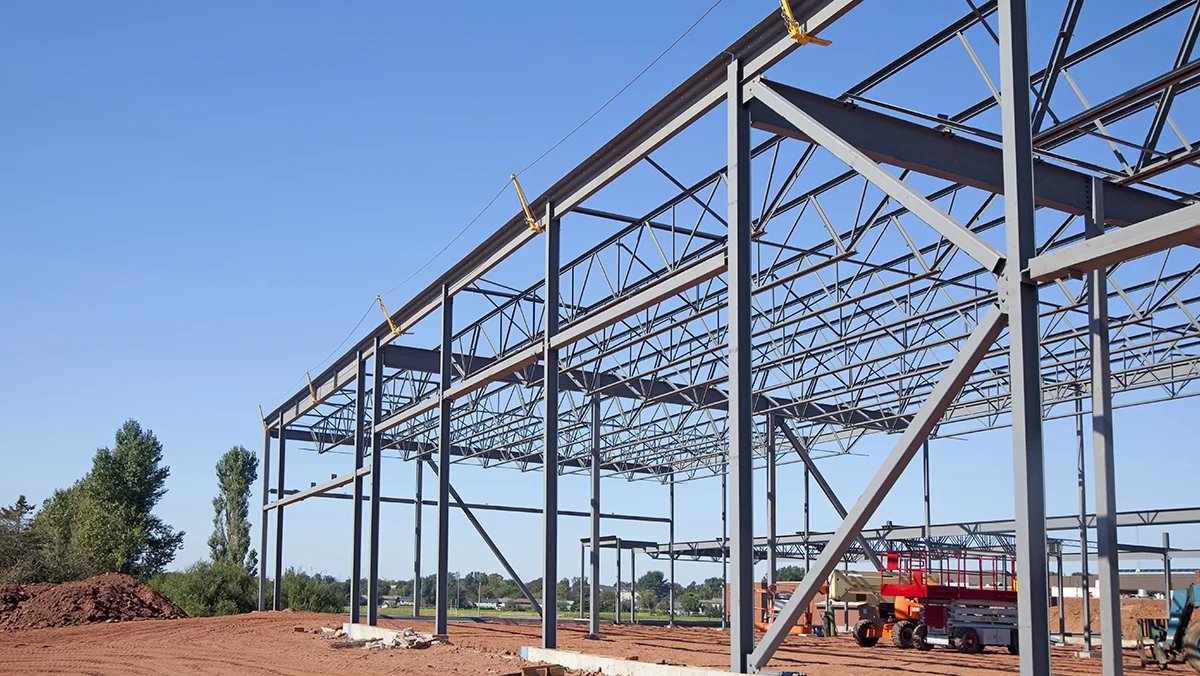
Nothing about a bare parcel in New Mexico is neutral until the geotechnical report says so. A caliche layer, a cemented soil horizon, an arroyo crossing the back corner or a floodplain line drawn by the county can each change where the building sits, how trucks enter and what the first month of earthwork costs. We build industrial plants from the first walk of the site to the day the owner takes the keys, and we describe each gate-to-gate step plainly so a plant manager knows what the field crew is doing in every week.
Ground-up work for us means one field organization carrying the project from clearing through the building shell, process tie-ins, site utilities, paving and turnover. Owners in advanced manufacturing, food processing, metals, energy services and logistics bring different equipment and different regulators, yet the order is familiar: confirm the permit path, prepare the pad, set foundations, erect structure, close the envelope, then bring in process and power. Every handoff carries a written permit to work, a laydown plan and a named superintendent.
Industrial construction here also depends on distance. Crews, steel and specialty inspectors cover long highway miles between the Rio Grande corridor, the southern border and the oilfield side of the state, so we plan mobilization, material staging and temporary power around drive time instead of discovering it in week six. Owners comparing us with a general building contractor should ask how each bidder handles that travel, because it shows up in the schedule long before it shows up in a change order.
Where New Mexico plants are actually being built
The state's recent plant work shows the range a ground-up owner may face. Intel opened Fab 9 in Rio Rancho on January 24, 2024, as part of a $3.5 billion advanced packaging investment that supported over 3,000 construction jobs, which tells a buyer how much labor one major plant can pull from the regional pool. The mayor told a March 2025 roundtable that the city had seen $6 billion in investment over ten years, so a mid-size owner on that side of the river is bidding for crews and inspector time against very large neighbors.
Farther south, the City of Las Cruces Innovation and Industrial Park sits at the junction of I-10 and I-25, lists more than 400 acres as shovel ready and is covered by Foreign Trade Zone 197. Shovel ready describes zoning and utilities, not soil. We still run borings, review drainage and price the pad before anyone commits to a footprint, whether the parcel is in Las Cruces or anywhere else in the state.
The sequence we follow from survey to shell
Week one is not mobilization, it is verification. We confirm boundary and easement information, walk the arroyo and drainage paths, review the geotechnical report for caliche depth and bearing values, and write the permit to work procedure that every sub and visitor will follow at the gate. Clearing and mass grading then run under a stormwater plan, with the building pad built up in lifts and tested before any footing is formed.
Foundations, slab, structure and envelope follow in the order the building type demands. For a heavy process building that may mean deep foundations and equipment pads before steel; for a distribution or light manufacturing shell it usually means slab and tilt panels or a framed steel structure first. Process tie-ins, fire protection and power are scheduled against the long-lead list so the shell is not waiting on a switchgear delivery. We hold a written turnover meeting at each phase boundary so the owner can see what is complete and what remains.
Code path and licensing for a new plant
New commercial and industrial buildings are permitted under the 2021 New Mexico Commercial Building Code (14.7.2 NMAC), which adopts the 2021 International Building Code as amended and took effect July 14, 2023. Electrical work follows the 2020 New Mexico Electrical Code, effective March 28, 2023, and the building envelope falls under the 2021 Commercial Energy Conservation Code effective January 30, 2024. Plans drawn before those dates can be caught between editions, so we ask for the edition on the permit application at the first design meeting.
Contractor licensing in New Mexico is classification based under 14.6.6 NMAC. The GB-98 General Building classification covers erecting, altering, repairing or demolishing commercial buildings and certain structures, and it requires four years of foreman level experience, at least two of them commercial. We check that every trade on a plant job holds the right classification before it mobilizes, because a gap there stops inspections the same way a missing drawing does.
Schedule drivers an owner should plan around
Three items usually set the calendar: long-lead electrical and process equipment, utility service dates from the local provider, and the weather window for concrete. Monsoon afternoons in summer can stop a pour or a trench, and at higher elevations a winter freeze changes curing and blanket requirements. We build those windows into the baseline schedule and price protection rather than assuming an ideal calendar.
Inspection scheduling is the quiet fourth driver. Some jurisdictions are a short drive from a crew, others are a half day away, and a missed inspection slot can cost a week. We book inspections against the look-ahead schedule, keep a clean log of what has been signed off, and report plainly when an item slips, with the recovery plan beside it.
What moves the number on a ground-up plant
The first cost swing is below grade. Caliche that can be ripped is a modest line; caliche that needs hammering or blasting is not, and the borings tell us which we face. Dewatering near the river valleys, imported structural fill where native soil is poor, and the length of utility extension to the property line follow close behind. We show those as separate lines in the estimate so the owner sees the exposure instead of a single lump sum.
The second swing is time on the owner's side: design changes after steel is ordered, late equipment data and utility upgrades that nobody scoped. Our design and build teams pin these down earlier, and our commissioning and closeout process keeps the end of the job from becoming a second budget. Owners planning a manufacturing plant or a line for advanced manufacturing should expect us to ask for equipment weights, utility loads and clearance heights early.
Talk through a new plant before the first borings
Send us the parcel, the process and the date you need production. We will walk the site, review drainage and utilities, and give you a gate-to-gate sequence you can use with your engineers and your board.
Common Questions
How early should we call a builder if all we have is a parcel and a rough footprint?
As soon as you have a legal description and an idea of the process. We can review access, flood exposure, utility distance and likely soil conditions before you spend on design, and that review often changes where the building sits. A few weeks of early site work usually costs less than redesigning a pad after the borings come back.
Does caliche change the foundation design?
It can, in both directions. A well-cemented layer gives good bearing, but it also means rippers, hammers or blasting for utility trenches and footings. The geotechnical engineer sets bearing values and any over-excavation, and we price the excavation method that the borings support.
What if utility service is not at the property line?
Then the extension becomes part of the critical path. We request will-serve letters early, map the length and depth of each extension, and schedule temporary power and water for construction separately from permanent service. Owners should treat a utility date as a schedule risk until it is in writing.
Which code edition applies if our design started before 2023?
Permits are issued under the editions in force when they are applied for, subject to any overlap period the state allowed. The commercial building code now in force is the 2021 edition, effective July 14, 2023. We compare the drawings against that edition before submittal so plan review does not become the first time anyone checks.
Can you build next to an operating plant?
Yes, with a separate access route, a defined laydown area and permit to work rules for anything that crosses the fence line. Where the work must tie into live process areas, our phased construction practice sets shutdown windows and fixes them with the operations lead before the contract is signed.
Related
Related Services
Related Building Types
Related Service Areas
Ready to talk about your project?
Request a Project ReviewOne project team for the whole sequence
Industrial Contractors of New Mexico reviews the site, the loads, the schedule and the approvals before pricing, then schedules, coordinates and inspects the specialty trade partners from preconstruction through closeout.