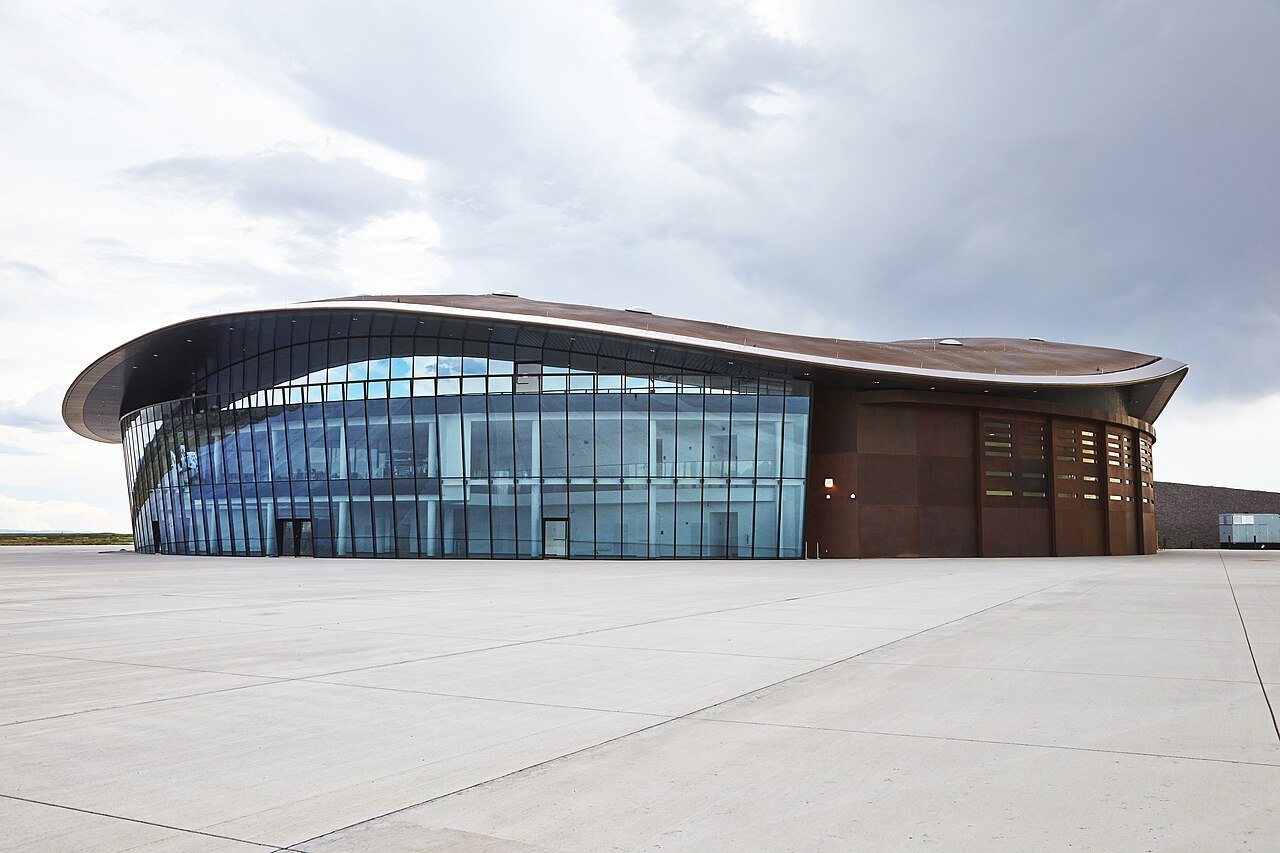
On a site with no neighbors, no city water and a long drive from the nearest supply yard, the work that matters is logistics: how crews arrive, where material is staged and how every building is tied into utilities that must be brought to it. We build hangars, operations and payload buildings, equipment pads and the roads and yards around them for aerospace and test operators who need to develop remote land, and we plan each job by the gate-to-gate steps the owner will actually experience.
The setting is large. A New Mexico Spaceport Authority presentation dated August 12, 2025 says Spaceport America's facilities span 18,000 acres in Sierra County, adjacent to White Sands Missile Range, with easy road access to I-25 and I-10. The site lies about 20 miles southeast of Truth or Consequences and 45 miles north of Las Cruces on State Trust Land. Those distances define the supply chain: crews, concrete and steel come from the towns on either side, and every delivery is a planned convoy and not a quick run to town.
Because the land is State Trust Land and the operators are specialized, the approvals and safety rules depend on the tenant and the landlord. We ask for them early, build them into the schedule and keep the owner informed of which ones control the start date.
Why aerospace operators build here
The Spaceport Authority lists a high elevation of 4,600 feet MSL, more than 340 days of sunshine, no salt air corrosion and access to 6,000 square miles of restricted airspace (R5111 and R5107). For an operator, those are working advantages: dry air is kind to metal structures and equipment, long clear weather windows suit flight testing and large restricted airspace allows operations that would not be possible elsewhere.
The same list of advantages shapes the buildings. A steel hangar in dry air needs less corrosion protection than one on a coast, and the sunshine makes rooftop solar attractive. Owners in advanced manufacturing who build and integrate vehicles or payloads also want clean, controlled assembly rooms next to the hangar, which we address in the building design rather than as add-ons.
Hangars, operations buildings and the ground around them
The core building is an aircraft hangar: a clear-span steel frame with a large door system, a slab designed for aircraft or vehicle loads and fire protection chosen with the owner's insurer. Beside it, operations buildings house control rooms, offices, storage and shops, and equipment pads support ground systems, tanks and generators.
Site work is as large a share of the scope as the buildings. We clear and grade the pad, build aprons and taxi connections where the owner specifies them, install drainage that survives desert storms and extend power, water and communications. Because the nearest utility connection may be far away, the site utilities often include wells, storage tanks, generators or long underground runs, each of which is designed and permitted separately.
Codes, State Trust Land and tenant approvals
Statewide, commercial buildings follow the 2021 New Mexico Commercial Building Code, which adopts the 2021 International Building Code as amended and took effect July 14, 2023. Electrical work follows the 2020 New Mexico Electrical Code. A project on State Trust Land adds a lease or use agreement and the landlord's requirements, and a tenant at an operating spaceport adds the site operator's design standards and safety reviews.
We coordinate those layers through our permitting and entitlements coordination service. Our checklist covers the building permit, grading and drainage approvals, utility permits and the site operator's review. We submit packages in the order the reviewers need them and keep a log of comments so that nothing is lost when the review passes from one party to another.
Convoys, long-lead items and a remote calendar
The Spaceport Authority states that Spaceport America was entirely funded by New Mexico public resources (about $250 million) and that humans were sent to space from New Mexico in 2021. For a builder, the useful point is that large public and private programs here run on long timelines with fixed windows, and the construction schedule has to fit them. We build backward from the operator's date, flag the items that could miss it and manage those items from the first day.
Our long-lead procurement management tracks door systems, steel, electrical gear and special equipment from order through delivery. Because every delivery crosses a long approach, we consolidate loads, schedule heavy trucks outside the hottest hours and keep a laydown yard on site large enough to store material between deliveries.
Gate-to-gate at a remote site
At a remote site, nobody is nearby to fix a missed step. We start with a mobilization plan that lists crew housing or travel, water and sanitation, communications, first aid and the closest emergency services. A permit to work controls excavation, hot work and tie-ins, and a daily briefing covers weather, heat and wildlife.
Heat is the primary hazard in warm months, and we manage it with shade, cool water, work-rest cycles and early starts. Wind and dust are the others, and we use water trucks and wind limits for lifts. At the end of the job, commissioning, turnover and closeout includes functional testing, training for the owner's staff and a complete package of as-built drawings, manuals and warranties.
Nearby towns and how they connect
Support for the spaceport comes from the towns on either side. Truth or Consequences is the closest, and Las Cruces offers a larger labor pool and supplier base. We staff each project from both, and we price the crew's travel and lodging openly.
When a tenant wants a single team to handle design and construction, industrial design-build puts the architect, engineer and builder under one agreement, which shortens the schedule and clarifies responsibility. It is a natural fit for a remote project where each coordination meeting is expensive.
Developing land near Spaceport America?
Share the operating concept, the parcel and the date you need to be flying or testing. We will map the access, the utilities and the approvals and return a scope that shows each step in order.
Common Questions
How do you supply a site that is far from the nearest town?
We plan convoys, consolidate deliveries and keep a staged laydown on site. Concrete, steel and equipment come from the towns on either side of the site, and we confirm each supplier's route and weight limits in advance. Water and power for construction are set up before the crew arrives.
Does dry desert air change how you build a hangar?
Yes, in several ways. Corrosion protection can be lighter than on a humid coast, but heat, wind, dust and sun exposure affect concrete placement, sealants and coatings. We choose materials and methods suited to the climate and cure slabs promptly to avoid cracking.
What approvals apply on State Trust Land?
Typically a lease or use agreement with the landlord, the site operator's design review and the building and utility permits required by the state and local authorities. The mix depends on the tenant and the parcel. We ask for the requirements early and put them on the schedule.
Can you handle design and construction together?
Yes. Our design-build approach pairs an architect and engineer with our field team, which reduces coordination and helps fit the building to a fixed operating date. The owner signs one agreement and deals with one point of contact.
How early should we involve a contractor in a spaceport project?
As soon as the site and the operating concept are known. Early input on utilities, access and building layout can reduce cost and shorten the schedule. We often help owners compare building options before drawings are final.
Related
Related Services
Related Building Types
Related Service Areas
Ready to talk about your project?
Request a Project ReviewOne project team for the whole sequence
Industrial Contractors of New Mexico reviews the site, the loads, the schedule and the approvals before pricing, then schedules, coordinates and inspects the specialty trade partners from preconstruction through closeout.