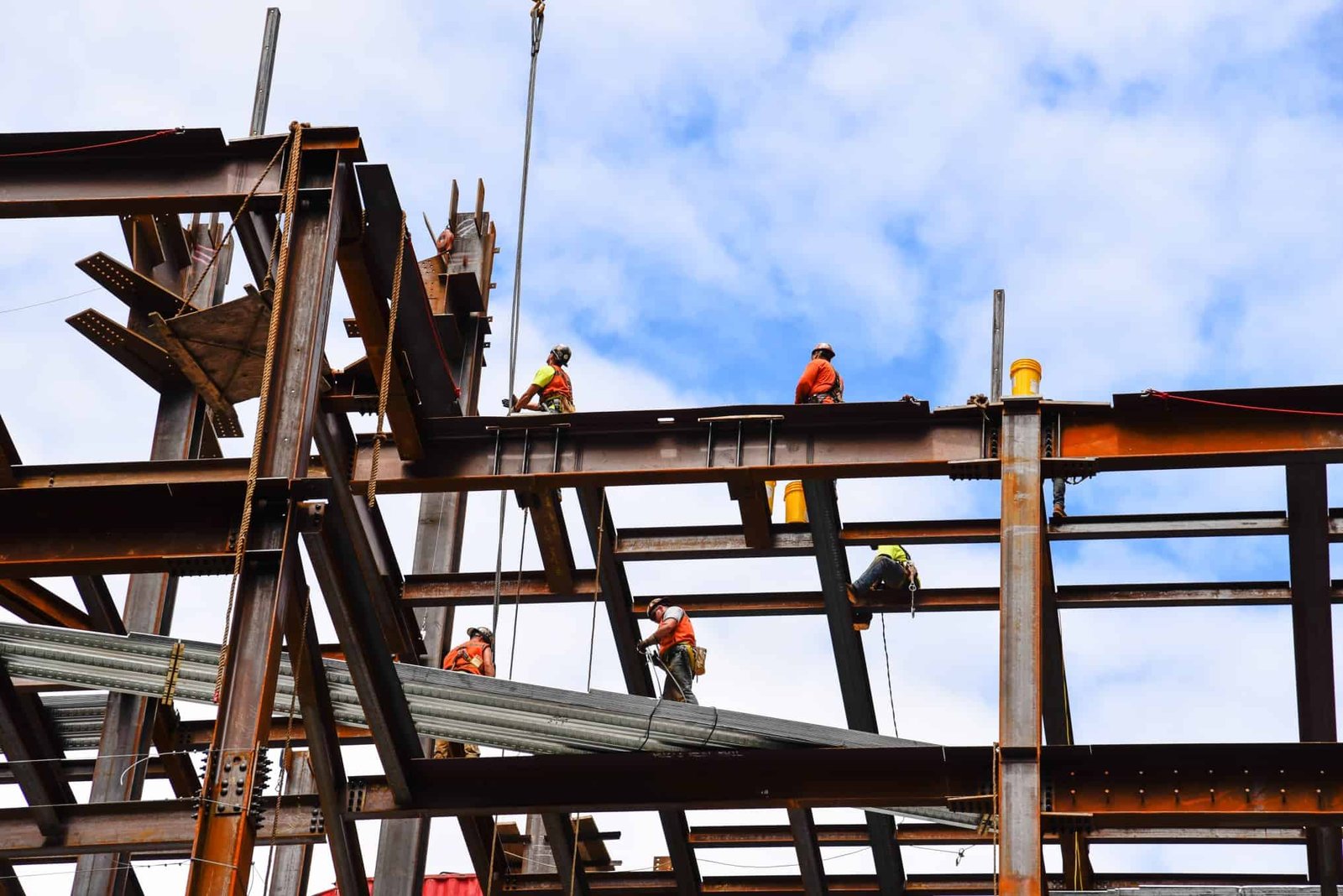
Steel arrives on a schedule that was set months before the foundations were poured. The mill order, the fabricator's shop drawings, the detailing review and the shipping slot each take their turn, and by the time the first column is on a truck the erection crew's start date is already committed. Anything that delays the foundations or the anchor rods in the field then lands directly on a crane that is on rent and a crew that is on site.
We erect structural steel for industrial buildings, process structures, pipe racks, mezzanines and equipment supports across New Mexico. The work includes receiving and sorting steel in the yard, setting columns on their base plates, raising beams, girders and joists, bolting and welding the connections, plumbing and aligning the frame, and placing metal deck. The owner receives a frame that is plumb, tight and inspected, with a record of every bolt and weld that required one.
Our role is to make the frame fit the foundation and the next trade. That means surveying anchor rods before steel is released, checking the fabricator's piece marks against the erection drawings, and giving the roofing, mechanical and electrical crews a clean deck to work from.
Crews, cranes and the checks we run
Erection is done by ironworkers working to a lift plan that names the crane, the pick weights and radii, the rigging and the sequence. We select cranes by lift capacity at the working radius, ground bearing at the pick location and clearance around the building, not by the largest unit in the yard. A crane working beside a live plant needs a prepared mat and a defined swing area, and we plan those before mobilization.
Before any steel is set, the surveyor checks every anchor rod group against the drawings and records elevation and position. A rod that is out of position is corrected through an approved repair or an engineered base-plate modification, never by forcing the column. During erection the frame is plumbed and aligned in stages, with temporary bracing left in place until the permanent bracing and the deck make the structure stable.
From laydown to topped-out frame
The sequence begins in the yard, where steel is unloaded, sorted by erection order and checked against the shipping list. Columns go up first, then beams and girders, then joists, bridging and bracing, then deck and edge angles. Connections are bolted snug at first, plumbed up, then tightened to the specified pretension, and field welds are made by qualified welders under inspection. On tilt-wall industrial buildings the steel is limited to the roof system, so the sequence starts with joists and deck.
Secondary steel such as lintels, stair stringers, ladders, platforms and equipment supports follows the main frame. On a heavy process structure the order may change, because large equipment has to be set before the beams that would block it. We review those cases with the owner's engineer so the erection sequence respects the equipment delivery dates, and coordinate the foundations beneath through drilled pier foundations when the soils call for them.
Fall protection, lift control and inspection records
Steel erection carries the highest fall and struck-by risk on most industrial jobs. We protect workers with tie-off points, controlled decking zones, safety nets or lines as the plan calls for, and we hold a lift briefing before each crane pick. Nobody walks under a load, and the swing radius is barricaded. Wind is monitored throughout the day, and picks stop when gusts exceed the crane manufacturer's or the rigging plan's limit.
Inspection is part of the same discipline. A special inspector observes bolt tightening and field welds, and we keep a log of the pieces erected each day, the bolt method used and the weld procedures. Any nonconforming connection is held open until it has been corrected and re-inspected, so the frame is not covered with deck or insulation before it is approved.
Delivery routes, laydown and crane booking
Getting steel to the site is its own project. In Albuquerque, Interstate 25 and Interstate 40 cross at the interchange known as the Big-I, and loads bound for sites on either side of the metro have to be routed with that junction and local weight and height limits in mind. Away from the interstates, county roads and short approach routes can limit trailer length, which is why we survey the delivery route before the fabricator ships.
We book cranes as early as the lift plan is final, because a crane has to travel across long distances in this state and the available units are not unlimited. Shipments are sequenced so the yard never holds more steel than it can keep clean and organized, and the first load arrives only when the foundations, rods and laydown area have been accepted.
What changes the price of an erected frame
Price follows tonnage, piece count, connection complexity, crane size and duration, access and the amount of field welding. A frame of many small pieces costs more to erect than the same tonnage in fewer, heavier members. Splices that could have been made in the shop but were left for the field raise the cost, and so do last-minute changes that send pieces back to the fabricator.
Large projects show how quickly tonnage grows. The City of Albuquerque announced on November 24, 2020 that Netflix's expansion of ABQ Studios at Mesa del Sol would add 300 acres, $150 million in capital expenditures and 1,467 construction jobs, and an August 26, 2026 Albuquerque Journal article describes Project Jupiter as a 1,400 acre data center under construction in Santa Teresa. The steel for buildings of that kind is ordered in large packages, while our work is more often a single building or an expansion. In both cases, we separate the steel supply, the erection and the crane in the estimate.
Fit with the rest of the building
A steel frame is only the start of the building. The same crew often coordinates with high-bay crane-ready buildings where runway beams add precision requirements, and with warehouse shell construction where steel joists carry a large roof.
Owners in advanced manufacturing and pharmaceutical and life sciences may need clean erection practices, limited dust and tight tolerances that other users do not, and a manufacturing plant often wants space for future crane or mezzanine loads built into the frame from the start.
Check the lead times before you set a date
Send us the framing plan, the tonnage estimate and the foundation schedule. We will review lead times, propose a crane and lift plan, and give you an erection sequence you can plan around.
Common Questions
How long does steel take to arrive after approval?
Lead time depends on the mill, the fabricator's backlog and the complexity of the detailing. It is usually measured in months and is the longest item in a steel building schedule. We ask for a realistic delivery sequence from the fabricator and tie our crane booking to the first shipment.
Why does anchor rod survey matter so much?
The column cannot be set if the rods are out of position. Surveying them before release catches problems when they are cheap to fix. We record position and elevation for every group and send the results to the engineer if a rod is outside tolerance.
Can steel be erected in the wind?
Within limits. The crane manufacturer and the lift plan set a maximum wind speed, and picks stop when gusts exceed it. In the spring, New Mexico often has windy afternoons, so we plan heavy picks for the morning and keep the schedule flexible.
What inspection does the frame get?
A special inspector observes bolt tightening and field welds, and checks that the connections match the drawings. We keep daily logs of what was erected and how it was connected. The frame is accepted before deck, roofing or fireproofing covers the connections.
How do you erect steel in an operating plant?
Under a permit to work, with defined crane positions, barricades and coordination with plant operations. Lifts over live equipment are avoided or scheduled for shutdowns. A written plan names the person responsible for each step.
Related
Related Services
Related Industries
Related Service Areas
Ready to talk about your project?
Request a Project ReviewOne project team for the whole sequence
Industrial Contractors of New Mexico reviews the site, the loads, the schedule and the approvals before pricing, then schedules, coordinates and inspects the specialty trade partners from preconstruction through closeout.