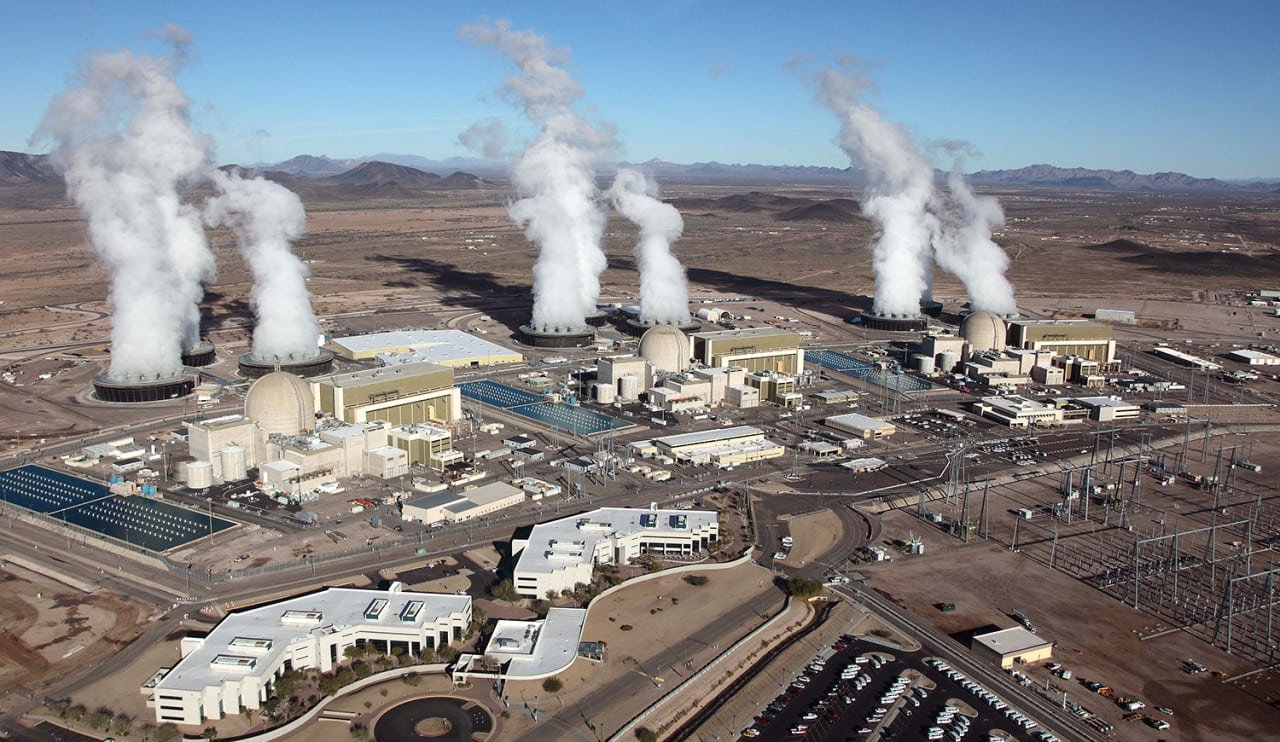
The last unit of the coal-fired San Juan Generating Station near Farmington was removed from service on September 30, 2022, and the work that remains around a retired plant is a different kind of construction from the work that built it. We serve utilities, independent power producers and fuel-cycle operators across New Mexico with site civil, foundations, buildings and underground electrical, and we do it under permit to work procedures that match the safety culture of a generating or enrichment site.
The buyer here is an owner's engineer or a utility project manager, and the contract is usually shaped by outage windows, interconnection dates and regulatory milestones. Our job is to fit the construction into those boundaries. That means clear scoping before mobilization, a field crew that has been trained for the site's rules, and a schedule that names who can enter, when and for what task.
The state's power picture is changing in several directions at once. Solar acreage is being proposed, wind training is under way at a community college, and a uranium enrichment plant in the southeast has announced a major expansion. Each creates its own construction need: foundations and roads for arrays, small buildings and equipment pads for substations, and heavy, controlled structures for process plants.
Four Kinds of Power Work in New Mexico
In the northwest, Farmington shows what a retiring plant leaves behind: switchyards, transmission corridors, laydown space and a skilled workforce. Redevelopment of a site like this often involves demolition, soil work and new, smaller facilities, and the trade partners for site utilities package and demolition are suited to it.
In the southeast, Eunice hosts an enrichment plant that Urenco says employs more than 500 staff and long-term contractors. On June 2, 2026 the company announced 2.1 million separative work units of new capacity at the site, expected to support 300 to 600 jobs at peak construction and 70 long-term operations jobs, and held a groundbreaking on August 18, 2026, stating that investment would rise to substantially more than $8 billion. In Lea County, a 2021 newspaper article described a proposed solar farm on two parcels at the Lovington industrial park totaling 1,350 acres. In the east, Tucumcari is home to a community college with a wind research and training center.
Procedures for Energy Sites
An energy site has hazards that a warehouse does not: energized equipment, hot surfaces, confined spaces and, in some facilities, radiological or chemical controls. Before anyone on our site arrives, we ask for the site orientation, the training requirements and the permit to work procedures, and we schedule the training into our mobilization. Work near energized equipment follows the 2020 New Mexico Electrical Code, which adopts the 2020 National Electrical Code, and your own utility standards where they are stricter.
We separate construction traffic and pedestrian routes from operating areas, mark all excavations and call for utility locates before digging. Daily briefings cover the day's tasks and any change in site conditions. Outage work has a written plan with hold points, and no crew starts on a tie-in until the isolation is verified by the owner's representative. For plants that store or process regulated materials, we add the owner's security and access rules to the plan.
What We Build Around Generation and Transmission
Typical projects include substation foundations and control buildings, equipment pads for transformers and switchgear, access roads capable of carrying heavy-haul loads, perimeter fencing, and the underground raceways that connect them. We build these from the grade up, and we place electrical duct banks and underground raceway with the encasement, spacing and cover the engineer specifies.
For solar and storage sites, the work is mostly civil: grading, drainage, roads, pile or ballast foundations for the owner's installer and enclosures for inverters and batteries. For large industrial utilities, such as an enrichment expansion, the scope grows to include heavy foundations, controlled-access buildings and extensive temporary facilities. Because every project has a different mix, our estimators separate site work, structures and underground systems so the owner can compare options.
Where Power Meets Other Industries
Utilities and large industrial users depend on each other. A large computing campus needs a utility partner as much as a building, and the same electrical choices that serve it show up in our page on data centers. Mining and refining need feeders and switchgear sized for large motors, which we describe under metals and heavy industry.
On the service side, we also manage fire water loops and hydrant systems for plants that must meet insurer and fire marshal requirements, along with stormwater control on sloped desert sites where flash flows can wash out a new pad. Combined with the electrical work, these services let us serve as a single builder for the civil and structural side of an energy project.
Access Across Long Distances
Energy sites in New Mexico are far apart, and distances shape cost. Reaching Lovington from Hobbs means 21 miles on NM 18, and the town is the northern end of a short-line railroad that serves the industrial park. A site in the east may be reached by two-lane roads where oversize loads need escorts, while a site along an interstate is easier but may have less open land.
We plan mobilization, crew housing and material delivery for each location, and where a site is remote, we set up a staging area close enough to avoid long haul days. Weather matters too: summer thunderstorms flood arroyos and stop work, and winter conditions in the higher elevations slow concrete. Our schedule includes allowances for both.
Plan Around Your Outage Window
Tell us the site, the outage or interconnection date and the safety requirements, and we will return a scope, a sequence and a mobilization plan.
Common Questions
Can you work inside an operating generating station?
Yes, under the site's access and permit to work rules. Everyone on our site completes the owner's orientation first, work in marked zones and tie in only after the owner verifies isolation. Outage work has a written plan with hold points.
What does solar site construction involve besides panels?
Grading and drainage, access roads, fencing, foundations or piles for the installer, concrete pads for inverters and storage, and underground collection circuits. These make up a large part of the budget and the schedule, and they depend heavily on soil and drainage conditions.
How do you handle long-lead electrical equipment?
We identify transformers, breakers and switchgear in the first weeks, ask the owner to release orders when design allows, and build the schedule around the delivery dates the manufacturers confirm. We then prepare foundations and conduits so the equipment can be set the week it arrives.
Is demolition of retired plant structures part of your work?
It can be. We scope demolition with the owner's environmental consultant so that hazardous materials are identified and removed under the proper procedures, and we recycle steel and concrete where the specifications allow.
Related
Related Services
Related Industries
Related Service Areas
Ready to talk about your project?
Request a Project ReviewOne project team for the whole sequence
Industrial Contractors of New Mexico reviews the site, the loads, the schedule and the approvals before pricing, then schedules, coordinates and inspects the specialty trade partners from preconstruction through closeout.