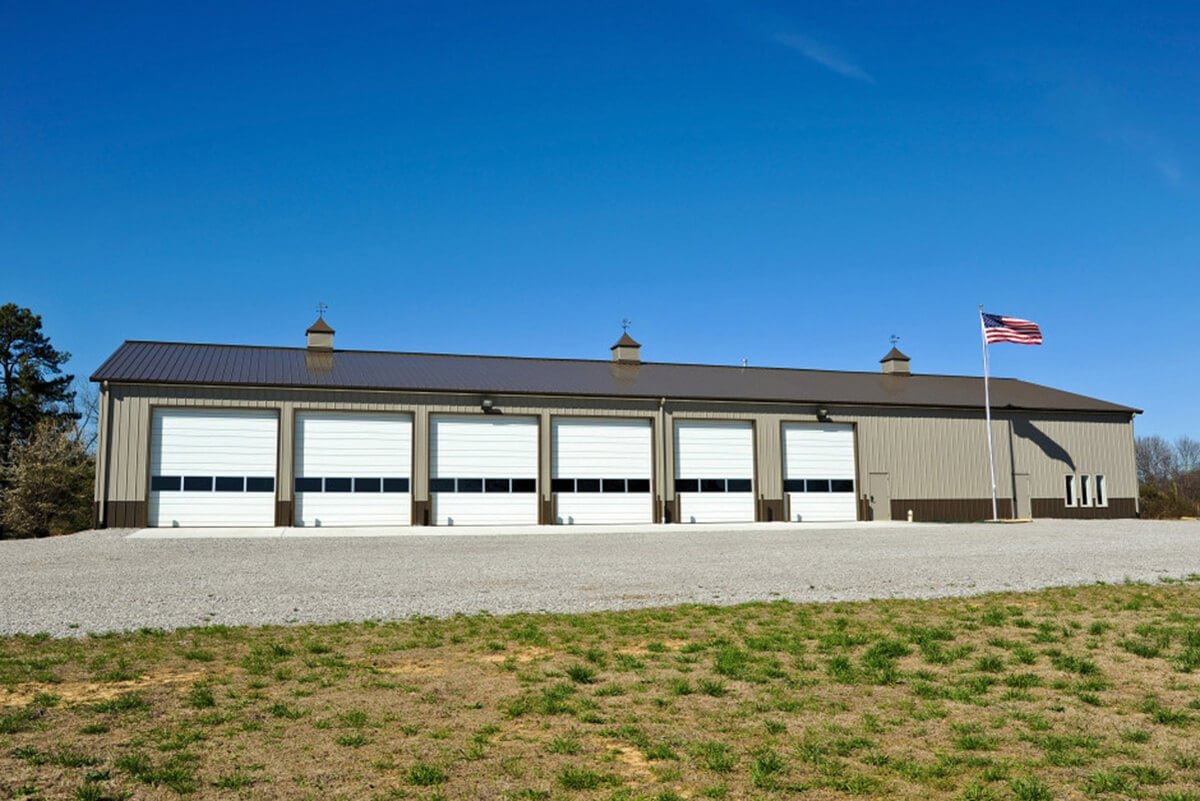
Fleet vehicles come home to the same yard every night, and the facility has to be ready for all of them: parking that carries axle loads, bays that fit the tallest vehicle, a wash that does not send runoff downstream, fuel that is contained, chargers that the electrical service can actually feed. We build automotive and fleet facilities in New Mexico for operators of delivery vans, trucks, buses, utility vehicles and service fleets, and for dealer and service center owners.
These projects combine a building, a yard and a utilities package. The building holds maintenance bays, parts, tools, a driver room and dispatch. The yard holds parking, a wash, fuel and often a secured perimeter. The utilities package is where many projects run into trouble, because a fleet that switches to electric vehicles needs a service, transformers and conduit that an older site was never built to provide.
We lay out the whole site before drawing the building, work out how vehicles circulate through it, and design the paving, drainage and electrical to match. A facility that flows well is cheaper to run than one with bottlenecks, and the layout is much easier to change on paper than in concrete.
What a fleet site includes
Maintenance bays, which we also cover under maintenance shops and service bays, come in several types: drive-through bays for fast service, single-entry bays for heavy repair, and lift bays with in-floor or surface-mounted lifts. Wash bays include a heavy slab with trench drains, an oil and grit separator and a recycling or discharge arrangement approved by the sewer authority. Fuel islands and canopies need containment slabs, tank systems, spill protection and clear approach lanes.
Paved yards must carry heavy axle loads and frequent turning, much like a truck court or trailer yard, so we design thick concrete or asphalt sections over a prepared subgrade, with joints and drainage that suit the traffic. Perimeter fence, gates, lighting and cameras secure the yard, and an administrative area covers dispatch and the driver room. Electric vehicle charging is added as conduit, panels and charger pads, usually in stages, so the trench is open only once.
Where the fleet drives and what it needs
A fleet facility works best near the roads its vehicles use. In Albuquerque, Interstate 25 and Interstate 40 cross at the interchange known as the Big-I, and the two interstates are used informally to divide the city into quadrants. A depot near that crossing reaches every quadrant, but the land is expensive and constrained. In Gallup, I-40 passes the north side of town and the interchanges run from about exit 16 to exit 26, including NM 118 and US 491, which gives a regional operator several access options along the railroad corridor.
Soils and drainage need a look too. A wash or fuel site on caliche behaves differently from one in a river valley, and a yard that sheds water toward an arroyo has to deal with the quantity and quality of what leaves it. We settle the drainage with the local authority at the start, since it fixes the finished grades for the whole site.
Facilities and tenants we plan for
The core group includes fleet maintenance shops, bus and truck depots, utility vehicle yards and municipal garages; see our work on government and municipal buildings for public-sector depots. Dealers and service centers add showrooms, customer waiting areas and a quick-service lane.
Electric vehicle service is growing, and the automotive and EV sector is part of why. In 2022 Tesla leased tribal land at Santa Ana Pueblo to build a service and delivery center that opened in 2023, near Bernalillo. A project of that type needs large electrical service, a clean customer area and a service shop under one roof, and shows how an auto facility is shifting in this region. Logistics users with trucks fit the truck terminal category.
Electrical, fire and environmental requirements
Charging is an electrical code question first. The 2020 New Mexico Electrical Code (14.10.4 NMAC) adopts the 2020 National Electrical Code as amended and took effect March 28, 2023, and the permit process reviews service size, load calculations, grounding and charger installation to that edition. We coordinate with the utility early, since a new transformer or service upgrade can take longer than the building.
Fire protection depends on what the building does: repair garages, fuel dispensing and battery handling each bring requirements for sprinklers, ventilation and separation. Environmental rules govern fuel storage, wash water and floor drains, and we design to the local authority's requirements. The 2021 New Mexico Commercial Building Code, effective July 14, 2023, covers the structure, egress and occupancy of the building itself.
Working beside moving vehicles
A fleet yard is usually in use while we build, so traffic separation comes first. We set up fenced work zones, marked pedestrian routes and a gate for construction access that does not conflict with the fleet's entry. Work near fuel or charging systems is done under a permit to work, with isolation and lockout tied to the owner's procedures.
Hot work in a maintenance building is controlled with fire watches and a check of flammable materials in the area, and new fuel and charging equipment is tested and tagged before the first vehicle uses it. The crew follows the operator's speed and spotting rules in the yard, and deliveries are scheduled to avoid the morning and evening vehicle departures and returns.
Tell us the fleet and the shift pattern
Send the vehicle types, the count, the fuel plan and the site. We will return a layout, a utility review and a phased plan that keeps your vehicles on the road.
Common Questions
How much electrical capacity do we need for electric vehicle charging?
It depends on the number of vehicles, the charger type and when they charge. We work from your fleet plan to estimate the load, then ask the utility what service is available and how long an upgrade takes. Staged conduit and panel space allows chargers to be added later without reopening the yard.
Why is the wash bay so heavily regulated?
Wash water carries oil, grit and detergent, and the sewer authority wants to limit what reaches the system. A separator, a properly sloped slab and a collection design are normal requirements. We confirm the discharge rules before the drawings are finished, because the wash is difficult to change after the slab is poured.
How are the bays sized for the vehicles we run?
We start from the tallest, longest and heaviest vehicle in the fleet and add working room around it: door height and width, lift reach, crane or hoist rails if the work needs them, and clear space for tool carts and parts. A bay that fits a service van will not fit a transit bus, and a bay designed for the bus is wasted space for vans. We also allow for the next vehicle purchase, because fleets change faster than buildings do.
Can we keep operating while the site is rebuilt?
Yes, with planning. We phase the work so that part of the yard and a number of bays remain in service, and we move vehicles between zones at agreed times. Utility cutovers are scheduled for low-activity periods.
What pavement should a heavy fleet yard use?
Concrete is common where vehicles turn, brake and park, as it resists the load and the fluids. Asphalt can work for lighter areas. The final design depends on the soil report, the vehicle weights and the budget, and we compare the lifecycle costs of each.
Related
Related Services
Related Building Types
Related Service Areas
Ready to talk about your project?
Request a Project ReviewOne project team for the whole sequence
Industrial Contractors of New Mexico reviews the site, the loads, the schedule and the approvals before pricing, then schedules, coordinates and inspects the specialty trade partners from preconstruction through closeout.