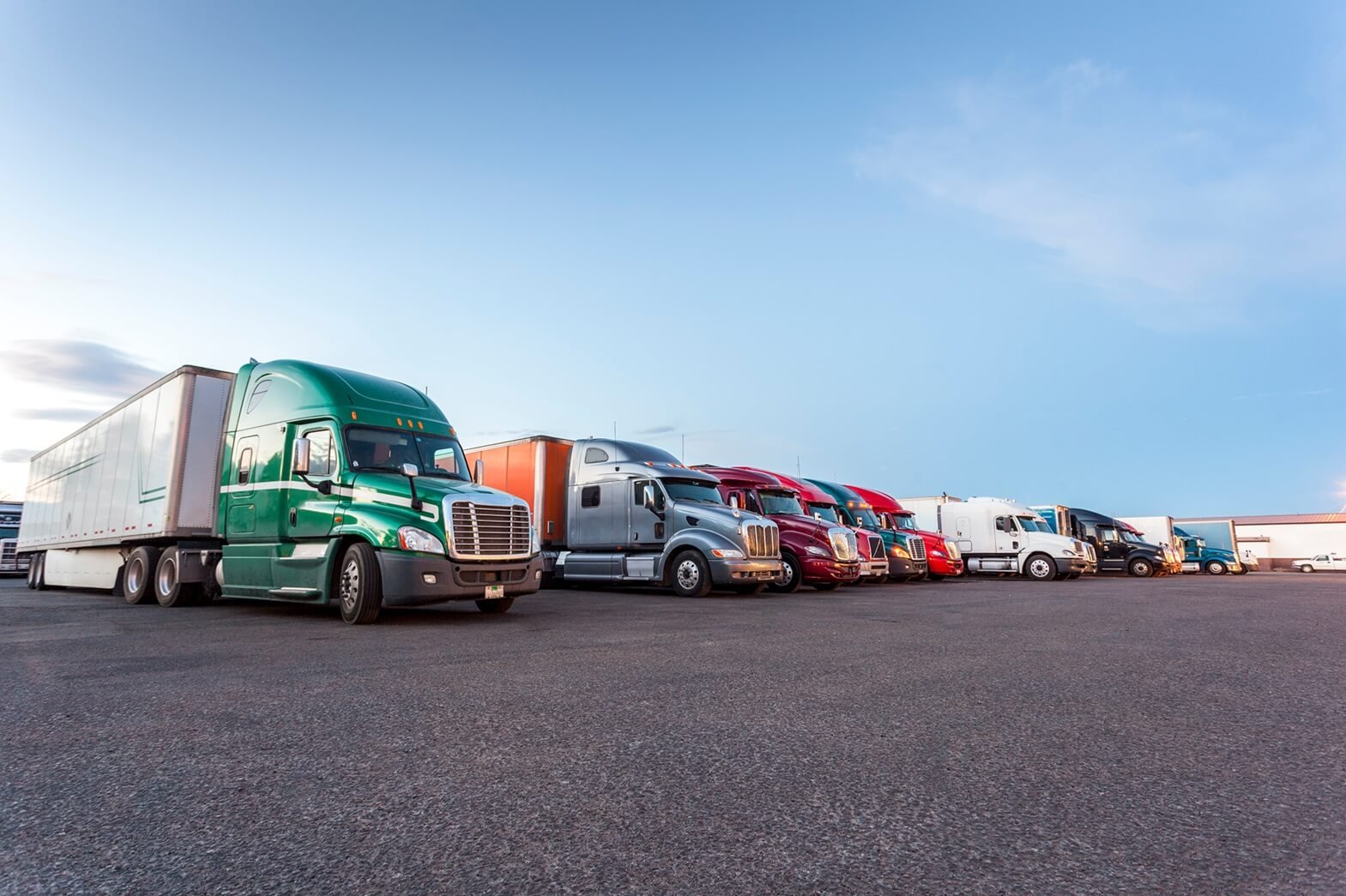
More than 100 mostly intermodal freight trains arrive and leave Clovis each day on the BNSF Southern Transcon, and most of what they carry eventually rides on a trailer. The yard where that trailer parks, turns and docks is a working piece of the supply chain, and it takes more abuse per square foot than almost any other pavement. We build truck courts and trailer yards for that abuse.
A truck court is not a parking lot. Loaded tractors and trailers apply high wheel loads and braking forces, and landing gear on parked trailers punches into the surface. Turning radii, grade, drainage and joint layout all affect whether the surface lasts. We build the subgrade, base, pavement and drainage as one system, tested at each step, so the finished yard is flat enough to dock, steep enough to drain and strong enough to last.
Owners come to us with several kinds of yards: staging areas beside a dock wall, overflow trailer storage, fleet parking, intermodal container pads and the entry roads that connect them to public highways. Each has its own traffic pattern and its own failure modes, and we discuss those patterns with the operations team before the layout is final.
Freight corridors that shape yard design
Freight in the state follows rail and interstate routes. The Santa Teresa intermodal terminal is listed with 74,000 feet of trackage expandable to 145,000 feet, 1,266 container and trailer parking stalls expandable to 4,380 and a $500+ million investment, according to a New Mexico Border Industrial Association presentation. Border crossing traffic adds further truck movement, and Albuquerque's Sunport reported 83,355,710 pounds of cargo in 2025.
Yards near these corridors have to handle high daily trailer counts, frequent turns and mixed vehicle types. We design and build for the traffic the owner expects in five and ten years, not only at opening, and we ask the operations team for trailer counts by hour so the layout reflects the peak and not the average. Where a yard may later be fenced into separate customer areas, we run gate conduit and lighting circuits to suit that division now. In Santa Teresa and along the rail corridor through Clovis, that typically means thicker pavement, wider turning areas and room for expansion.
Components of a yard
The scope includes subgrade preparation, base course, concrete or asphalt pavement, dock aprons, dolly pads at trailer landing gear, curbs, drainage inlets, fencing, gates, lighting conduits, bollards, striping and signage. Concrete is common in heavy-turning and parking zones, where asphalt can rut and gouge under landing gear. Asphalt may suit entry drives and lightly loaded areas.
We coordinate gates and guard shacks with the owner's security plan, and we install truck scale foundations where the plant weighs loads. Fuel and wash areas need separate containment and drainage. Detail drawings show the joint layout, dowels and sealant for concrete, and the lift thickness and compaction for asphalt. We build what the engineer has drawn and flag details that look hard to build or maintain.
Why yard pavement costs what it does
Pavement section drives cost. A thicker concrete slab with dowels at joints and a stabilized base costs more than a light asphalt section, but it survives years of heavy turning. Subgrade quality matters; poor soils may need lime, cement or geogrid stabilization, or removal and replacement. Caliche near the surface can be a benefit as a base layer, but it can also make trenching and grading difficult.
Area and drainage are the other drivers. A trailer yard of many acres needs inlets, pipes and a detention facility sized for all that impervious area, which often rivals the pavement cost. We tie the yard to the site's drainage system early, so slopes and inlets are located to work with both trucks and water. Owners in logistics and distribution can also trade yard area for building area, and we price both.
Turning, docking and traffic flow
Layout begins with the longest vehicle, the turning path and the dock positions. Tractor-trailers need wide approaches, and the apron in front of the dock must be flat for trailers to line up and for levelers to work. We review the layout for blind spots, conflicts between employee parking and truck routes and queuing space at the gate, since trucks that wait on a public road create hazards and complaints.
Operations also matter. A terminal with many short stops differs from a plant with a few scheduled loads. Our approach to truck terminal and cross-dock layouts is to make sure the yard supports the way the building is used. Parking stalls for trailers need landing gear pads, lighting and sometimes electric hookups for refrigerated trailers; we plan the conduits so they can be added without cutting the finished surface.
Building around live truck traffic
Where an existing yard stays open, we phase the work in strips and maintain a route for trucks at all times. Barricades, signage, flaggers and speed limits keep drivers and our work area apart, and we use a permit to work for any area shared with operations. Concrete pours near live lanes are scheduled when traffic is lightest.
On a new site, construction traffic is kept separate from future operations when possible. We build the entrance first, with a stabilized surface, so that trucks and delivery vehicles do not track mud onto the public road. Lighting and striping are installed before the yard opens, and we walk the finished layout with the safety lead to confirm sight lines and signage.
Lay out the yard around your trailers
Send the dock plan, the trailer counts and the site boundary. We will draft a pavement and drainage approach and a phasing plan that suits your traffic.
Common Questions
Concrete or asphalt for a trailer yard?
Concrete handles turning, braking and landing gear loads better and lasts longer in heavy-use zones, while asphalt costs less up front and is easier to patch. Many yards use concrete near the dock and in the turning areas, with asphalt on lightly loaded roads. The engineer sets the section based on traffic and soils.
How long before we can use a new concrete yard?
Concrete needs time to gain strength before heavy loads. Light traffic may be allowed after a few days, but heavy trucks usually wait longer, based on strength tests. We plan the pour sequence so that part of the yard can be opened while another part cures.
What are dolly pads?
They are reinforced concrete areas where trailer landing gear sits when a trailer is parked without a tractor. They keep the gear from punching through asphalt. We install them in storage stalls and at dock positions.
How do you keep the yard from ponding?
Pavement is graded to inlets or edges with enough slope to drain but not enough to roll a parked trailer. We check elevations with survey control before paving, and we correct low spots in the base. After the first rain, we walk the yard to confirm it drains.
Related
Related Services
Related Building Types
Related Service Areas
Ready to talk about your project?
Request a Project ReviewOne project team for the whole sequence
Industrial Contractors of New Mexico reviews the site, the loads, the schedule and the approvals before pricing, then schedules, coordinates and inspects the specialty trade partners from preconstruction through closeout.