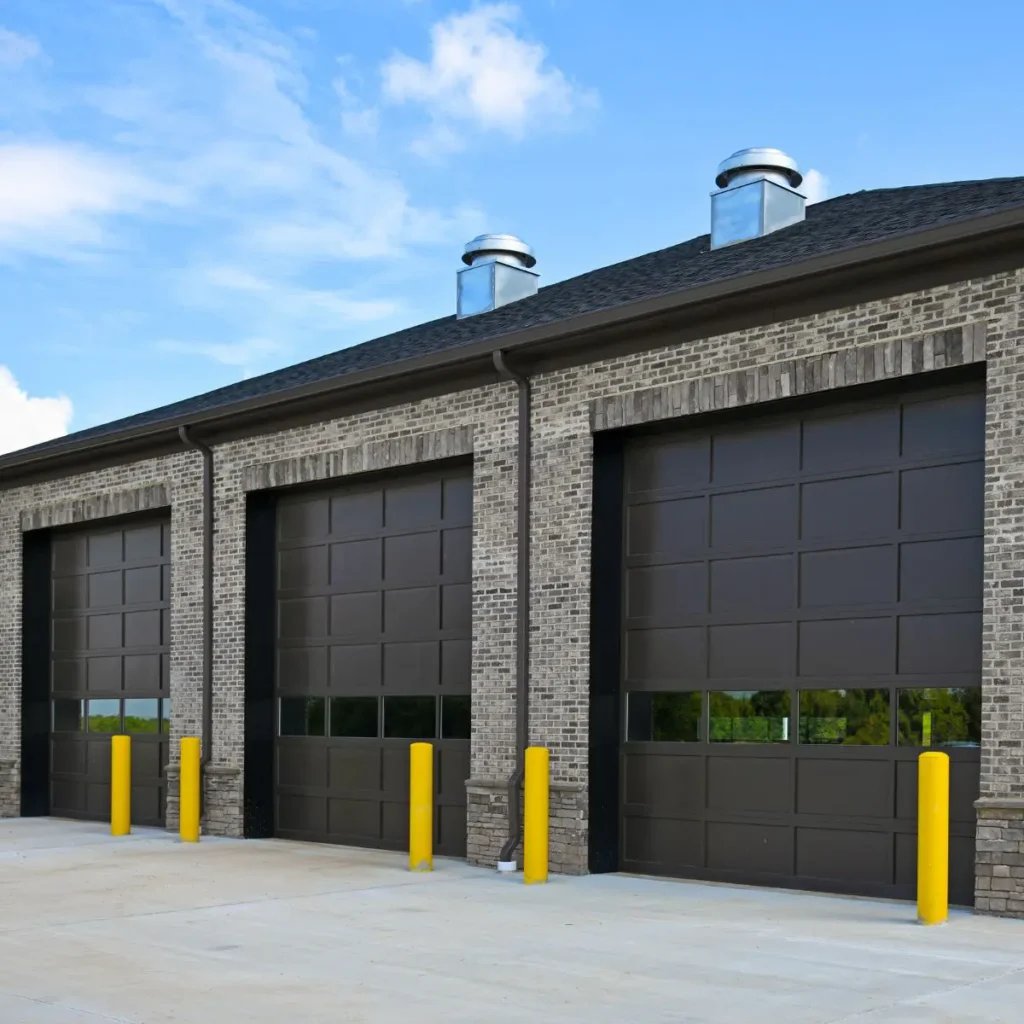
Down in the Permian Basin counties, a maintenance shop earns its keep by getting a truck, a pump or a loader back to work before the next job needs it. A shop built for that pace has tall doors, a floor that survives oil and steel, power for welders and compressors, and a layout that moves equipment through without backing. We build maintenance shops and service bays for oilfield service companies, mining and potash operations, refinery contractors, municipalities and general fleets across New Mexico.
The building itself is often a steel frame on a slab, which makes the details around it decide whether it works. Door height and width, the swing of a crane hook, the slope of the floor to a drain, the place where waste oil is stored, the path a tractor-trailer takes into the yard: these are what separate a shop that runs from a shop that frustrates its crew.
We start by watching how the work flows. Which equipment comes in, how long it stays, what leaves with it, who needs to see it and what tools must be within reach. Then we draw the bays, the parts room, the wash and the yard around that flow, and we build it with a field crew that understands how a working shop is run.
Bays, floors and the systems around them
A service bay can be a drive-through lane, a deep bay for large equipment or a pit or lift bay for under-vehicle work. Overhead doors are sized to the tallest and widest unit that will enter, with headroom for hoses and mirrors. Where components must be pulled, a bridge crane or monorail hoist runs on a rail system that is part of the building structure, so we confirm the capacity and the runway design before the frame is ordered.
The floor is a heavy concrete slab, sloped to trench drains that lead to an oil and grit separator, with a sealer or hardener suited to the work. Around the bays we build the supporting spaces: parts storage, tool crib, welding area, tire and battery storage, a wash bay, compressed air, exhaust extraction, lighting, fluid storage with containment and an office. The yard outside is a work area as well, and its paving has to match the loads.
Equipment-heavy counties in the southeast
Oil and gas drive the shop market in Hobbs and Lea County. The U.S. Energy Information Administration reported that horizontal wells in Lea and Eddy counties produced 29 percent of all Permian Basin crude oil in the first quarter of 2023, about 1.7 million barrels per day, and the largest industries in Hobbs are mining and quarrying and oil and gas extraction. Those wells, and the trucks and pumps that serve them, need places to be repaired close to the field.
Farther west, Carlsbad adds potash mining to the mix, with two mines east of the city, on top of oil and gas formations. In Artesia, the refinery is described as the largest in the state, and oil and gas, agriculture and dairy are the main activities. These economies run on heavy equipment, and the shops that support them have to be tough and close to the work.
Building near live industrial operations
Many shop sites are next to a working yard, a refinery contractor's gate or an oilfield service base. We follow the operator's site access rules, complete the orientation, and work under a permit to work for digging, hot work and any tie-in. Traffic around the site is controlled with barriers, flaggers and a defined route for deliveries, so construction vehicles do not mix with the owner's equipment.
Inside the new building, safety is part of the design: eyewash and shower locations, guarded pits, lockout points on equipment, fire extinguishers and detection, ventilation for exhaust and welding fumes, and clear exits from every bay. Fluid storage is built with secondary containment so a leak stays on the owner's pad. We review those features with the shop supervisor, because they live with them every day.
What changes the price of a shop
Crane capacity and runway length are the biggest structural variables, followed by clear height and door size. A bay with a 20-ton hoist asks much more of the frame than a bay without one. Slab thickness and reinforcing, trench drains, separators and the pit or lift foundation come next. Power service for welders and large compressors adds to the electrical cost, and remote sites may need a line extension that costs more than the building.
Site work is a significant line in the oilfield counties. Caliche pad preparation, a laydown yard, truck access, water and septic if no municipal service exists all add up. We price these items separately and offer alternates such as a smaller initial building with a planned expansion bay, a choice that suits operators whose work may grow.
Services that belong with a shop
Most shops are metal buildings on engineered slabs, and many sit within a yard that needs a stabilized laydown yard for equipment and materials. Heavy equipment foundations, such as a test stand or a compressor, fall under equipment pads and foundations.
For operators in metals and heavy industry or utilities and power, the same shop design adapts to line crews, substation maintenance and mining support. Trucking operations also look at the truck terminal building type when shop space is combined with a dock.
Walk us through your equipment list
Tell us what comes through the door, how heavy it is and how often it needs service. We will return a layout, a structure and a floor plan that match the work.
Common Questions
How tall should the doors and the building be?
Measure the tallest unit with its boom, lights or cab fully raised, then add working clearance. For crane work, add the hook height and the crane runway. A shop that is a few feet too short is a shop that can never take the biggest unit, so we err toward height and test the choice against the cost.
What kind of floor does a shop need?
A thick, reinforced slab with joints designed for the loads and traffic, sloped to drains and finished with a sealer or hardener. Where heavy equipment sits or turns, the slab and subgrade are thicker. We design the floor with the geotechnical report, since weak or variable soil is the main cause of cracking.
Do we need an oil and grit separator?
Almost always, if the floor drains to a sewer or a discharge point. The separator keeps oil and solids from reaching the system, and the local authority sets the rules. We confirm the requirement before design is final and place the separator where it can be reached for cleaning.
Can you build a shop at a remote site?
Yes. Remote work adds mobilization, material hauling and utility extension, and we plan for each. We also check access roads and weather conditions, and we stage the materials so crews are not idle waiting on deliveries.
How does the building code treat a repair garage?
It carries its own occupancy rules for fire separation, ventilation and sprinklers, depending on the work. The state adopted the 2021 International Building Code as amended, effective July 14, 2023, and the review applies those rules to the building. We design to the occupancy and confirm it with the building official.
Related
Related Services
Related Building Types
Related Industries
Related Service Areas
Ready to talk about your project?
Request a Project ReviewOne project team for the whole sequence
Industrial Contractors of New Mexico reviews the site, the loads, the schedule and the approvals before pricing, then schedules, coordinates and inspects the specialty trade partners from preconstruction through closeout.