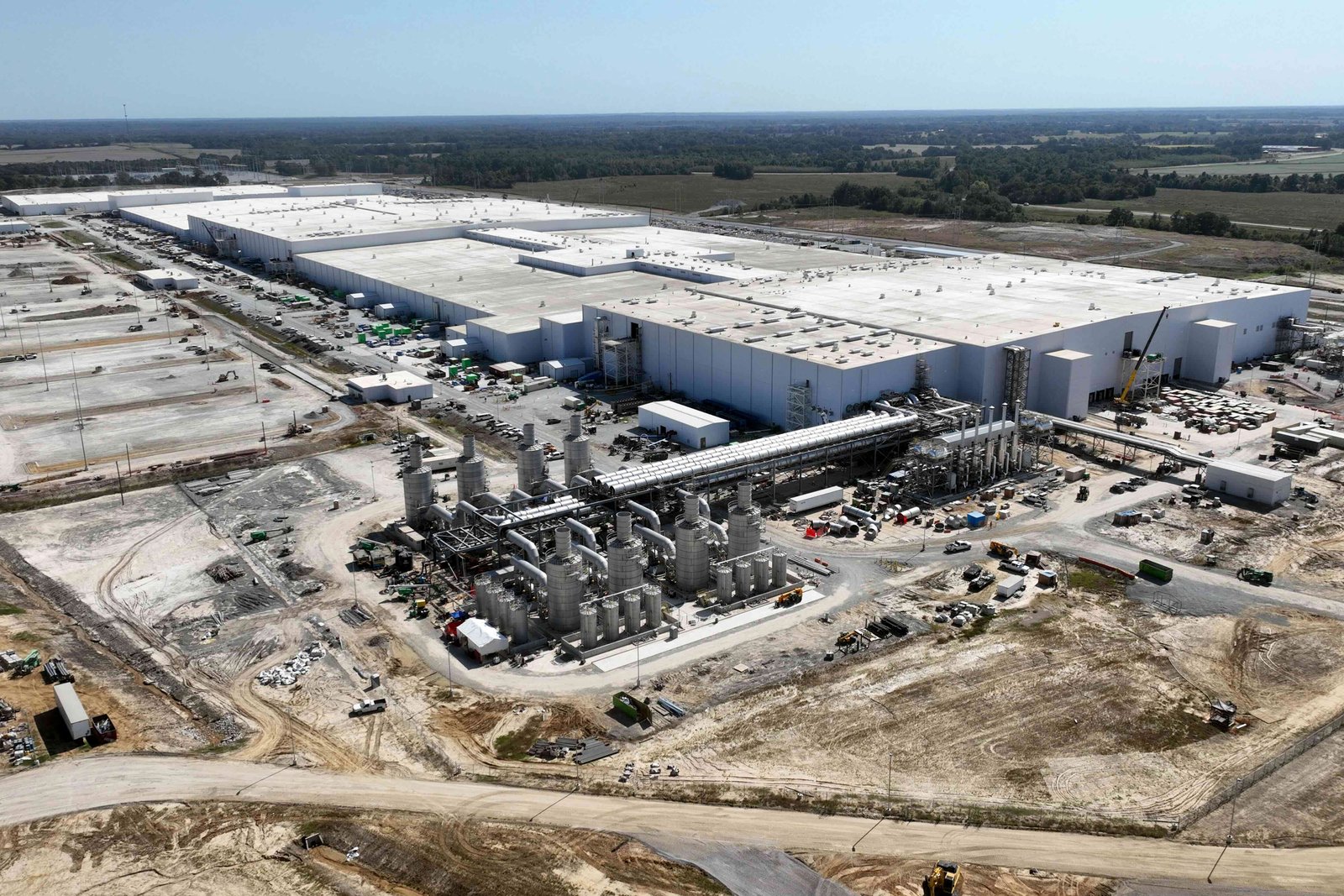
Vehicle plants have a reputation for being fast, but the first six months on site are slow by design. The owner is waiting on a utility service agreement, a paint and battery process that has not finished its design, and a body shop line that cannot ship until the foundations are cured and surveyed. In New Mexico that waiting happens on ground that rarely matches the plant's reference site, with cemented caliche in the borings, arroyo flow that crosses the parcel after a monsoon cell, and long hauls for anything not made in the region.
We build automotive and electric-vehicle plants as a ground-up industrial contractor, and the work is organized around the gate-to-gate steps an owner can follow: a permit to work for every crew, a laydown plan before steel is bought, a tie-in schedule agreed with the serving utility, and an inspection sequence that matches how the line will be commissioned.
The state is already moving vehicles and freight. A vehicle service and delivery center opened in 2023 on leased tribal land near Bernalillo, and the intermodal terminal at Santa Teresa gives a border-side plant a rail option most inland sites lack. Below is how we price, sequence and deliver this building type in that setting.
Where a New Mexico vehicle plant makes sense
Site selection here usually comes down to where freight enters, where power comes from and where the workforce lives. Santa Teresa answers the first question better than anywhere else in the state. A New Mexico Border Industrial Association presentation lists the Union Pacific intermodal terminal there with 74,000 feet of trackage expandable to 145,000 feet and 1,266 container and trailer parking stalls expandable to 4,380, and the Gateway Rail Park covers 1,100 acres beside the port of entry.
Farther north, the Innovation and Industrial Park in Las Cruces sits at the junction of I-10 and I-25 beside the city's international airport, with 400 or more acres listed as shovel ready and coverage under Foreign Trade Zone 197. For a supplier that defers duty on imported parts, that status changes the receiving layout we draw, because bonded and non-bonded material need separate controlled areas inside one fence.
What we build inside an automotive or EV plant
A vehicle plant is a set of buildings that share a fence. The main hall holds body, paint, trim and final assembly on a heavy slab with embedded trenches, pits and cable ways. Beside it sit the battery or powertrain hall, which may need tighter humidity and cleanliness control, a high-bay receiving area, and an energy building for chillers, compressed air and switchgear. Each has its own slab thickness, overhead loading and mechanical load.
The trade partners for structural steel erection work to the equipment supplier's embed and anchor bolt drawings, and we place floors to the flatness the line integrator specifies. We survey the foundations before the first conveyor is set and hand the integrator a written as-built package rather than a verbal assurance.
Foundations, slabs and underground work we manage closely
The work that decides a vehicle plant's schedule is mostly below grade. Press foundations, robot pedestals and the trench network for process water, drains and conduit must be cured and surveyed before equipment trucks arrive. We supervise the trade partners for excavation, forms, reinforcing, embedded steel and placement, and we agree the pour sequence with the integrator so a trench needed for a late drain is formed and protected, not backfilled and cut again.
Heavy electrical service is the other long pole. A plant like this is built around its substation, so electrical duct banks and underground work go in early, with the tie-in outage planned months ahead. In caliche we drill and break rather than trench blindly, and we log each duct run by depth and elevation.
Codes and the order approvals arrive in
Building permits are issued under the 2021 New Mexico Commercial Building Code (14.7.2 NMAC), which adopts the 2021 International Building Code as amended and took effect July 14, 2023. Electrical work follows the 2020 New Mexico Electrical Code. Occupancy classification, high-piled storage and any hazardous-materials control areas for batteries, paint and solvents are decided early because they drive fire separations, sprinklers and egress.
State plan review is one track of several. Stormwater, air permitting for paint operations and the local grading permit each run on their own clocks, and the order they land in decides when mass grading can start. Our permitting and entitlements coordination keeps one tracker so the owner sees which approval gates which activity.
What moves the number on a vehicle plant
Cost per square foot is a poor guide because the process, not the shell, sets the budget. The largest swings come from electrical service size and substation scope, slab design for heavy equipment, trench and pit complexity, and the mechanical systems for paint and battery areas. Geotechnical conditions add a range of their own: cemented caliche near grade raises excavation cost, and soft alluvial soil above it brings over-excavation and replacement fill.
We price these as allowances with explicit unit costs during preconstruction, then firm them as the integrator's drawings mature. A plant near a border port should also carry a controlled gate, scale and inspection area, which is why we show truck courts and trailer yards as a separate line. Owners comparing us with a manufacturing plant estimate should expect the process utilities to be the larger difference.
Send us the process drawings and the parcel
Give us the line layout, the utility load letters and the parcel boundary. We will walk the site, pull the borings, and return a sequence with the permit track, the tie-in dates and the equipment embed schedule laid out gate to gate. For supplier campuses see how we approach automotive and EV industry work.
Common Questions
How early do we need to talk to the utility about a vehicle plant's power service?
Before the site is bought if possible, and certainly before design is frozen. A plant of this type often needs a dedicated substation or a high-capacity feeder, and the serving utility has its own study, equipment lead time and outage window. We ask the process engineer for the load letter in the first week and schedule the tie-in as a milestone beside foundations.
Does the Santa Teresa rail terminal change how a plant is laid out?
It can. A plant that receives parts by rail needs a spur, a transfer area and turning room so trucks move containers to the dock without crossing the employee route. We keep the site plan flexible enough to add a spur later, with grading and drainage already set for it, and the same yard geometry carries over to a truck terminal and cross-dock if the owner adds one.
What does caliche do to a plant's foundation budget?
Cemented caliche can be competent bearing material, but it varies sharply across a parcel. A layer a few feet down may be hard rock in one boring and a soft pocket in the next. We ask for extra borings under the heaviest equipment, then decide whether to excavate through it, bench it or found on it, and the estimate shows both ranges.
Can the building start while process equipment is still being selected?
Yes, for the shell, utilities and foundations whose loads are known. We leave pits, trenches and heavy pedestals open on the drawings with marked blockouts and release them when the embed drawings are final. That keeps steel and enclosure moving without a cut into new slab later.
Related
Related Services
Related Building Types
Related Service Areas
Ready to talk about your project?
Request a Project ReviewOne project team for the whole sequence
Industrial Contractors of New Mexico reviews the site, the loads, the schedule and the approvals before pricing, then schedules, coordinates and inspects the specialty trade partners from preconstruction through closeout.