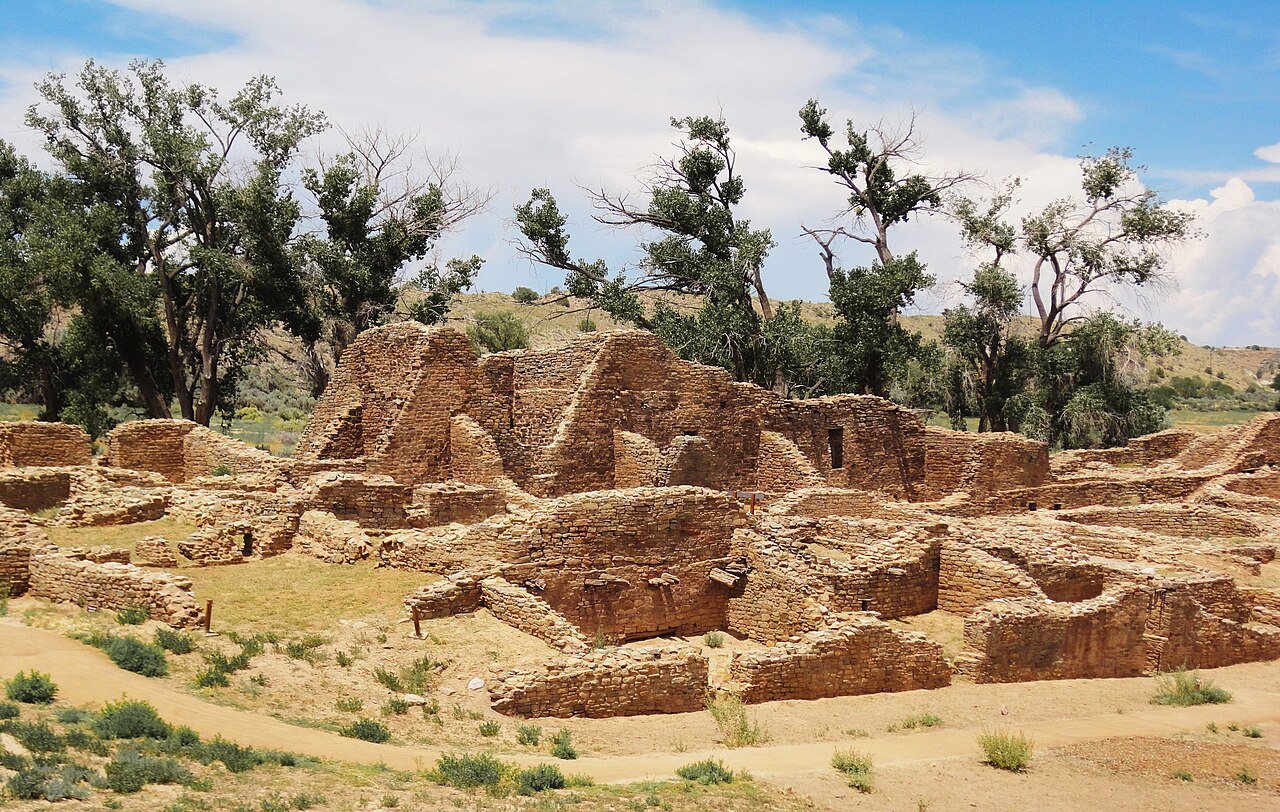
Water decides a lot of what gets built in Aztec. The Animas River flows south through town before it reaches Farmington, where it joins the San Juan River, and Aztec draws its own supply from the Aztec Ditch, the Lower Animas Ditch and the river. For an industrial owner, that means a lot near the river or an irrigation ditch comes with drainage, setback and easement questions that we raise at the first site visit and not after the footing is dug.
We build shops, service yards and process-support buildings for San Juan County operators, and we organize each job around the steps the owner will see from the gate: surveyed boundaries, a staged laydown area, a permit to work for excavation and tie-ins, then a documented turnover. Elevation here is 5,820 feet, which affects winter concrete practice, snow loads on roof framing and the length of the season in which we can place slabs without protection.
Two state routes shape how trucks reach a parcel. NM 516 and U.S. Highway 550 pass through Aztec, and U.S. 550 runs through downtown as Main Street. Anyone planning deliveries of steel or ready-mix has to account for that, so we route heavy loads to avoid the town center whenever the parcel allows.
Permits, inspections and the code in force
Construction in Aztec falls under the New Mexico Commercial Building Code, which adopts the 2021 International Building Code as amended, effective July 14, 2023, replacing the 2015 code. Drawings prepared before that date sometimes need to be reviewed against the newer requirements, particularly for structural loads, egress and energy compliance, and we flag those gaps during preconstruction rather than during plan review.
Our permitting and entitlements coordination covers the full path: the building permit, the grading and drainage review, any approval needed to cross or work near an irrigation ditch, and the electrical and mechanical permits that follow. We keep a single tracker of submittals and comments, and we give the owner an honest date for each approval instead of a hopeful one.
What we manage most closely on a San Juan County job
We closely schedule and supervise the concrete, the site work and the structural erection on these projects. That means the same crew that grades the pad also forms the footings and places the slab, which cuts down on the hand-offs between trades and keeps the schedule in our hands. The equipment operators run excavators, loaders and compaction equipment, and the concrete finishing trade partners place and cure floors to the flatness the owner specifies.
Underground work is a particular strength. Site utilities are installed in a planned order with pressure tests and inspections recorded before backfill, and fire water loops and hydrant systems are laid out with the fire authority's review in mind. Because the owner sees one crew from clearing to turnover, questions about quality and responsibility have one answer.
Ditches, easements and the shape of the lot
Aztec's irrigation heritage leaves a network of ditches, easements and older property lines that do not always match current survey data. On a new lot we ask for a boundary survey with easements shown, and we locate every ditch, lateral and buried utility before we mobilize. If a ditch crosses the parcel, we meet the ditch operator early to agree on crossing details and on how water will be kept flowing during construction.
Runoff is the other concern. Drainage on a site near a river or a ditch has to leave the parcel at a rate and location the approving authority will accept. We shape the yard so water moves to a single controlled outfall, set the finished floor above expected flood and ponding levels, and keep construction runoff out of the ditch with perimeter controls that we inspect after every rain.
Who we build for in this part of the county
The owners who call us from Aztec tend to run service, fabrication and supply operations that need a durable building and a good yard. Metal fabricators and repair shops fit the profile of metals and heavy industry, where crane rails, heavy floors and clear working height drive the design. Operators moving freight along the U.S. 550 corridor show up on the logistics and distribution side, wanting truck courts and dock aprons.
A building for one of these users is not a generic box. A fabricator may need a thickened slab under a press brake, embedded plates for equipment and a power drop sized for a welding bay. A logistics user may need a turning radius for a particular trailer and a canopy over the dock. We ask those questions before drawings are final so that the building matches the work from day one.
Sequencing around the U.S. 550 corridor
U.S. 550 is a four-lane divided road with 70 mph limits except through towns, and the stretch between Bloomfield and Bernalillo was widened to four lanes in a project costing a near $300 million, completed in 2001. Anyone hauling material toward Aztec benefits from that upgrade, but the posted speeds drop in town and trucks slow sharply at the Main Street crossings. We build that into delivery windows and we avoid scheduling large placements at times when school or commuter traffic congests the route.
Our schedules show every critical delivery, inspection and shutdown on a weekly look-ahead. When winter conditions arrive, we adjust: insulated forms, heated enclosures and accelerated mixes are priced as options so the owner can decide whether to keep placing concrete or to hold work until conditions improve.
Working across the Animas and San Juan valleys
From Aztec we reach the neighboring communities quickly. Bloomfield lies a short drive down the same highway, and Farmington is where the Animas joins the San Juan River. We staff all three markets from the same field organization, so an owner with sites in more than one town deals with one project manager and one safety program.
Operators who run a regional yard often want identical buildings in more than one location. Our programmatic approach to multi-site work reuses the same design package, the same material suppliers and the same inspection checklists, which saves owners time and gives them a consistent building at each site.
Have a parcel in Aztec in mind?
Send us the survey, the use and the target date. We will walk the lot, mark the ditches and easements, and return a scope that sets out access, permits and tie-ins in the order they will happen.
Common Questions
Does the Aztec Ditch or the Animas River limit where I can put a building?
Possibly. Parcels near the river or a ditch can have setbacks, floodplain mapping and easements that restrict where a building, a yard or a retention basin can go. We obtain the survey and easement information first, and we meet the ditch operator when a crossing is likely. A site plan that respects those limits avoids redesign after permits are filed.
Which building code applies to a new industrial building in Aztec?
The New Mexico Commercial Building Code, which adopts the 2021 International Building Code as amended and took effect July 14, 2023. It replaced the 2015 code. Plans prepared under the old code are generally reviewed against the new one, so we check structural, egress and energy requirements before submittal.
How does altitude affect a concrete slab in Aztec?
At 5,820 feet, the air is dry and temperatures swing widely between day and night. That speeds surface drying and raises the risk of plastic shrinkage cracks, so we use windbreaks, evaporation retarders and prompt curing. In winter we use insulated blankets or heated enclosures and mixes designed for cold placement.
Can you handle the whole job from grading to turnover?
Yes. Clearing, grading, utilities, drainage, foundations, slab, steel erection and paving are all within our scope, and the same project team carries the job from start to finish. We assign one project manager so questions about schedule or quality have one answer.
Related
Related Services
Related Industries
Ready to talk about your project?
Request a Project ReviewOne project team for the whole sequence
Industrial Contractors of New Mexico reviews the site, the loads, the schedule and the approvals before pricing, then schedules, coordinates and inspects the specialty trade partners from preconstruction through closeout.