Trucks reach Bloomfield from two directions at once, and that is the first thing we price into any yard or terminal here. U.S. 550 enters town and briefly overlaps U.S. 64 before continuing to Aztec, so a parcel near the overlap sees traffic bound for several destinations. We build truck courts, dock aprons and shop buildings for San Juan County operators, and we plan each one from the turning movement at the driveway inward.
The highway itself has been upgraded. The stretch of U.S. 550 between Bloomfield and Bernalillo was widened to four lanes in a project costing a near $300 million, completed in 2001 because of high accident rates. For an owner choosing a site, that history means a safer, higher-capacity route to the south, and for us it means entrance design that respects the safety record: adequate sight distance, a deceleration lane where the highway department requires one and a driveway that does not force a loaded trailer to swing across the center line.
Bloomfield sits at an elevation of 5,614 feet, a little lower than Aztec to the east, and its winters are still cold enough that we plan concrete placement with protection from the first freeze forward. We tell owners at the start which months give the widest working window.
From driveway to dock door
A typical Bloomfield project begins with entrance and yard geometry and ends with a building the operator can occupy. We clear and grade the lot, set a compacted base for the truck court, install drainage, pour the slab, erect the frame and finish the envelope. If the owner already has a building, the scope may be limited to truck courts and trailer yards, new pavement or a concrete pad where trailers park.
Dock work is where small mistakes show up. Dock aprons and loading zones take repeated heavy wheel loads on a small area, so we specify reinforced concrete with a base that will not pump under traffic, slope the pavement away from the door and place dock leveler pits to the manufacturer's tolerance. We confirm trailer heights with the owner so the dock height suits the fleet that will actually back into it.
Terminals, cross-docks and equipment shops
Operators on this corridor ask for buildings that fit a particular fleet or service line. A truck terminal or cross-dock needs doors on both long walls, a wide apron and a floor that survives forklifts running between trailers all day. A service shop needs high doors, a floor drain system and a slab that can be sloped for wash bays. Many owners combine them, with an office and driver amenity area at one end.
We also build open-sided canopies and equipment enclosures that sit beside a main building. Because Bloomfield is a small market, a single building often has to serve more than one purpose, so we design for adaptability. Door positions, clear height and power service are chosen to work for the first user and still be useful to the next.
Cultural sites and the approval path along Highway 64
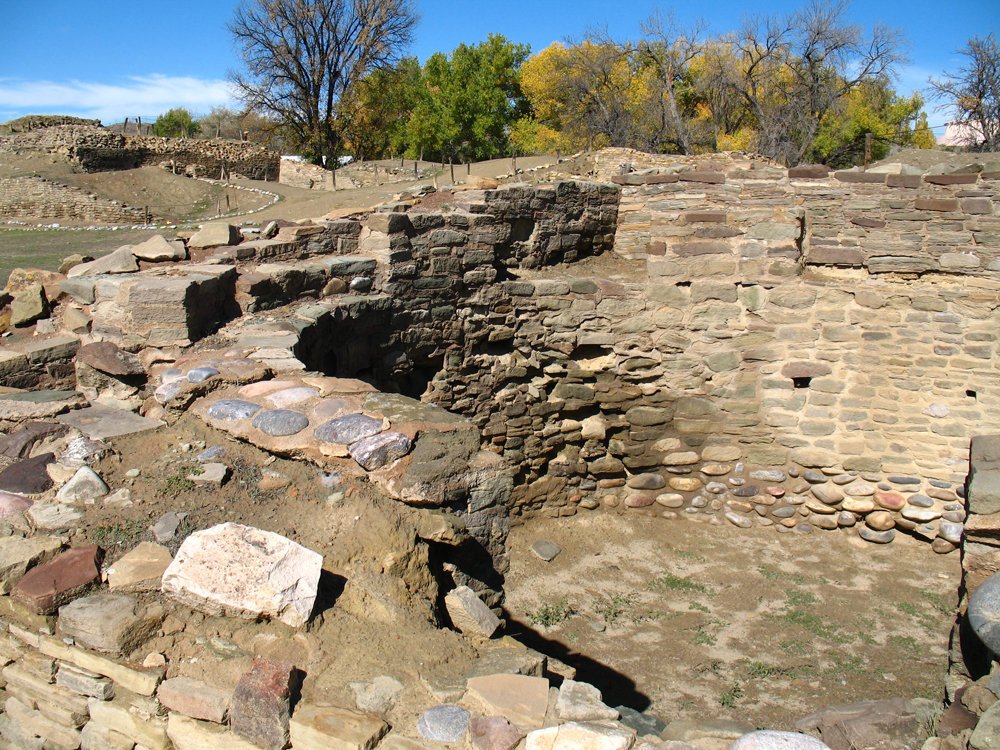
Salmon Ruins lies just west of Bloomfield along Highway 64, so we expect cultural resource questions on some parcels along the highway. Before we grade a parcel in that setting, we ask the owner whether a cultural resource review has been completed and whether any approving agency requires one. If a review is needed, it can add weeks, so we place it at the front of the schedule and keep the rest of the preconstruction work moving beside it.
The same caution applies to utilities. Rural parcels often have no public sewer or limited water service, so tie-in distances can dominate the budget. We obtain utility availability letters early and show the owner the cost of extending service next to the cost of an on-site alternative. Aztec, up the same highway, raises similar questions about ditches and easements.
Where the money goes on a corridor yard
On a truck-oriented site, pavement is usually the largest single line. The thickness of the section depends on the soil, the number of heavy axles and whether the owner wants concrete or asphalt. We compare lifecycle cost and not just first cost, because a concrete court at a high-traffic dock often outlasts several rounds of asphalt repair.
Utilities and drainage come next, followed by the building. We give owners a range early, using allowances for items still to be confirmed, such as rock, groundwater or utility extensions, then narrow the range as drawings and reports arrive. Choices like a taller eave, a larger canopy or a second dock door are shown as separate adds so the owner can see the price of each.
Services that pair with a Bloomfield build
Owners often need parking for employees and visitors along with the work yard. Stabilized parking lots use a compacted base, proper drainage and surfacing sized to the traffic, and we usually build them in the same mobilization as the truck court so the equipment stays on site.
Operators who support energy and power customers often ask about utilities and power work, including equipment pads, switchyards and enclosures. We build those with the same safety program and permit to work procedure as our building projects, and we coordinate outages with the owner's operations staff. The same crews and procedures follow U.S. 550 south, so an owner with a second site near Bernalillo keeps one safety program and one point of contact.
Looking at a Bloomfield parcel for a yard or shop?
Send us the address, the fleet and the target date. We will review the highway access, mark the utilities and return a scope and schedule with every approval and delivery shown in order.
Common Questions
How wide should a driveway be for tractor-trailer traffic off U.S. 550?
The width and geometry depend on the trailer length, the highway department's access requirements and the angle of approach. Many owners need wide throats with generous radii and a stacking lane that keeps queued trucks off the road. We lay out the design with swept-path drawings for the owner's actual fleet and submit it for state review before final pricing.
Does being near Salmon Ruins slow permitting?
It can if a parcel falls within an area that requires a cultural resource review. The review is handled by qualified specialists and the approving agency, and its timing varies. We ask the question at the start and run the review in parallel with design so that it does not hold up the rest of the schedule.
Will a concrete truck court cost much more than asphalt?
Concrete usually costs more up front, but it resists the rutting and fuel spills that damage asphalt at a busy dock. For a site where trailers park and turn in the same spots, concrete often wins on lifecycle cost. We price both options and show the difference in first cost and expected maintenance.
Which code governs the building itself?
The New Mexico Commercial Building Code adopts the 2021 International Building Code as amended, effective July 14, 2023, replacing the 2015 code. We confirm any local amendments and design the structure, egress and energy envelope accordingly. Mechanical, electrical and plumbing permits are issued separately under their own state codes.
How early should I bring a contractor in on a Bloomfield site?
As early as you have a parcel under contract. Preconstruction input on access, drainage and utilities can change the layout and save money, and our early review of the survey and soils report often finds issues before they become change orders.
Related
Related Services
Related Building Types
Ready to talk about your project?
Request a Project ReviewOne project team for the whole sequence
Industrial Contractors of New Mexico reviews the site, the loads, the schedule and the approvals before pricing, then schedules, coordinates and inspects the specialty trade partners from preconstruction through closeout.