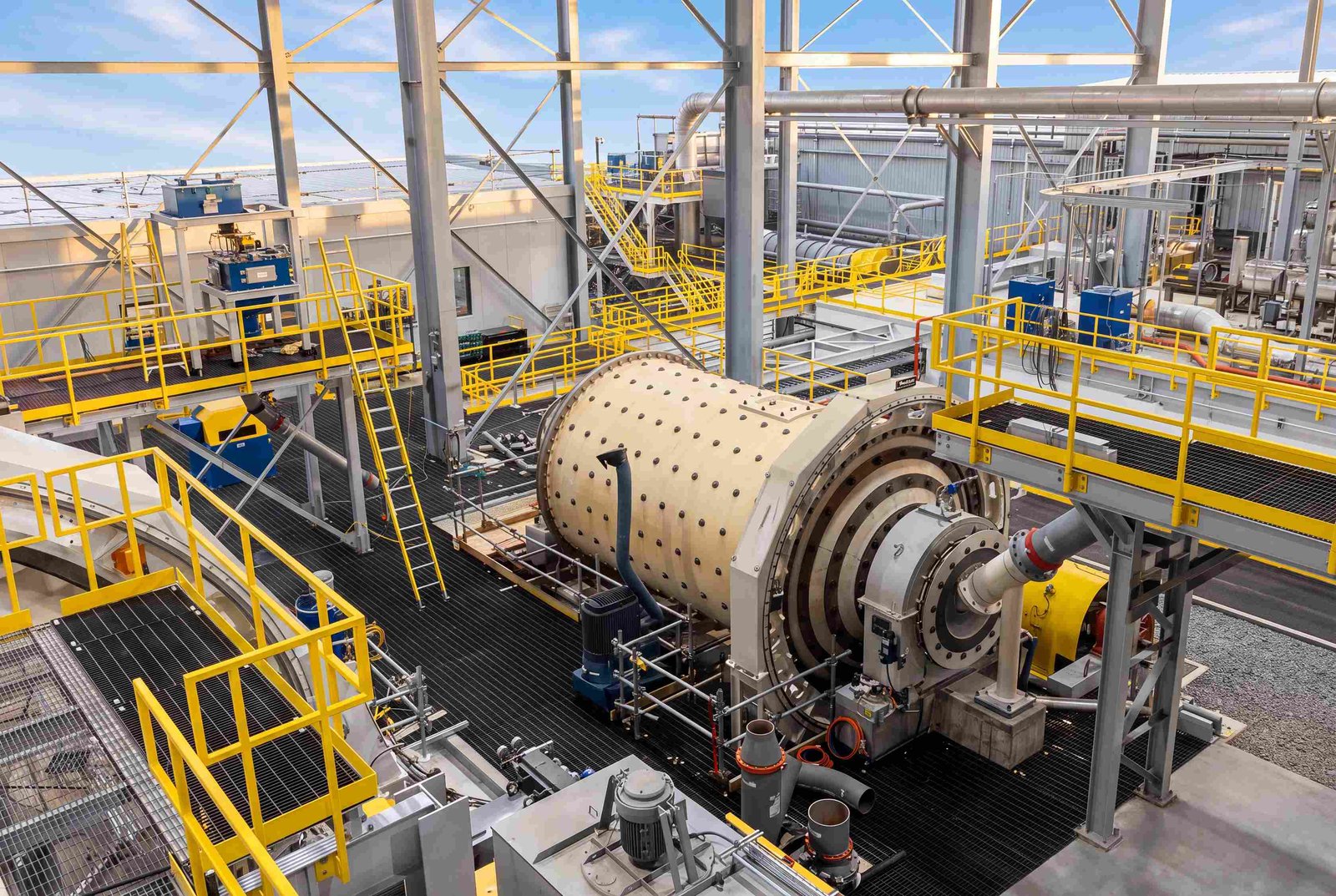
Foundations for heavy industry are sized by the worst day the equipment will ever have, not the average one, and that changes how a contractor reads a drawing. We build mill buildings, crusher and conveyor foundations, process pads, maintenance shops and access roads for mining, refining, potash and metals operators in New Mexico, and we plan the work around the operating plant that sits beside it.
The state's heavy industries sit on its geology. The Chino Mine, owned by Freeport-McMoRan subsidiaries, is in Santa Rita, 15 miles east of Silver City, and its operations employed approximately 1,035 people as of January 2014. Mosaic and Intrepid potash mines operate east of Carlsbad, and the city also sits over Permian Basin oil and gas formations. Near Grants, a uranium discovery sparked a mining boom that lasted into the 1980s. In Artesia, a refinery is described as the largest in New Mexico, and in Lea County EnergyPlex Park covers more than 9,600 acres.
The buyers are plant managers, maintenance and reliability engineers, and corporate engineering staff. They ask about shutdown windows, hazardous area classifications, crane clearances and how a contractor will keep an operating process safe while heavy work goes on next door. We answer with a plan that names each hazard, each permit and each person who can stop the work.
Working Next to an Operating Process
The first rule is separation. Before we mobilize, we walk the site with the owner's operations and safety staff, mark the boundaries of our work area and identify the lines, vessels and electrical equipment that must stay untouched. Every task that could reach an energized or pressurized system needs a permit to work, signed by the owner's operator and by our superintendent, and reviewed again whenever conditions change.
Hot work, excavation, crane lifts and confined space entry each have their own permits and gas tests where the process requires them. We bring our own gas monitors and rescue plans, hold daily briefings in the field and keep an updated drawing of underground utilities. During a shutdown, work runs on a task-by-task schedule posted at the gate, and the shutdown manager can see progress hour by hour. No tie-in is made until isolation is confirmed in writing.
The Resource Economy and What It Needs Built
The Silver City area depends on copper, and a mine is an enormous consumer of construction: haul roads, crushers, maintenance shops, tailings structures and water systems. Carlsbad adds potash and a long-running federal waste isolation facility 26 miles to the southeast, which disposes of transuranic waste in a salt formation 2,150 feet below the surface and employs about 1,000 people.
In the Permian Basin counties, horizontal wells in Lea and Eddy counties produced 29 percent of Permian crude oil in the first quarter of 2023, about 1.7 million barrels per day, according to the federal Energy Information Administration. That output supports a service economy of yards, shops, pump stations and processing, and the work centers on Artesia and on Hobbs, where mining and oil and gas extraction are the largest industries. These operations often need quick construction: a shop or a pad that is ready when the equipment arrives. Our project teams are accustomed to remote locations and to working with the local rail and highway network.
Heavy Work We Manage Most Closely
Heavy industrial work depends on earthwork, concrete and steel, and we schedule, supervise and inspect each of those trades closely. That includes excavation in caliche and rock, deep foundation piers for loads that spread poorly in shallow soil, heavy mat and pedestal foundations, and structural steel erection for mill buildings, platforms and pipe racks. We hold pre-pour meetings with the owner's engineer on each major placement, including cold weather and hot weather plans when the season requires them.
Road work is as important as the structures. Equipment and materials travel on heavy-haul access roads that we design for the axle loads the delivery will impose, with subgrade reinforcement and drainage to keep them passable after a storm. Crane pads, laydown areas and temporary access are built to the same standard, because a rig that sinks into a soft pad stops everything.
Cost Drivers in Remote Heavy Projects
Distance is the first driver. Mobilizing crews, housing them and bringing in materials from a city three hours away adds cost that does not appear in a unit price. Next come the foundations: rock, caliche and groundwater can change the quantities, so we recommend geotechnical borings at each major load and a clear process for adjusting the price when conditions differ.
Shutdown work is priced differently from ordinary work. Premium labor, extended shifts and expedited materials are normal during an outage, and the penalty for missing the restart date is far higher than the premium. We build the estimate by task, show the owner which tasks can be done before the shutdown starts, and move as much work as possible outside the critical window. If you are comparing sites, our page on utilities and power shows how similar logic applies to energy facilities.
Environment, Water and Weather
Mines, refineries and mills face scrutiny from regulators and neighbors, and construction must follow the same standards. Stormwater permits, dust control and spill containment are in place before ground is disturbed, and we keep records of what each crew did and when. Desert thunderstorms can send water through arroyos and across work areas quickly, so we plan for temporary diversions, sediment control and an evacuation route for equipment.
Winter matters at higher elevations. Silver City sits at 5,919 feet, and Grants at 6,454 feet, so concrete placement needs cold weather protection in some months, and haul roads may ice. Summer heat affects worker safety and concrete setting times. We plan shifts, hydration and curing to match the season. Owners whose products end up in vehicles will find the finishing and assembly side of that chain on our automotive and EV page.
Walk the Site With Us
Share the process area, the shutdown window and the load data, and we will prepare a safety plan, a sequence and a price that match the way your plant operates.
Common Questions
Can you build inside an active refinery or mine site?
Yes. We work under the owner's permit to work system, complete the required orientation, and keep everyone on our site inside a marked work zone. Anything that touches an operating process is isolated and verified by the owner before we begin.
How do you handle shutdown schedules?
We break the shutdown scope into tasks, assign each a crew, a duration and a predecessor, and post the plan where the shutdown manager can see it. Work that can be done earlier, such as prefabrication and foundations, is moved out of the critical window.
What if the geotechnical report does not match what we find?
We write unit prices for rock, caliche and dewatering into the contract so that a different condition has an agreed price instead of a dispute. We also call the engineer when we hit a change and document it the same day.
Do you build remote sites away from towns?
We do. We set up a staging area, arrange crew lodging or travel, and plan fuel, water and materials in advance. Distances in New Mexico are long, so schedule float for deliveries is built into the plan.
How are heavy loads handled during construction?
Equipment and large components travel on routes we design and test, with permits for oversize loads where required. Crane pads and lift plans are prepared by the rigging team and reviewed before each lift.
Related
Related Services
Related Industries
Related Service Areas
Ready to talk about your project?
Request a Project ReviewOne project team for the whole sequence
Industrial Contractors of New Mexico reviews the site, the loads, the schedule and the approvals before pricing, then schedules, coordinates and inspects the specialty trade partners from preconstruction through closeout.