The South Fork Fire, first reported near Ruidoso on June 17, 2024, burned 17,569 acres and destroyed more than 1,400 structures. For anyone building an industrial site in New Mexico, it is a reminder that fire protection is not paperwork. When the public main is small, far away or stressed, the fire water loop on your site may be what the fire department and your insurer rely on.
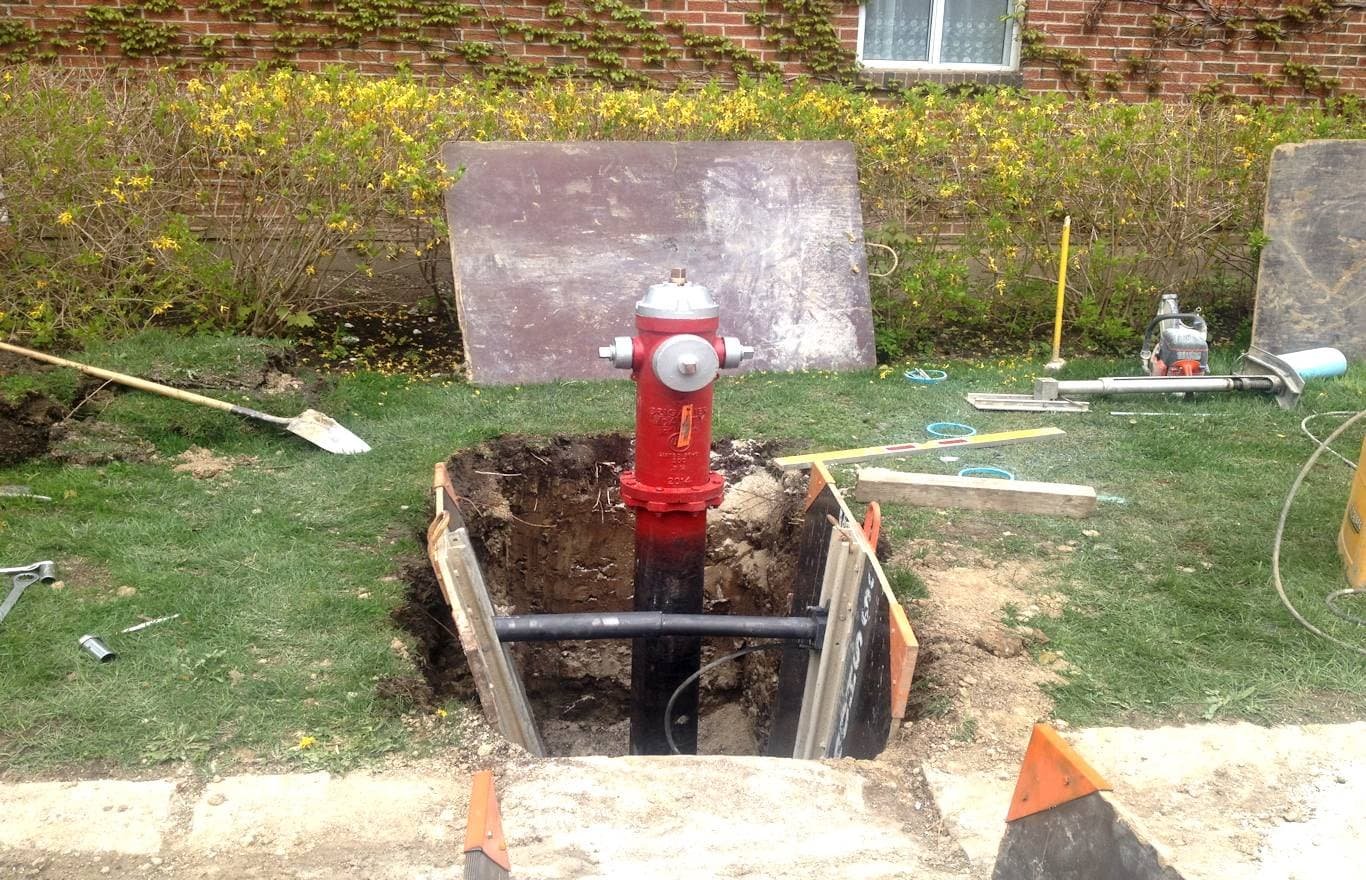
We build the private fire service system from the connection at the public main to the building risers: the underground loop, valves, hydrants, post indicator valves, fire department connections and, where needed, the fire pump and storage tank. Each piece is placed according to the approved plans, installed to the standard the authority adopts and tested under witness before it is accepted.
Owners come to us in two situations. Some have a municipal main with adequate flow and need a clean, well-built loop. Others have a remote site where the supply is a tank and a pump, and the system has to work without anyone nearby to help. We approach both with the same discipline: confirm the supply, build it correctly and prove it works.
Testing, witnessing and acceptance
Every fire main goes through hydrostatic pressure testing, flushing and, where required, disinfection before connection. The authority having jurisdiction or the insurer's representative often witnesses these tests. We schedule them in advance, prepare the system and record the results on forms that become part of the turnover file. Flow tests at the hydrants confirm that the system delivers the design flow at the required pressure.
During construction, safety is a matter of trench and pressure. Thrust restraint is checked before a main is pressurized, test sections are barricaded and only authorized personnel are allowed in the zone. When a loop has to be tied into a live system, we plan an isolation with the provider, confirm valves hold and keep the tie-in crew small and briefed. If a fire system is impaired during a tie-in, we coordinate a fire watch with the owner.
Components we install
The scope includes ductile iron or PVC fire service pipe as specified, gate and butterfly valves with indicator posts, hydrants with breakaway flanges, thrust blocks or restrained joints, backflow assemblies, fire department connections, and pipe protection at road and rail crossings. For sites without enough pressure, we install fire pump houses, jockey pumps and storage tanks coordinated with the fire protection designer.
We pay attention to placement. Hydrants must be reachable by apparatus, clear of dock aprons and truck turning paths, and spaced as the plan requires. Valves must be located so that a break can be isolated without losing the whole loop. We confirm these locations with the owner's operations team and, when requested, with the local fire marshal before the pipe is laid. The loop is built with the same crew that installs the rest of the site utilities package, which reduces crossings and conflicts.
Which standards and approvals apply
Private fire service mains are generally designed and installed to the fire protection standards the authority adopts, typically NFPA 24 for the underground piping, and reviewed alongside the building's sprinkler design. The fire marshal or building department reviews the plans, and the owner's insurer may add requirements. We build only to approved drawings and keep a current set on site with the red lines.
The plumbing and mechanical side is changing. The 2024 New Mexico Plumbing Code and Mechanical Code take effect August 1, 2026, with permits issued under either the 2021 or 2024 edition until January 1, 2027. Where a loop connects to building risers and backflow devices, we confirm which edition the permit set follows so inspections go smoothly. Underground fire lines also routinely share corridors with underground electrical duct banks, and we coordinate separation at crossings.
What decides the price
Loop length, pipe size, number of hydrants, depth of cover and ground conditions set the base. Caliche and rock raise trench cost, as does shallow groundwater. A site that needs a pump and tank has a very different budget from one that connects to a strong municipal main, and the difference can be larger than the cost of the loop itself.
Industrial processes with a high fire load push the design up. The HFSinclair Navajo Refinery in Artesia, described as the largest refinery in New Mexico, is an example of the kind of facility where fire water capacity is a central design feature. For owners in metals and heavy industry and for large distribution centers with high-piled storage, we explain early how flow and storage requirements affect cost. Retrofit loops at occupied plants add phasing cost too, as we describe in our commissioning and closeout work.
How we sequence a loop
We confirm supply first: a flow test at the nearest public hydrant or a documented tank and pump arrangement. Then we stake the loop, locate and protect other utilities and excavate. Pipe is laid to grade with proper bedding, restraints are installed and joints are inspected before backfill. Hydrants are set at the specified elevation, with drainage stone at the base.
After backfill, we flush the line, pressure test it with the inspector present and record the results. Hydrants are painted, caps greased and valves exercised and tagged. At turnover, we provide a valve and hydrant map, test certificates and a maintenance sheet for the owner's fire safety team. If a municipality or district takes over any portion, we prepare the acceptance package they require.
Confirm the fire water supply early
Send us the building, the storage type and the site plan. We will review flow data, outline the loop and tell you whether a pump and tank are likely.
Common Questions
What if the public water main cannot deliver the flow the building needs?
The fire protection designer will usually specify one of three solutions: a larger connection to the public main, a booster pump or an on-site tank with a pump. We install whichever the approved plans require and help with the cost comparison early, because the tank and pump option can change the site layout.
Who witnesses the tests?
Typically the fire marshal's office or the building department, sometimes with the owner's insurance representative. We book the test date, prepare the system and have our foreman on hand with the gauges and records. We do not call the system accepted until the paperwork is signed.
How often do hydrants need maintenance?
The owner's fire safety program sets the schedule, but at a minimum hydrants should be flushed and operated regularly, and valves should be exercised. We provide a map and a maintenance sheet at turnover so the plant's team can set up the routine.
Can a loop be added to an operating plant?
Yes, using phased work and planned isolations. We locate existing lines, coordinate shutdown windows with the operations lead, and set up fire watch during any impairment. The tie-in is the highest-risk moment, so we rehearse it.
Do fire lines have to be separated from other utilities?
The plans and local rules set minimum separation from sewer and electrical lines, and we follow them. We also pothole crossings and mark the corridors so later work does not strike the main. A clear utility map avoids most problems.
Related
Related Services
Related Building Types
Related Service Areas
Ready to talk about your project?
Request a Project ReviewOne project team for the whole sequence
Industrial Contractors of New Mexico reviews the site, the loads, the schedule and the approvals before pricing, then schedules, coordinates and inspects the specialty trade partners from preconstruction through closeout.