Small-bay shops, trade contractor yards and light-duty service buildings are the typical industrial projects in Los Ranchos de Albuquerque, and they succeed or fail on one thing: fitting a working site onto a narrow valley lot without disrupting the neighbors on every side. We build those projects with a field crew that plans the tight spots first, which means the entrance, the turning space for a service truck and the single place where materials can be stored.
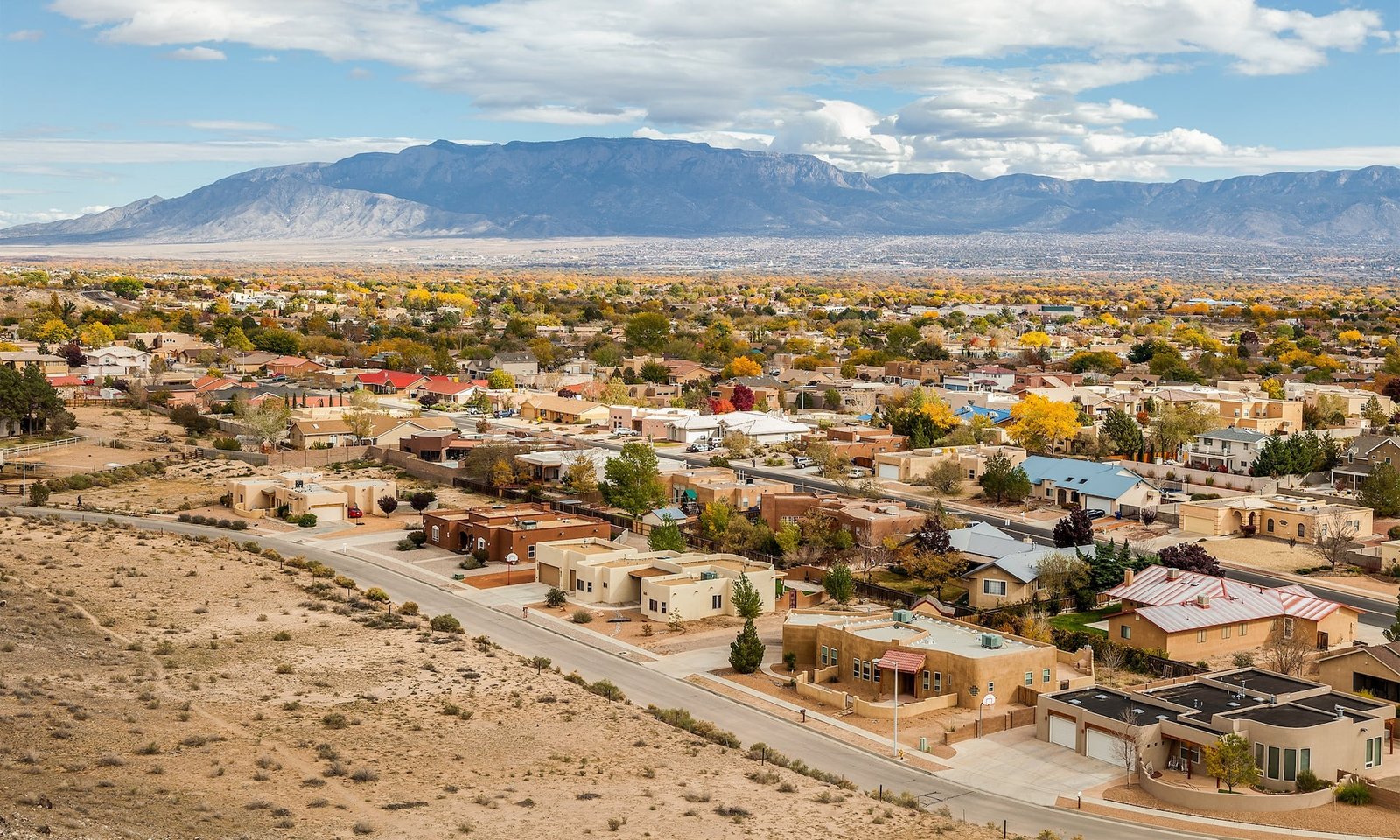
The village lies on the east side of the Rio Grande at an elevation of 4,984 feet, and it is surrounded on three sides by the larger city of Albuquerque, with a total area of 4.4 square miles, all land. That geography has practical consequences for construction. Water, sewer, power and roads may come from several different providers depending on which side of a line a parcel sits on, and an owner can be a block from a large industrial district and still be subject to a different set of rules. We sort out who serves the lot before we price the work.
The valley also has an agricultural past. Subdivisions and estates began to appear along Rio Grande Boulevard in the early 20th century after the railroad reached Albuquerque, while the valley continued to hold many farms and ranches. Older lots, odd shapes and old easements are the legacy, and a careful survey is the first step on almost every job.
An infill market beside a large industrial district
Because the village is surrounded by Albuquerque, many of its buyers are businesses that want a base close to the city's customers and suppliers but do not need a large warehouse. Landscapers, electricians, mechanical contractors, equipment servicers and food producers use small buildings with a yard, a few bays and an office. They want quick access to the major roads and a location that feels like the valley and not a business park.
We also see owners of larger operations in Albuquerque who need a satellite building for a crew or a specialty function. For them, a village parcel is a way to place a small facility close to customers without taking on the cost of a large industrial lot. Our estimates show both options side by side so that the owner can decide which one fits the operation.
Tight lots, old easements and shared boundaries
The lot is rarely square, and the property line is rarely where a fence suggests it is. We begin with a boundary and topographic survey that shows easements, ditches and utilities, and we verify it with a walk of the site. Setbacks, height limits and parking rules come next, and we draw several building footprints on the lot to see which one leaves the most usable yard.
Construction logistics get as much attention as design. On a narrow lot, a concrete pump and a mixer cannot sit side by side, so we plan the pour sequence around access. Stockpiles are small, materials arrive when they are needed and the street is kept clear. Where the parcel has a shared driveway, we agree with the neighbors on work hours and on a way to reach us if an issue comes up. A neighbor who has our phone number is a neighbor who calls us instead of the village office.
What we manage most closely here
On small sites, tight scheduling is a clear advantage because there is no room for several subcontractors waiting on one another. We schedule and inspect the lot grading, underground utilities, slab, frame and envelope. When the project calls for concrete flatwork around the building, site concrete and ADA compliance work is built with the correct slopes, landings and curb ramps so that the finished lot passes inspection the first time.
Lighting and electrical work around the yard also matters for safety and for neighbors. Yard lighting and electrical site work is aimed to light the work area without spilling into the adjoining homes and fields. Fixtures are shielded and placed at heights that serve the operation, and the controls let the owner switch off lights when the shop is closed.
What changes the price of a small-bay project
On a lot this small, the building is a smaller share of the cost than on a large site. Utilities, drainage, paving and entrance work make up a bigger proportion, and each can be affected by the village's rules and by neighboring providers. A tie-in that crosses a street may need a permit and a traffic plan, and a drainage solution that works on a larger parcel may not fit when there is no space for a basin.
We keep prices clear by splitting the budget into site work, building shell, interior and owner-requested options. The owner can then see which items drive the total and where to adjust. A package such as small-bay contractor condos can lower the cost per owner when several small users share one site, because the utilities and the yard are shared too.
Beyond the village line
Los Ranchos is bounded by the city on three sides, so most owners also look at nearby alternatives. Corrales offers a quieter valley setting with different utility challenges, and Mesa del Sol provides large planned industrial parcels at the southern edge of the metro area. We build in all three and can help an owner compare them.
Food producers and processors with roots in the valley sometimes ask about expanding. Those users belong to the food and beverage group and need sanitary floors and drains, a receiving dock and a cooler, and we assess whether a village parcel can support those requirements or whether a larger lot is the better choice. The code basis is the same everywhere in the state: the 2021 New Mexico Commercial Building Code, which adopts the 2021 International Building Code as amended.
Thinking about a small building in Los Ranchos?
Send us the survey, the use and your preferred start. We will check the lot, confirm who serves it and return a scope that shows the yard, the building and each approval in order.
Common Questions
Which utility providers serve a Los Ranchos parcel?
It depends on the parcel. Because the village is surrounded by Albuquerque, water, sewer and electric service may come from different providers depending on location, and some lots may have unusual arrangements. We request availability letters from each provider and map the connection points before design so that you know the cost of service.
Can a contractor yard operate legally in a village setting?
That depends on the zoning of the parcel and the village's rules for outdoor storage, vehicles and hours. We ask the village what uses are allowed, what screening is required and what conditions might apply, then lay out the yard to comply. It is better to know before you buy.
What is the fastest way to get a small shop built?
A simple steel building on a flat lot with utilities at the property line can move quickly once approved. The permit is usually the longest step. We prepare the submittal early, order long-lead items such as overhead doors and electrical gear at award and build in the order that avoids rework.
How do you keep construction from bothering the neighbors?
We set working hours, control dust with water, keep trucks off the shoulder and give neighbors a contact number. Noisy operations are scheduled for the middle of the day. Stockpiles stay small and covered, and the street is swept regularly.
Related
Related Services
Related Service Areas
Ready to talk about your project?
Request a Project ReviewOne project team for the whole sequence
Industrial Contractors of New Mexico reviews the site, the loads, the schedule and the approvals before pricing, then schedules, coordinates and inspects the specialty trade partners from preconstruction through closeout.