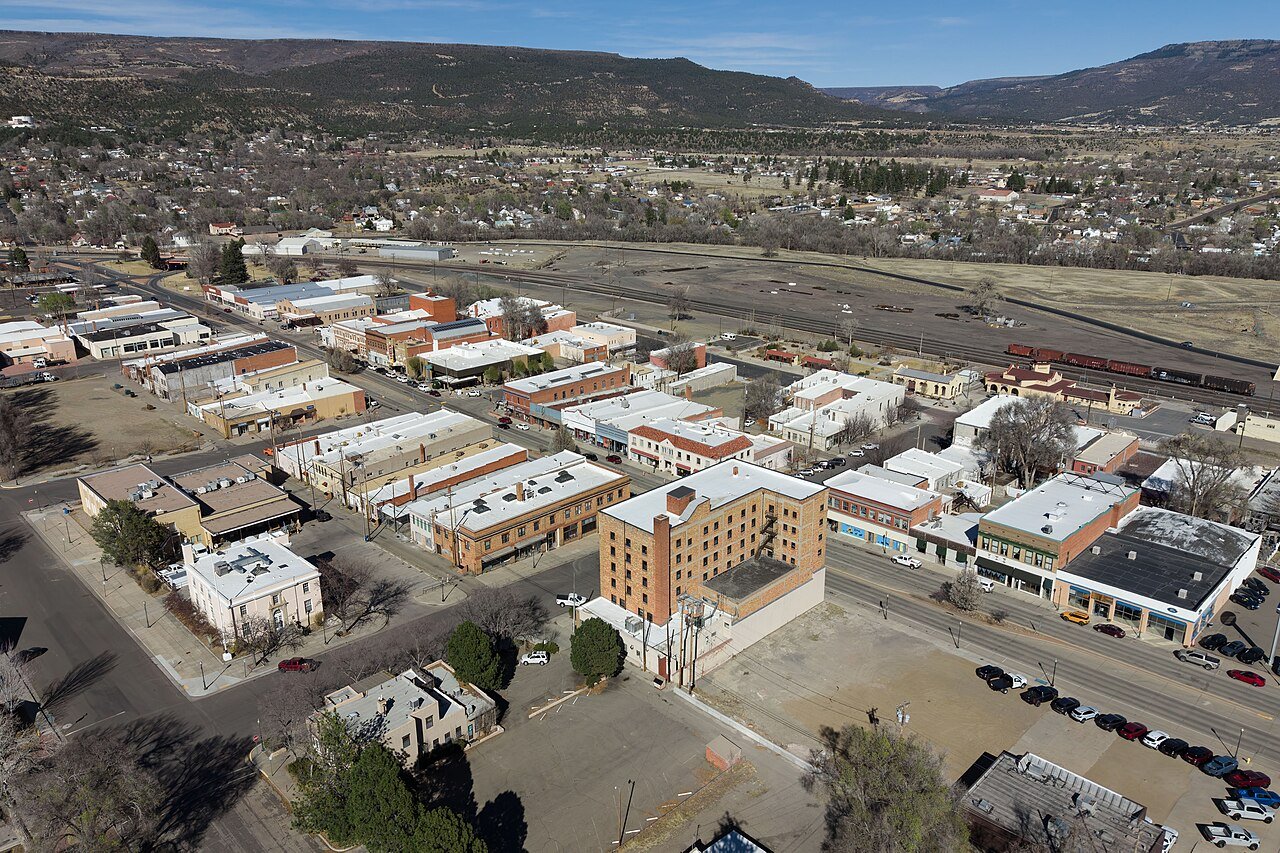
When Raton Pass closes, trucks stop arriving from the north, and a Raton schedule has to assume that day will come. I-25 across Raton Pass can be hard to drive and closes occasionally during heavy winter snow. The interstate crosses the pass at 7,798 feet before leaving New Mexico, and the speed limit through the pass is 65 mph. Raton is served by I-25, US 64 and US 87, and sits just south of the pass. We build industrial and commercial space for owners in this setting by keeping buffer stock on site, carrying weather days in the plan, and staging work that can go on indoors when deliveries cannot reach us.
Our work in Raton includes metal and tilt-wall buildings, shops, warehouses, equipment pads, truck yards and the utility service that supports them. We supervise the grading, concrete and steel erection, and we manage the specialty trades. Every task is under a permit to work, and every worker knows the stop-work rule.
The city sits at 6,559 feet in a cold, semiarid climate, and the Raton Filter Plant station averages 18.60 inches of precipitation and 28.8 inches of snowfall per year. Those numbers set the shape of the construction season, and we plan from them.
A winter-aware master schedule
With 28.8 inches of snow in an average year, snow removal, cold-weather concrete and short daylight hours all enter the schedule. We front-load excavation and foundations into the warmer months where the owner's date allows, and we close the building envelope before deep winter so interior work can continue under cover. Heated enclosures, blankets and accelerators protect concrete when winter placement cannot be avoided.
Each week we update a three-week look-ahead that names deliveries, crews and inspections. If the pass closes and a shipment is delayed, the look-ahead shows which tasks move up and which slip, and the owner sees the consequence the same day. We confirm critical deliveries a few days ahead by phone and track them on the road.
Pass traffic, rail and the freight picture
BNSF owns the Raton Pass railroad, inherited when it absorbed the Atchison, Topeka and Santa Fe Railway in 1996, and Amtrak's Southwest Chief still runs over the pass, though freight moved to the Belen Cutoff in 1908. For an industrial owner, that history means the town's rail legacy is real but its main freight line now runs elsewhere. We check the track status and access rights before anyone plans a rail-served building.
Highways are the dependable freight route. Our logistics and distribution planning looks at I-25, US 64 and US 87, the grades and the weather. A distribution building here must plan for drivers who arrive late after a closure and need parking, fuel and a place to wait. We design the truck court and the yard with extra staging space for that reason.
Cold, ice and altitude
Winter safety goes beyond warm clothes. Walking surfaces, ladders and scaffold decks ice over, and equipment behaves differently in the cold. We apply sand or deicer to work areas, inspect hoses and hydraulic lines before use, and limit exposure time for the crew. Frostbite and hypothermia prevention are part of the daily briefing in cold months.
Heavy snow loads on roofs are a hazard during erection as well as service. We keep snow off partially completed roofs, brace frames for wind and snow, and do not load roofing materials beyond what the structure can carry. The permit to work records the check before anyone climbs.
Code and design inputs for a snow country
The 2021 New Mexico Commercial Building Code (14.7.2 NMAC) adopts the 2021 International Building Code as amended and took effect July 14, 2023. Roof snow load, frost depth and wind are design inputs that the structural engineer determines for the specific site, and we do not guess at them. We ask for a signed structural design with the loads stated and build to it.
The 2021 New Mexico Commercial Energy Conservation Code, based on the 2021 International Energy Conservation Code, took effect January 30, 2024. In a cold climate, insulation, air sealing and heating equipment sizes are major design items. We review the energy provisions with the designer to avoid change orders after permit review.
Buildings and site work we deliver
Raton packages typically include a building, a yard and a utility connection. We build industrial demolition and site clearing where an old structure must come down first, then prepare the pad, place foundations and erect the new building. Trucks, forklifts and snowplows all use the yard, so we design the base and the surface for repeated heavy loads and for frost.
Raton Municipal Airport, also called Crews Field, is a city-owned public airport 12 miles southwest of Raton at 6,352 feet, with a 7,615 foot asphalt Runway 2/20 and a 4,425 foot Runway 7/25. Owners considering an aircraft hangar or an aviation-related shop can rely on us for the slab, door, fire protection and utility details those buildings need.
Cost drivers in a cold, remote setting
Winter conditions raise cost through slower production, heating and protection, snow removal and delays. Remote location adds mobilization and per diem, and long hauls add freight charges. We separate those items in the estimate so owners can decide whether to shift the schedule or accept the premium. Buying out major packages early protects prices and delivery dates.
Owners may compare Raton against Las Vegas or Cimarron as sites for similar buildings. We provide a side-by-side budget for each, showing freight access, climate effects and permit time, and we use the same level of detail for each site.
Crews that work in the cold
Cold-weather concrete, steel erection and earthwork are core skills for the trade partners we schedule here. We carry heaters, blankets, frost-protection materials and ground thawing equipment, and we use them. A well-protected slab gains strength on schedule instead of becoming a rework item in spring.
Our commissioning approach brings the same care to the end of the project. Commissioning, turnover and closeout includes testing of heating, ventilation and door operations in winter conditions, so the owner takes over a building that works when it is cold.
Plan your Raton project for the whole year
Share the site, the use and the date you need to be open. We will build a schedule that accounts for the pass, the snow and the permits, and give you a scope you can check.
Common Questions
How do pass closures affect a construction schedule?
A closure can stop deliveries for a day or more. We keep buffer stock on site, confirm critical deliveries a few days ahead and arrange interior tasks that can proceed when exterior work stops. The look-ahead schedule shows the effect immediately.
Can a Raton building use rail service?
It depends on the parcel and on track access. BNSF owns the Raton Pass railroad and Amtrak's Southwest Chief runs over the pass, but freight moved to the Belen Cutoff in 1908. We verify track status and rights before planning any rail-served building.
What snow load should we design for?
The structural engineer sets the roof snow load for the specific site according to the adopted code. We do not choose it ourselves. We ask for the stated load on the drawings and build to it, and we check the frames for snow during erection.
When should we plan to pour concrete?
In the warmer months where possible. If winter placement is unavoidable, we use heated enclosures, blankets and accelerators and do not place on frozen ground. We monitor temperature until the concrete reaches the required strength.
What airport rules affect a hangar project?
Crews Field has two runways, and hangars need fire separation, door clearance and utility provisions that a standard warehouse does not. We coordinate with the airport owner and the fire marshal and verify height limits before steel is ordered.
Related
Related Services
Related Building Types
Related Service Areas
Ready to talk about your project?
Request a Project ReviewOne project team for the whole sequence
Industrial Contractors of New Mexico reviews the site, the loads, the schedule and the approvals before pricing, then schedules, coordinates and inspects the specialty trade partners from preconstruction through closeout.