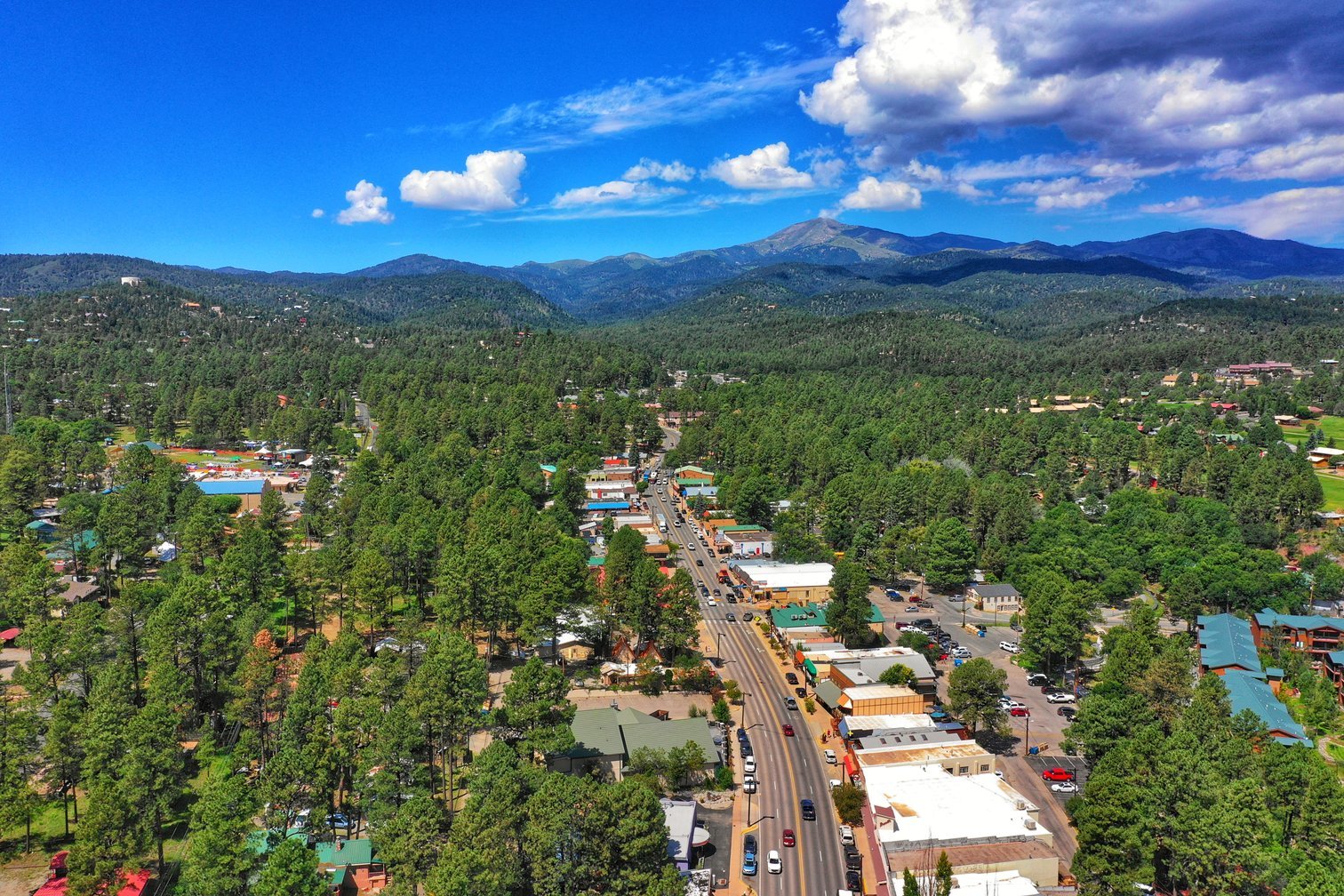
Building in the mountains above Ruidoso starts with slope, water and fire, in that order, and the industrial owners who work there want a contractor who plans for all three before a footing is set. We build shops, public-works and utility buildings, supply yards and the grading, drainage and retaining work that holds them in place on steep ground, and we do it with a permit to work on every excavation and a drainage plan that is drawn before the dozer arrives.
The terrain is the first constraint. Ruidoso's official elevation is 6,739 feet, and elevation ranges from 6,400 feet in the southeast valley of the Rio Ruidoso to over 7,700 feet near Alto. The village sits in the Sierra Blanca range next to the Lincoln National Forest. A parcel can change by hundreds of feet in elevation within a short distance, so one site may be a valley-floor lot with flood concerns and the next a hillside lot that needs terraced pads and retaining walls.
Recent events have made drainage and fire resilience part of nearly every conversation. The South Fork Fire, first reported on June 17, 2024, burned 17,569 acres near Ruidoso and destroyed more than 1,400 structures. We treat that history as a design input, and it changes how we site, grade and detail a building.
Burn scars, runoff and steep lots
After a large fire, hillsides shed water faster and carry more sediment and debris than they did before. Roads, culverts and small channels that handled storms for years can be overwhelmed, and a site at the bottom of a burned slope needs a drainage plan that expects higher flows. In the Ruidoso area on July 26 and 27, 2008, remnants of Hurricane Dolly brought up to 9 inches of rain, about 500 structures were damaged and damage estimates reached $15 to $20 million, which shows what concentrated rain can do in this terrain.
Our response is practical. We locate buildings out of drainage paths, set finished floors above expected flow depths, size culverts and swales generously and provide sediment control that we inspect after every storm. Stormwater detention and drainage is a core part of our scope here, and on a steep site we pair it with armored outlets so that water leaves the property without cutting a gully.
Codes, fire considerations and approvals
The statewide basis for a commercial building is the 2021 New Mexico Commercial Building Code, which adopts the 2021 International Building Code as amended and took effect July 14, 2023. Rebuilding after a wildfire adds questions about defensible space, exterior materials and water supply for fire protection, and the local authority may have its own requirements in addition to the state code.
We work with the owner and the authority early. Permitting and entitlements coordination covers the building permit, grading and drainage approvals, any review tied to forest-adjacent land and the fire marshal's requirements for access and water. We prepare drawings that show noncombustible exterior materials where they are expected and we confirm the fire apparatus turning radius and driveway grade before the layout is final.
Roads, grades and winter
US 70 runs through the southeast part of Ruidoso, 70 miles east to Roswell and 33 miles southwest to Tularosa. NM 48 runs along Sudderth Drive, the main street, and goes 18 miles north to Capitan. These are the arteries every delivery uses, and they carry heavy tourist and local traffic, so we plan material drop-offs for early morning and avoid event weekends. Steep side roads and narrow bridges limit what a truck can reach, so we confirm the final approach for each parcel and use smaller trucks or staging areas when needed.
Winter is a real scheduling factor at this altitude. Snow and ice close roads and keep concrete from curing, and a cold snap can set a job back several days. We build a winter allowance into the schedule, order cold-weather admixtures and heated enclosures where needed and sequence earthwork for the dry months so that cut slopes are stabilized before the first storm.
How we plan a mountain job from the gate in
The first visit is a walk of the parcel with the owner and, where appropriate, a geotechnical engineer. We look at the slope, the drainage, the access and the neighbors, and we record where the staging area, the fence line and the haul route will be. An erosion control plan goes in before disturbance, and a permit to work governs every excavation, hot work item and tie-in.
Crews are trained on slope safety, including trench shoring, equipment placement on grades and the hazards of working near cut banks. Where the work involves removing damaged structures or slabs, our demolition and slab replacement scope separates debris by type and hauls it to approved disposal. The site is secured at the end of each shift because unfinished cuts and open trenches are a danger on a hillside.
A regional hub with regional connections
Ruidoso is the largest community in Lincoln County and its regional economic hub, with draws including Ski Apache, the Inn of the Mountain Gods and Ruidoso Downs Race Track. Businesses that serve those destinations, and the contractors and suppliers who maintain them, need shops, warehouses and equipment yards, and many of those fit our work. Public owners rebuilding roads, water lines and municipal facilities form another group, and we describe our approach to government and municipal buildings for owners who manage public funds.
The village also draws on its neighbors. Alamogordo lies on the other side of the mountains, and Roswell is a 70-mile drive east on US 70. Owners with operations in more than one town can use the same field organization, and utility-focused owners in utilities and power find that our procedures for isolation and tie-ins carry across all three.
Have a mountain parcel near Ruidoso?
Send us the survey, the slope and the use. We will walk the lot, review the drainage and fire access, and return a scope that shows the approvals and the construction steps in the order they will happen.
Common Questions
How does a hillside lot change the cost of an industrial building?
It adds grading, retaining walls, drainage structures and sometimes deeper foundations. The cost depends on the slope and the soil. We ask for a geotechnical report and a topographic survey, then compare layouts to find the one that minimizes cut and fill and keeps the building out of drainage paths.
Do you plan for fire resilience when rebuilding near Ruidoso?
Yes. We design with noncombustible exterior materials where they are expected, keep vegetation and storage clear of the building and confirm that fire apparatus can reach the site. We also coordinate water supply for fire protection with the local authority so that the building and yard meet the approving requirements.
What should I worry about with runoff after a burn?
Burned slopes shed water and sediment faster, so culverts and swales that were adequate before may not be now. We size drainage for higher flows, protect outlets from erosion and inspect sediment controls after every storm. The goal is to move water through the site without damaging the building or the neighbors.
Can you work through the winter at this elevation?
Some work, yes. Steel erection and interior work can continue in many conditions, and we use heated enclosures and cold-weather concrete practices when pours cannot wait. Earthwork is best scheduled for drier months. We carry winter allowances and tell you early which tasks are at risk.
How are materials delivered on narrow mountain roads?
We check each route for grade, width and weight limits, and we use smaller trucks or staged drop-offs when a full-size rig cannot reach the lot. Deliveries are scheduled outside peak traffic, and a flagger is used where trucks turn into the site.
Related
Related Services
Related Building Types
Related Service Areas
Ready to talk about your project?
Request a Project ReviewOne project team for the whole sequence
Industrial Contractors of New Mexico reviews the site, the loads, the schedule and the approvals before pricing, then schedules, coordinates and inspects the specialty trade partners from preconstruction through closeout.