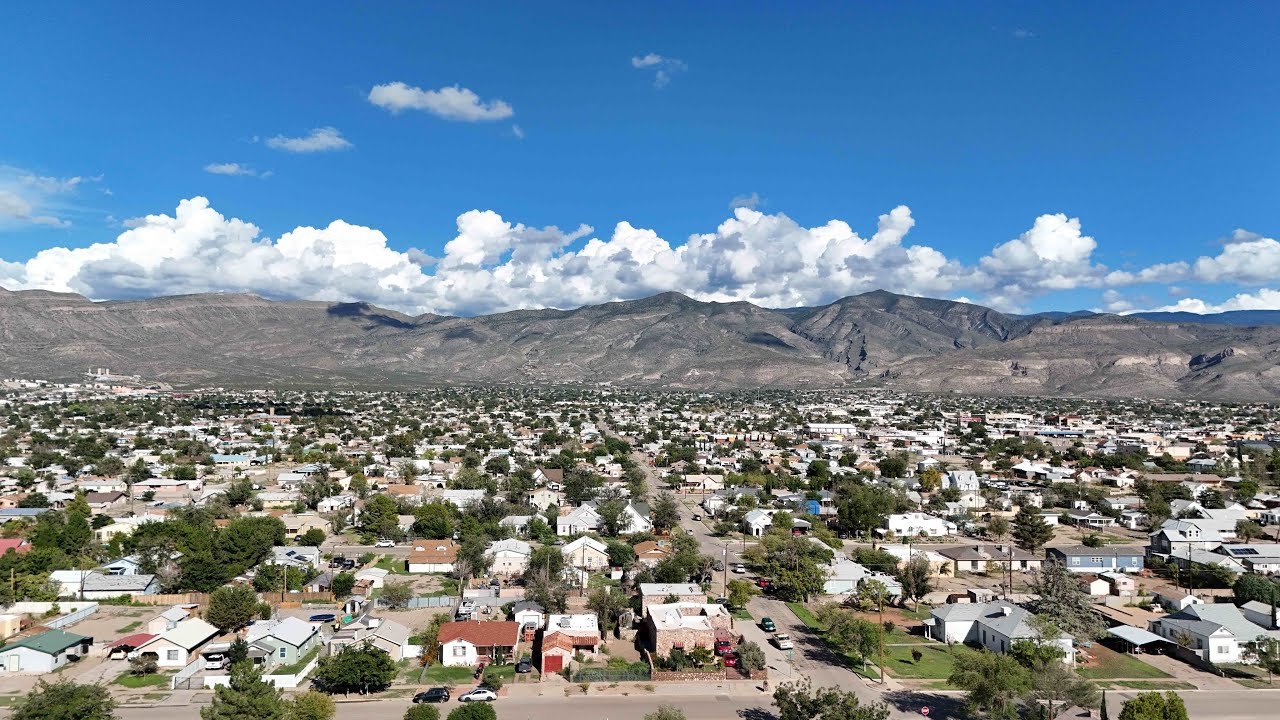
Water that has nowhere to go changes how a site is graded, and that is the first thing we study in Alamogordo. The city sits at 4,330 feet on the western flank of the Sacramento Mountains and the eastern edge of the Tularosa Basin, which is endorheic, meaning runoff collects in the basin and does not reach the sea. For an industrial owner, that translates to a plain instruction: a pad, a yard and a building entrance must be designed so storm water leaves the property and does not stand against the foundation.
Once drainage is settled, the work is similar to other Southwest industrial sites with a few local twists. Holloman Air Force Base is about six miles southwest of Alamogordo on US Highway 70, and the community profile calls it the largest employer in the area, with around 11,000 people in its daytime population. Many of the local owners we serve provide parts, services, housing support or storage to people connected to the base, and their buildings reflect.
We build the shops, warehouses, offices and yards that support that economy, and we plan each around the access, security and schedule expectations of the people who use them.
Holloman, the relief route and the freight link
The Alamogordo community profile cites an economic impact for Holloman of $411,743,040 through payroll, job creation and contract spending. The base hosts F-16 aircrew training under the 54th Fighter Group, reactivated in March 2014, and trains MQ-9 Reaper pilots. Training missions and the people who support them create demand for maintenance space, storage, office buildouts and contractor yards in the region.
US 54, US 70 and US 82 are the main intercity routes through Alamogordo and are all four-lane. The Charles T. Lee Memorial Relief Route (US 54/70), a western bypass built in 2001, eases traffic on White Sands Boulevard. Alamogordo sits at the intersection of US 70 and US 54, which connect to I-10 and I-25, and Union Pacific provides freight service to the city. Those facts tell us how trucks reach a site: by four-lane highway, not by interstate, so turning radii and intersection geometry need attention.
Which codes govern base-adjacent work
Buildings on private land follow the statewide codes: the 2021 New Mexico Commercial Building Code, effective July 14, 2023, and the 2020 New Mexico Electrical Code, effective March 28, 2023. Buildings on the installation follow federal criteria and procurement rules, which are separate. We confirm who the authority having jurisdiction is before we estimate the work.
Our commissioning, turnover and closeout procedures produce the documentation both kinds of owners expect: test reports, as-built drawings, equipment manuals and warranty records. Contractors doing work for the base's suppliers may be asked for additional records, and we capture them as the job progresses instead of rebuilding them at the end.
Buildings and yards for base suppliers
Common requests include storage warehouses with secure fenced yards, shops for vehicle and equipment maintenance, light assembly buildings and office space with controlled entry. We also build tenant improvements in existing buildings, and our industrial tenant improvement work focuses on getting a space ready for the occupant's equipment and security systems without disturbing neighbors.
Each project starts with the survey, the geotechnical report and a drainage plan. Then we sequence earthwork, utilities, foundations, shell and finishes. Site clearing and grading are handled with mass grading crews, and we verify each finished grade by survey so water moves where the engineer intended.
Flat basin ground, wind and dust
The basin floor is flat, and flat ground drains slowly. We create positive drainage with swales, gentle slopes and outlets sized for the storm the engineer selects. Gravel yards that look fine in dry weather can turn soft when water collects, so we compact the base and make sure edges are not undermined.
Wind and blowing dust are part of the environment. We water haul roads, cover stockpiles and time earthwork to avoid the windiest days. Finished surfaces get stabilized quickly. For owners with sensitive equipment, such as electronics or sealed storage, we also detail the building envelope and doors to limit dust infiltration.
Hangars, offices and storage
Aviation-related owners ask for hangar-type buildings with large doors and clear spans, which we cover in our aircraft hangar work. The Alamogordo-White Sands Regional Airport is mainly used for general aviation, and scheduled commercial service has ended, so buildings there tend to be private hangars and aviation support space.
Office buildings and offices attached to shops are common too. A modest office building with a controlled entry and a conference room suits many contractors and suppliers, and we design it with an efficient mechanical system and durable finishes. Owners who also work in advanced manufacturing or testing can add a lab or assembly bay.
Phasing so operations continue
Owners rarely stop operating while we build. Our phased construction for occupied sites splits the work into zones, protects each zone with fencing and keeps the owner's trucks and people moving on a separate path. Hot work, excavation and utility tie-ins are scheduled for agreed windows, and the owner approves each one in advance.
Weekly meetings review the lookahead schedule, open requests for information and safety observations. The owner's representative sees the same documents we do, so there is no mismatch between the field and the office. For owners also considering Ruidoso or Las Cruces, we apply the same process.
Bring the site plan
Send the survey, the building program and your security requirements. We will return a drainage approach, a phasing plan and a list of approvals that control your schedule.
Common Questions
What does an endorheic basin mean for site drainage?
It means runoff stays in the basin instead of draining to a river that reaches the ocean. For a site, the practical lesson is to design positive drainage, with swales, slopes and outlets that move water away from buildings and pavement.
Do I need to build to federal criteria if I support the base?
Buildings on private land follow state and local codes. Buildings on the installation follow federal criteria. We confirm which rules apply to the property before pricing.
How do you manage dust on a flat desert site?
We use water trucks, stabilized entrances, covered stockpiles and quick surface stabilization. We avoid earthwork on the windiest days and detail building envelopes to limit infiltration.
Can existing buildings be adapted for new tenants?
Yes. We assess the structure, slab, electrical service and fire protection, then price the improvements needed. In many cases a tenant improvement costs less than new construction.
Can the airport support my business?
The local airport is mainly used for general aviation, and scheduled commercial service has ended. Owners who depend on air travel should plan for ground trips to larger airports, and visiting engineers or inspectors should budget extra travel time. We schedule site meetings and inspections with that in mind so a single trip covers as many items as possible.
Related
Related Services
Related Building Types
Related Service Areas
Ready to talk about your project?
Request a Project ReviewOne project team for the whole sequence
Industrial Contractors of New Mexico reviews the site, the loads, the schedule and the approvals before pricing, then schedules, coordinates and inspects the specialty trade partners from preconstruction through closeout.