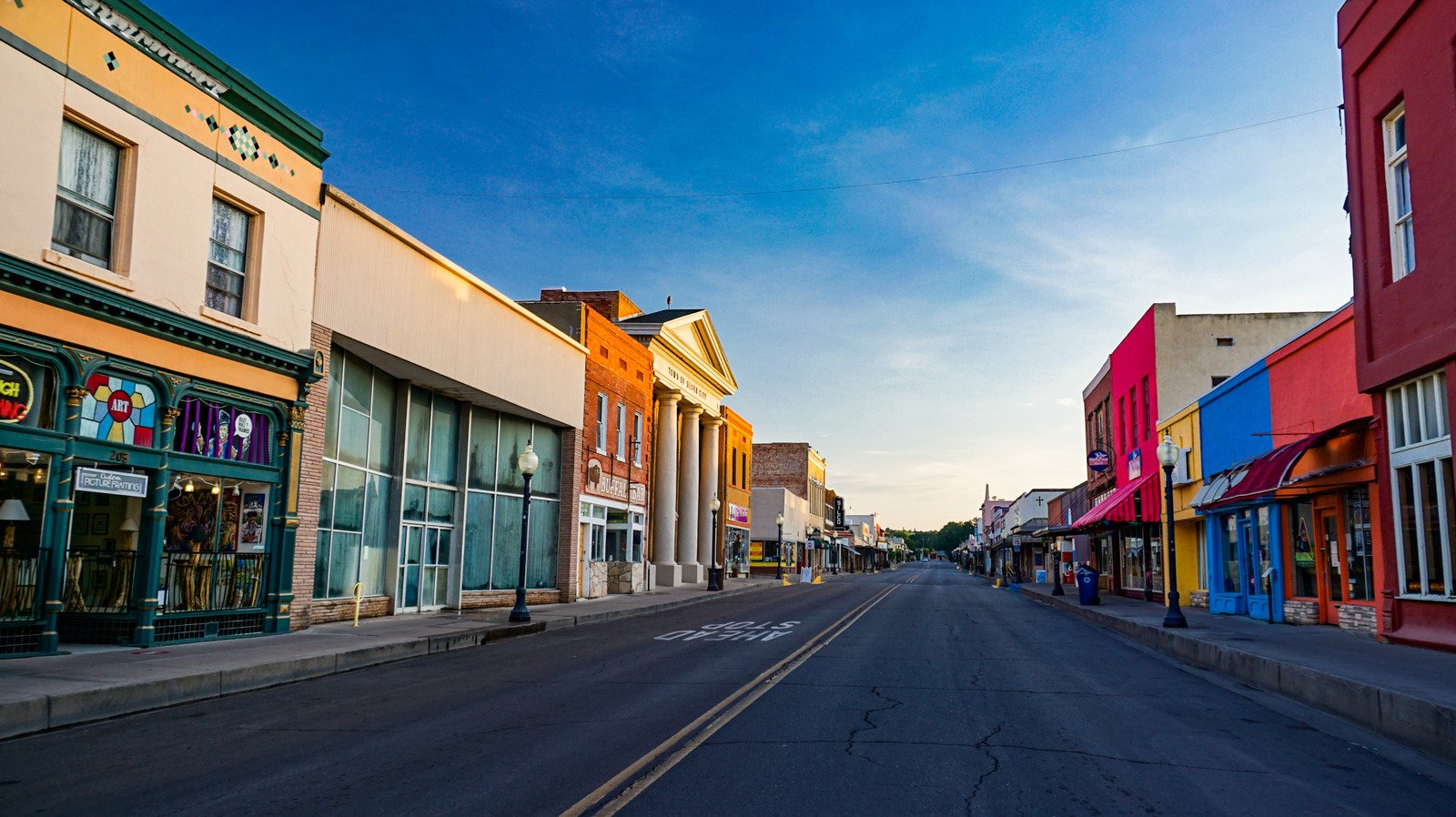
Water decides how a site in Silver City gets built, and the town's own history shows why. On July 21, 1895, a heavy wall of water rushed through the downtown business district and cut a ditch about 55 feet below the original street level. Silver City's listed elevation is 5,919 feet, and that event is a reminder that storm water in this country moves fast and carries real force. An industrial owner here needs a contractor who treats arroyo drainage as the first design question and who builds channels, culverts and detention before foundations.
We build shops, warehouses, equipment buildings and yards in this part of Grant County with that priority. Our field team walks the drainage paths on the site and upstream of it, mark where concentrated flow runs, and plan grades so a storm moves around the pad rather than through it. We document the plan on the drawings that go to the reviewer, so the owner, the engineer and the inspector are looking at the same sketch.
Silver City is the Grant County seat and home of Western New Mexico University. The mining operations nearby, the university and the regional airport give the town a steady demand for maintenance buildings, laydown areas and support facilities. We take on all three kinds of work, and we bring the same procedures to each.
Slopes, storm flow and foundations
Hillside sites change the cost of everything. Cut and fill balance becomes a design goal, retaining walls appear where the slope cannot be graded back, and foundations step with the grade. We review the geotechnical report with the structural engineer and ask whether piers, spread footings or a mat is the better answer for the pad. For a heavy building on variable ground, drilled pier foundations may reach competent material more reliably than shallow footings.
Storm flow is handled with swales, culverts, check dams and detention volume sized by the engineer of record. We build them to the drawings, protect the outlets from scour, and stabilize slopes with seed or riprap as the plan requires. Our stormwater detention and drainage work is staged so that temporary erosion measures are in place before rain, not after the first washout.
Permits and approvals in Grant County
Industrial work in New Mexico is permitted under the 2021 New Mexico Commercial Building Code (14.7.2 NMAC), which adopts the 2021 International Building Code as amended and took effect July 14, 2023. The state electrical code adopts the 2020 National Electrical Code as amended, and permits are issued only under that rule now. We prepare plans to those editions and confirm the plumbing and mechanical edition before we release drawings, since the state is phasing in newer editions.
Beyond building permits, a hillside parcel may need grading, drainage and driveway approvals. A site that connects to U.S. Route 180, which passes through the northern part of Silver City, or to State Road 90 (Hudson Street), leading southwest 45 miles to Lordsburg, needs a highway access permit. We put each of those steps on the schedule, with the lead time the agency typically requires, and we do not start construction until they are in hand.
Buildings and yards we deliver here
Typical scopes include metal-framed maintenance buildings, warehouse space for contractors and suppliers, secure equipment yards, and small manufacturing or processing spaces. We also build the concrete and gravel surfaces that go with them: truck pads, wash racks, loading areas and parking. A fully fenced yard with controlled gates is a common requirement near mining and utility operations, and our fencing and security integration work covers the posts, gates, lighting and conduit.
The Chino Mine, owned and operated by Freeport-McMoRan subsidiaries, is in Santa Rita, 15 miles east of Silver City, and as of January 2014 its operations employed approximately 1,035 people. We do not claim to work for any mine. The point is that a mining district generates demand for shops, warehouses and service buildings in nearby towns, and supplier-owners benefit from a contractor who understands heavy-equipment access and spill control.
Safety on remote and sloped sites
Distance from help changes the safety plan. We identify the nearest medical facility, set up communication on every task, and use a buddy system for work in trenches, on roofs and in confined spaces. Steep sites call for fall protection and equipment placement plans that account for slope. The morning meeting covers the day's tasks, the weather forecast and what can go wrong.
At nearly 5,900 feet, winter cold is a planning item, so we also plan for cold-weather concrete placement and for the safe movement of equipment on icy surfaces. Fuel and chemical storage on our sites follows the owner's spill-control rules, and we keep absorbents and containment on hand for equipment work near drainage paths.
Buildings for the university, county and regional operators
Western New Mexico University is an 80-acre campus with over 40 buildings and over 3,500 students in fall 2024. Campus facilities, maintenance buildings and warehouses are regular needs on a property of that scale, and our approach to education and school projects includes phased construction near occupied buildings. We schedule noisy and dusty work for off hours where we can and keep walkways clear.
Grant County Airport, a county-owned public use airport served by one commercial airline, is about 10 miles southeast of Silver City. Airport facilities and the private hangars and shops around them have their own review requirements, which we cover in project planning. We also build for municipal and county owners, and we work within public procurement rules.
What changes the price at 5,900 feet
Remote location, rock excavation, slope and weather are the four cost drivers we see. Mobilization from the nearest large city adds travel and per diem. Rock can slow trenching and require hammering or blasting subcontractors. Slope means retaining walls and extra grading. Winter weather limits productivity. We show each factor separately in a proposal so an owner can see what is driven by the site and what is driven by the building.
Value engineering is most effective early. Moving a pad a few feet or rotating a building can cut earthwork considerably, and consolidating utility trenches can reduce cost without reducing performance. Owners also working near Lordsburg or Deming can share mobilization between projects, and owners in metals and heavy industry benefit from phasing work around outages.
Walk your Silver City site with us
Share the parcel, the building program and your timing. We will visit the site, trace the drainage and return a scope that shows the ground conditions as plainly as the building.
Common Questions
How do you design a pad on a sloped Silver City site?
We start with the geotechnical report and a topographic survey, then test cut and fill options with the engineer. The best layout often places the building where the earthwork balances, with a retaining wall only where it is needed. We price at least two layouts when the slope is steep so the owner can see the tradeoff.
What permits apply to a highway-side parcel?
In addition to the building permit, a driveway or turn lane onto a state route needs access approval, and drainage that crosses a right-of-way may need a separate permit. We list each approval with its typical lead time and begin the applications as soon as the site layout is stable.
Can you build around a working mine supply operation?
We can build support facilities such as warehouses, shops, yards and laydown areas. Heavy-haul traffic, dust, spill control and security are the key planning items. We use the owner's orientation and permit-to-work rules, and we separate construction traffic from operating traffic wherever the site allows.
How does winter affect an industrial schedule here?
Freezing temperatures limit concrete and asphalt work, and snow can close access roads. We plan the critical path so concrete is placed in the warmer season where possible, and we use blankets, heaters and accelerated mixes when winter placement cannot be avoided.
Do you handle phased work on a university campus?
Yes. We coordinate with campus facilities staff, schedule noisy work around classes, and stage deliveries to keep walkways open. We provide a written phasing plan with protected paths and temporary signage.
Related
Related Services
Related Building Types
Related Service Areas
Ready to talk about your project?
Request a Project ReviewOne project team for the whole sequence
Industrial Contractors of New Mexico reviews the site, the loads, the schedule and the approvals before pricing, then schedules, coordinates and inspects the specialty trade partners from preconstruction through closeout.