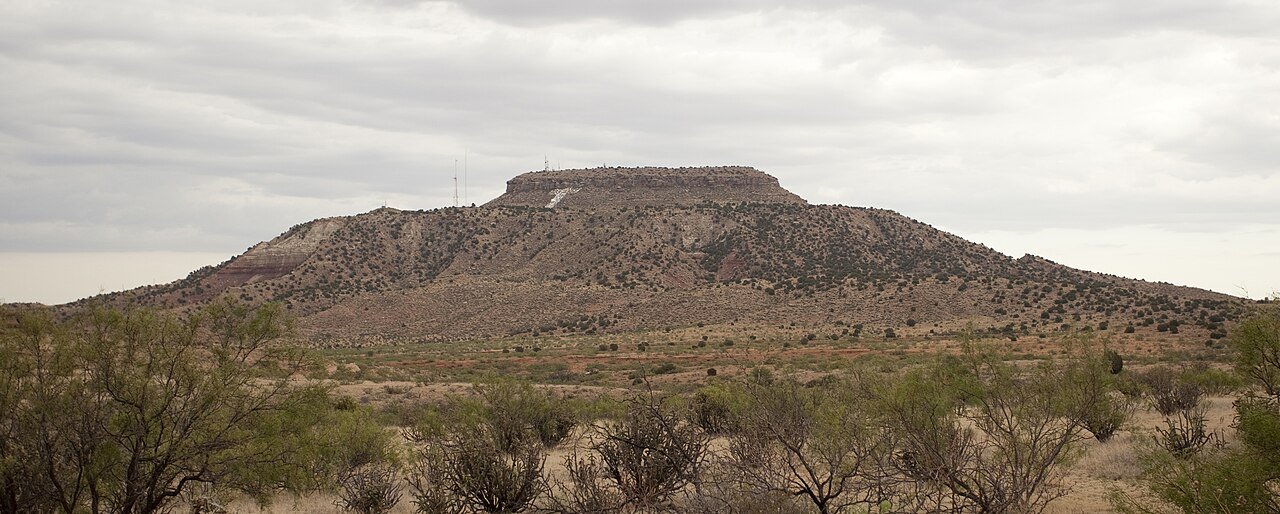
A building in Tucumcari has to handle a 111 degree summer afternoon and a winter that still brings snow, and we specify for both. Tucumcari sits at 4,032 feet and averages 14.9 inches of snowfall per year, and the record high there was 111 degrees F on June 11, 2022. That range stresses roofing, slabs, doors and mechanical equipment in different ways, so we choose insulation, expansion joints and cooling capacity with the whole year in mind. The owner receives a building that works in July and in January.
We build for operators who need metal buildings, shops, truck-service structures, storage and yards along the Interstate 40 corridor. We schedule and supervise the cut and fill, foundations and slabs, frame and cladding, and coordinate utilities. A permit to work covers each task, and every crew member knows who to call if conditions change.
Tucumcari lies along Interstate 40, which replaced U.S. Route 66 in the area, and at Tucumcari the interstate separates from US 54 before passing just north of San Jon and reaching the Texas border at Glenrio. That position makes the town a natural stopping point for freight and a place where services for drivers and equipment are always in demand.
Energy, education and freight
Mesalands Community College in Tucumcari, listed with about 1,700 students, is home to the North American Wind Research and Training Center and signed a 2009 agreement with Sandia National Laboratories on turbine operations and maintenance. Wind-energy operations need maintenance bases, parts storage, crane pads and access roads, and our utilities and power work includes those items. We build to the equipment supplier's foundation requirements and verify them before pouring.
Freight carriers, fuel distributors and repair shops form the other part of the market. They want durable yards, wash bays, heavy-duty slabs and lighting that works at night. We build with those operating patterns in mind, so owners spend less on repair in the first few years.
Route 66 Boulevard and the I-40 interchange
Old Route 66 still runs through downtown Tucumcari as Route 66 Boulevard. The older street pattern and the interstate interchange create two different kinds of site: a smaller downtown lot with older utilities, and an edge-of-town parcel with easier truck access. We help owners decide which fits the use. For a repair shop with many vehicles, the interstate side is usually better. For an office or showroom, the boulevard may be the right choice.
Neighboring markets matter too. Santa Rosa is a neighboring interstate market, and Clovis is the larger market toward the Texas line. Owners who serve more than one of these places may prefer one contractor with one safety plan and a single set of records.
Scheduling for heat, wind and snow
Summer pours begin early in the morning, with chilled water or ice in the mix if the forecast calls for it. Hot, dry wind can crack a fresh slab, so we use curing compound, windbreaks and fog sprays as needed. Winter work requires different measures: blankets, heated enclosures and accelerators, and a plan for snow removal so deliveries are not blocked.
We build the master schedule with seasonal windows in mind. Excavation and foundations are placed in the better months where possible, steel erection continues through most weather, and interiors proceed once the building is closed in. Long-lead items such as overhead doors, rooftop units and electrical gear are ordered as soon as the design is approved.
Heat illness and wind controls
On a day approaching 111 degrees, a work plan has to protect people first. We provide water, shade and rest breaks, schedule heavy labor for the cooler parts of the day, and train supervisors to recognize heat illness. If a crew member shows symptoms, work stops and first aid begins. We write this into the safety plan so the response does not depend on someone remembering.
Wind is the other hazard. We stop crane lifts and sheeting work when gusts exceed the manufacturer's limit or the competent person's judgment. Loose materials are tied down at the end of each shift, and temporary bracing is installed on every frame before the crew leaves. Our structural steel erection sequence includes bracing and plumbing checks at each stage.
How we work with a distant owner
Many Tucumcari owners are not on site every day, so we communicate through a weekly report with photographs, a three-week look-ahead, an open-issues list and a cost summary. Decisions needed from the owner are listed with the date by which they must be made. We hold a call each week and prepare minutes that capture the decisions.
Tucumcari Municipal Airport is a city-owned public-use airport about six miles east of town, with a 7,104 foot asphalt Runway 03/21 and a 4,600 foot Runway 08/26 at an elevation of 4,065 feet. Visiting owners and consultants sometimes use it, and we can arrange site visits around their flights. The same planning approach applies to a campus maintenance building, as it does on other education and school projects.
Foundations and slabs for heavy use
Truck yards and shop slabs take punishment. We design the base and the concrete thickness for the loads, include dowels at joints and control crack width with proper joint spacing. Wash bays, oil-water separators and trench drains need slopes that move liquid away from traffic, and we check them with a level before pouring.
For buildings that house cranes, hoists or tall racks, a high-bay crane-ready building needs column reinforcement, runway beams and floor flatness beyond a standard shop. We coordinate with the crane supplier and confirm tolerances before ordering steel.
Describe the Tucumcari building you need
Send the use, the location and the date. We will review the site conditions, outline a scope and share a schedule built around the seasons.
Common Questions
How do you protect concrete in extreme heat?
We pour early, cool the mix when necessary, and keep the surface moist with curing compound or fog sprays. Windbreaks reduce evaporation, and the crew finishes slabs quickly. We check temperature at delivery, reject loads that fall outside the specification, and cure for the full period.
Can you build maintenance bases for wind energy equipment?
Yes. We build crane pads, equipment storage, shops and access roads. Foundations follow the equipment supplier's requirements, and we check dimensions and embeds before concrete placement.
Is the downtown or interstate side better for a truck shop?
The interstate side usually has easier truck access, larger parcels and newer utilities. Downtown suits retail or offices. We walk both sites with the owner and compare access, utilities and permitting.
What winter measures do you use on slabs and foundations?
Blankets, heated enclosures, accelerators and subgrade protection keep concrete from freezing in its early hours. We monitor temperature, and we do not place concrete on frozen ground.
How do you handle a project when the owner is out of town?
We send a weekly report with photos, a three-week look-ahead, an open-issues list and a cost summary, and we hold a call. Decisions are listed with deadlines, and approvals are recorded in writing.
Related
Related Services
Related Building Types
Related Service Areas
Ready to talk about your project?
Request a Project ReviewOne project team for the whole sequence
Industrial Contractors of New Mexico reviews the site, the loads, the schedule and the approvals before pricing, then schedules, coordinates and inspects the specialty trade partners from preconstruction through closeout.