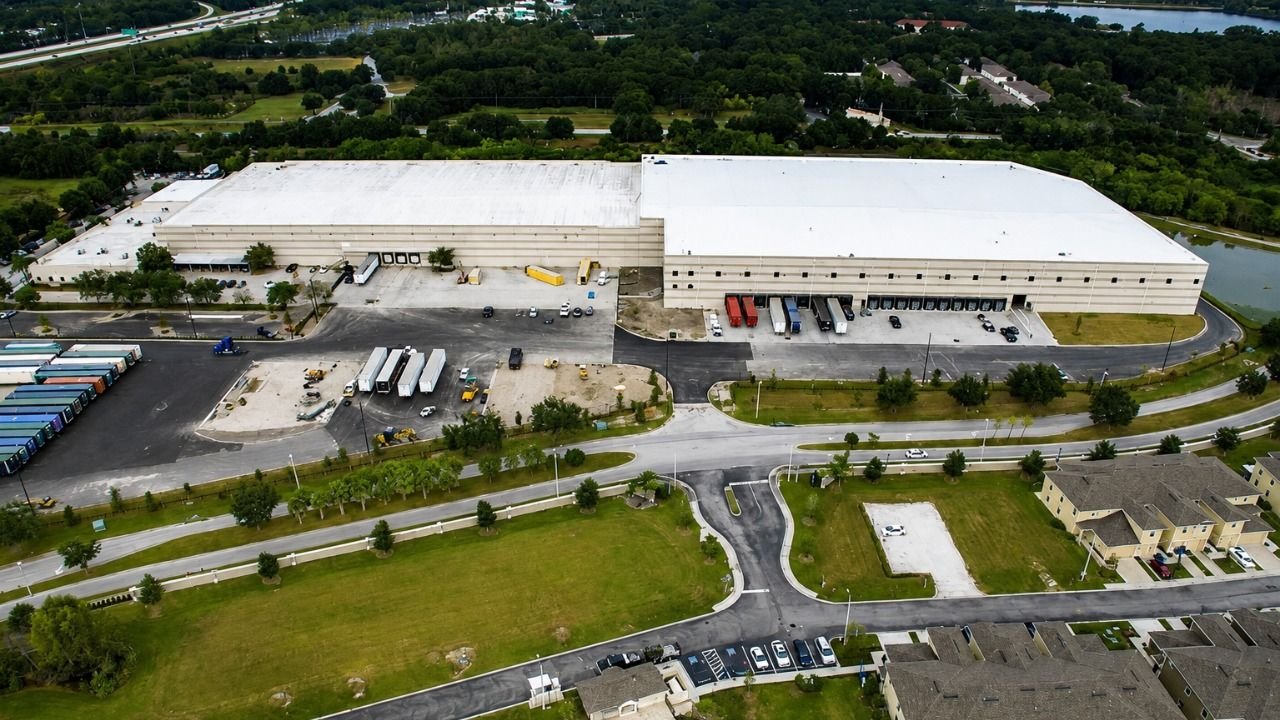
Expanding a working distribution center means building around trucks that will not stop coming. The doors stay open, the forklifts keep moving, the sprinkler system has to remain in service and the peak season arrives on its own calendar. A new bay added to one end of the building, or a second building tied to the first by a conveyor bridge, looks like a simple extension on the drawings and is a series of controlled interruptions in the field.
We plan and build distribution center expansions as phased work inside an operating site. That includes the new floor area, any mezzanines and platforms, the extension of the structure and the roof, new dock doors and truck court, the demolition and reconnection of the existing end wall, and the extension of fire protection, power, lighting and controls. Each of those steps affects the operation, so we describe each one in terms of what stops, for how long and what the operator has to do.
The experience we aim for is plain: the new space opens on the date promised and the existing building keeps shipping on every day in between.
What the existing building constrains
The first review covers what the existing building allows. Is the end wall demountable, or is it a load-bearing panel that carries roof loads? Can the roof drain toward the new area without ponding? Does the slab have room for a new joint pattern that matches the old one? Where are the underground utilities, the fire main and the sprinkler risers? Can the new truck court fit without cutting off the existing yard circulation?
Drainage is a recurring issue. A building that sheds roof water at the end wall will shed it onto the new work unless gutters, downspouts and grading are rebuilt. New paving over an existing yard has to meet the old paving at a smooth joint, with slopes that keep water from running back to the dock doors. We confirm these points on survey before the design is final, not after demolition has started.
Phasing the work to protect shipping
Following the method we use for phased construction on occupied sites, we divide the project into zones: the new construction area, a buffer zone beside the existing wall, the existing operation and the truck routes around them. The new area is fenced with a solid barrier that keeps dust, noise and debris out of the operating space. Work close to the existing wall is scheduled for hours when the nearby docks are quiet, and demolition of the wall itself happens in a short, rehearsed window.
Before any wall comes down, the permanent fire separation, the temporary partition and the emergency exit routes are confirmed. When the opening is made, the new space is already closed on the other three sides. The tie-in of sprinkler lines, power and lighting is done under a written impairment plan, with a fire watch where needed and a defined time to return each system to service.
Peak season, blackout dates and the move-in
Operators set blackout dates for work that touches shipping, and those dates are the first thing we put on the schedule. For many logistics and distribution users the fall peak means that no tie-ins or road closures can occur from the end of October until after the holidays. We work backward from that date to set the start of construction, and forward from it to set the earliest opening.
Racking, conveyor and automation vendors need access once the shell is closed, and their work often takes as long as the building. We share a combined schedule with them. Rail and highway access matter for expansion planning as well: the Albuquerque Sunport reports 83,355,710 pounds of cargo in 2025, BNSF operates a division point and large freight classification yard at Clovis, and Interstate 40 runs alongside the BNSF mainline through Gallup. Each of those facts points to a place where distribution demand has a physical reason to grow.
Working next to forklifts and trailers
The biggest risk in an operating distribution center is the mix of construction equipment and material handling equipment on the same pavement. We separate the routes physically with barriers and signs, assign a flagger to any crossing, and brief every worker on the owner's traffic rules at the gate. Our deliveries are scheduled outside peak truck times.
Inside the building, hot work, saw cutting and core drilling are controlled by permits. Dust is contained by negative air or sealed partitions, and noise is limited by scheduling. We keep egress paths clear at all times and review the plan with the owner's safety lead before each phase begins.
Neighboring scopes and building types
Expansions rarely involve only the building. The yard often needs truck courts and trailer yards, the door line needs dock aprons and loading zones, and the owner's operations team is involved in every step.
We apply the same methods to a distribution center serving e-commerce fulfillment, where volumes swing with the season, and to users that want to add cross-dock capacity beside an existing building.
Why an expansion costs more per square foot than a new shell
Expansions cost more per square foot than a new shell for several reasons. The area is smaller, so fixed costs are spread over less space. The work must be phased, with protection, temporary barriers and night or weekend labor. The tie-ins are labor-intensive, and unforeseen existing conditions, such as undocumented utilities or a wall that is not what the drawings show, add allowances.
The offset is that the expansion uses the existing site, utilities, docks and management, and avoids the land cost, entitlement time and new infrastructure of a separate building. We show owners a side-by-side comparison of expansion versus new construction, including the cost of disruption, to help them decide. We then list the allowances for the unknowns openly, so that unexpected findings do not lead to disputes.
Bring us the calendar before the drawings
Send us the existing plans, your blackout dates and the target opening. We will review the building's constraints, outline a phasing plan and give you an expansion price with allowances shown separately.
Common Questions
Can we keep shipping while you build an addition?
Yes. We fence the work area, separate the construction route from the truck route, and schedule noisy or disruptive work around your peak hours. Tie-ins to the sprinkler, power and the existing wall are done in planned windows with a written plan. Shipping continues at the other docks throughout.
How long can the fire sprinkler system be out of service?
As briefly as possible, and only with a documented impairment plan. We pre-fabricate the new lines, drain only the section being altered, add a fire watch if required and return the system to service the same day where we can. The owner and the insurer approve the plan beforehand.
What is the best time of year to expand?
Most operators prefer to avoid the fall and holiday peak, so the construction runs in the first half of the year. Weather also matters: the slab and roof work are easier in moderate temperatures, and the monsoon season calls for care with drainage. We balance the two with your calendar.
Should we expand or build a second building?
It depends on the site and the operation. An expansion shares docks, systems and staff, but it is limited by the existing site. A second building can be planned for the future, but it costs more in land and infrastructure. We compare the options with real numbers.
What happens if we find surprises in the existing wall?
We stop, document and call the engineer. Typical surprises are unrecorded utilities, wall panels that carry more load than expected, or slab thickness that differs from the drawings. We carry an allowance in the price for these and share the findings so the next step is agreed quickly.
Related
Related Services
Related Building Types
Related Industries
Related Service Areas
Ready to talk about your project?
Request a Project ReviewOne project team for the whole sequence
Industrial Contractors of New Mexico reviews the site, the loads, the schedule and the approvals before pricing, then schedules, coordinates and inspects the specialty trade partners from preconstruction through closeout.