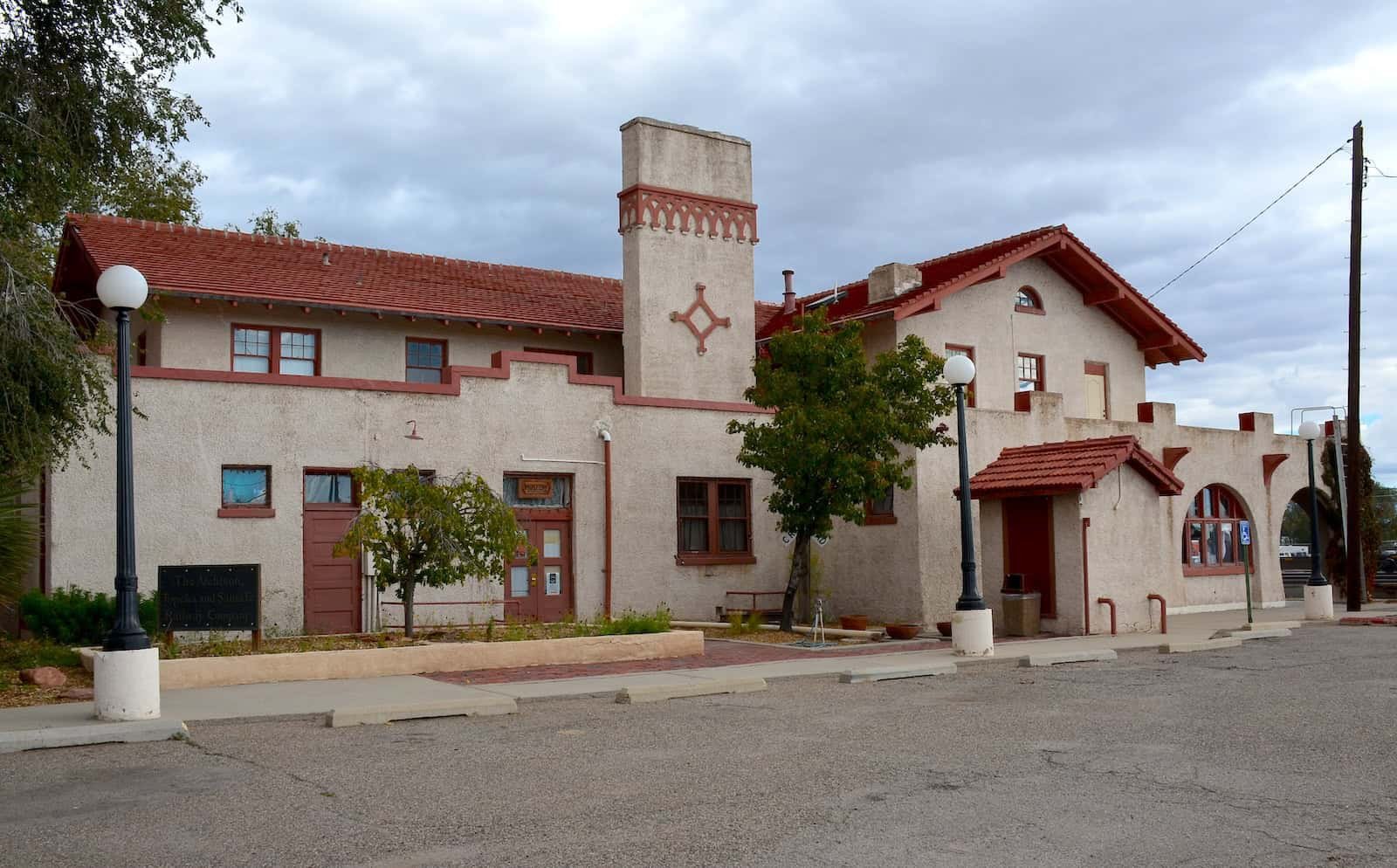
A warehouse or plant in Belen is judged by how quickly freight gets in and out of it, so we start every Belen job with the truck route, the rail option and the gate. Interstate 25 forms the western boundary of the city, and New Mexico Highways 314 and 309 cross through it. The BNSF Railway also crosses Belen, and the rail yard here is described as a major division point on the Southern Transcon. A building on this ground has three ways to move product, and the owner should decide early which of them the site is designed to serve.
We build the structure and the yard together. That means tilt-wall or steel shells, slab-on-grade floors sized to the rack plan, dock aprons, truck courts and the drainage that keeps trailers from sitting in ponded water after a monsoon storm. Our project teams are used to working beside active rail and highway rights-of-way, and we plan the interface with both before a stake is driven.
Gate to gate, an owner working with us in Belen sees a site walk, a written permit to work for every crew, a stabilized laydown area, and a look-ahead schedule that is updated every week. The steps are plain on purpose. Plain steps are the ones people actually follow when a trailer is waiting.
Why freight shapes every Belen decision
The Belen Cutoff was built between Texico and a point northwest of Belen so freight trains could bypass the steep grades of the older line over Raton Pass, and the entire line was completed on July 1, 1908. More than a century later, that choice is why Belen remains a railroad town and why a distribution or manufacturing owner here can think seriously about a rail spur. Our rail spur site improvements start with the switch geometry and the clearances, and then work back to the building footprint.
Road access is just as important. On Interstate 25, exit 190 is I-25 Business north toward Belen and South Belen, exit 191 is Camino del Llano, and exit 195 is I-25 Business south toward Belen. Each interchange feeds a different part of town, so the choice of site often decides which exit a truck driver uses and how many turns the trailer makes before reaching the dock. We check the swept paths for the largest vehicle the owner expects, not the average one.
How we sequence a Belen build
Our order of work is set by the weather and the trades. Clearing, rough grading and the stormwater outlet come first, because arroyo drainage and monsoon runoff cannot be solved after the footings are cast. We then run underground utilities and the building pad, place foundations, and set the shell. Concrete flatwork for the truck court is held until the building envelope is closed, so the heavy equipment that erects the walls does not destroy new paving.
Every step is tied to an inspection. We ask the building official early about the review path, and we keep the inspection record in the same binder the owner receives at turnover. When an owner is weighing options for a new warehouse, we compare tilt-wall industrial buildings with steel framing on schedule, cost and future expansion, and put the comparison in writing before the decision is made.
Buildings that suit Belen sites
The strongest fit is the distribution center, where cross-dock doors on one side and trailer storage on the other make use of a long, flat site. Light manufacturing and flex space are also practical, because a Belen parcel can hold a 24-foot to 32-foot clear building with generous truck courts without the land cost of a larger metro. We also build maintenance shops and fleet buildings for operators who need a base near the interstate.
Rio Grande Industrial Park is a marketed site of about 365 acres at the northeast corner of Highway 304 and Navarro Drive near Belen, adjacent to the Valencia Power Generation Station and zoned B-M (Business Manufacturing) and Rio Communities I-3 (Heavy Industrial), according to a broker listing. We treat a listing as a starting point, and we verify zoning, utility capacity and access with the jurisdiction before we price anything. A parcel that looks ready on paper may still need a lift station or a turn lane.
Permits and codes for a Belen project
Commercial buildings in New Mexico are reviewed under the 2021 New Mexico Commercial Building Code, which adopts the 2021 International Building Code as amended and took effect July 14, 2023. The 2020 New Mexico Electrical Code adopts the 2020 National Electrical Code as amended, and permits are now issued only under that rule. We build submittals to those editions and ask the reviewer for questions in writing so the answers go into the file.
Work near rail or state highway rights-of-way adds permits that a plain site does not need. Drainage that discharges toward a railroad ditch, a driveway that connects to a state route, or a utility crossing of a rail line each carries its own approval and its own lead time. We list them on the first schedule, not the second.
Air access and the Belen airfield
Belen Regional Airport, about three miles west of the city, has two asphalt runways, 3/21 at 6,601 by 60 feet and 13/31 at 5,280 by 75 feet. A separate FAA approval for a new runway at Belen's Alexander Municipal Airport allowed bidding to begin on a $4 million project, and the airport manager said the existing runway cannot be used when the wind blows in from the west. For an owner, the point is that aviation is part of the local picture. A tall crane or a stack near an airfield needs notice and sometimes a review.
We check obstruction rules before we place a tower crane or a tall tilt panel on a site near any runway. We also ask whether an aviation-related tenant will share the site, since airfield support buildings and hangars carry different fire and separation requirements. When the program includes an aircraft hangar, we involve the fire marshal before drawings are finished.
Services that usually go with a Belen build
Owners rarely buy only a building. Most also need truck courts and trailer yards, a dock apron designed for the trailers they run, and parking sized for shift changes. The Belen station on the Rail Runner is the southern terminus of the line, began service on February 2, 2007 and offers free parking with 220 spaces, which is relevant for employers whose staff commute from the north.
We also help owners reach the wider valley. Projects at Los Lunas and the metro area around Albuquerque are often linked to a Belen site by the same trucking lanes, and our team can scope them as a package when the owner is expanding in more than one place. An operator building a logistics and distribution network gets the benefit of one crew, one safety system and one set of records.
Start the Belen conversation
Tell us the parcel, the freight mode you need and the date the building has to work. We will check access, drainage and permits, then give you a scope and schedule in plain terms.
Common Questions
Can a new Belen warehouse tie into the rail line?
Often it can, but it depends on the parcel, the track owner and the switch location. We start with a survey of the existing track and a review of clearances, then draw a spur that fits the building footprint. Because the railroad controls the connection, we put its review time on the schedule before any dirt moves.
Which interstate exit works best for a truck-heavy site?
That depends on the site. Exit 190 leads to I-25 Business north toward Belen and South Belen, exit 191 is Camino del Llano and exit 195 is I-25 Business south toward Belen. We test turning paths for the longest trailer the owner expects and check queueing at the nearest signal or stop sign.
How do you handle monsoon runoff on a flat site?
We shape the pad so water moves off it in a defined path, build swales or a detention basin to receive that flow, and protect outlets from erosion. Paving subgrades are crowned so water drains away from joints. Drainage is the first design decision, not an afterthought.
Does building near an airport change the permit process?
It can. Tall equipment and tall structures may require notice or review, and uses like hangars have fire separation rules that general warehouses do not. We raise these issues with the owner and the building official in the first meeting rather than after the drawings are complete.
How long does a typical shell take?
A tilt-wall or steel shell of moderate size is often sequenced in months, not weeks, after the pad is ready, but the actual duration depends on size, long-lead items and review time. We publish a schedule with the critical path marked and update it weekly. If a switchgear or door package is late, we reorder the interior work so crews keep moving.
Related
Related Services
Related Building Types
Related Service Areas
Ready to talk about your project?
Request a Project ReviewOne project team for the whole sequence
Industrial Contractors of New Mexico reviews the site, the loads, the schedule and the approvals before pricing, then schedules, coordinates and inspects the specialty trade partners from preconstruction through closeout.