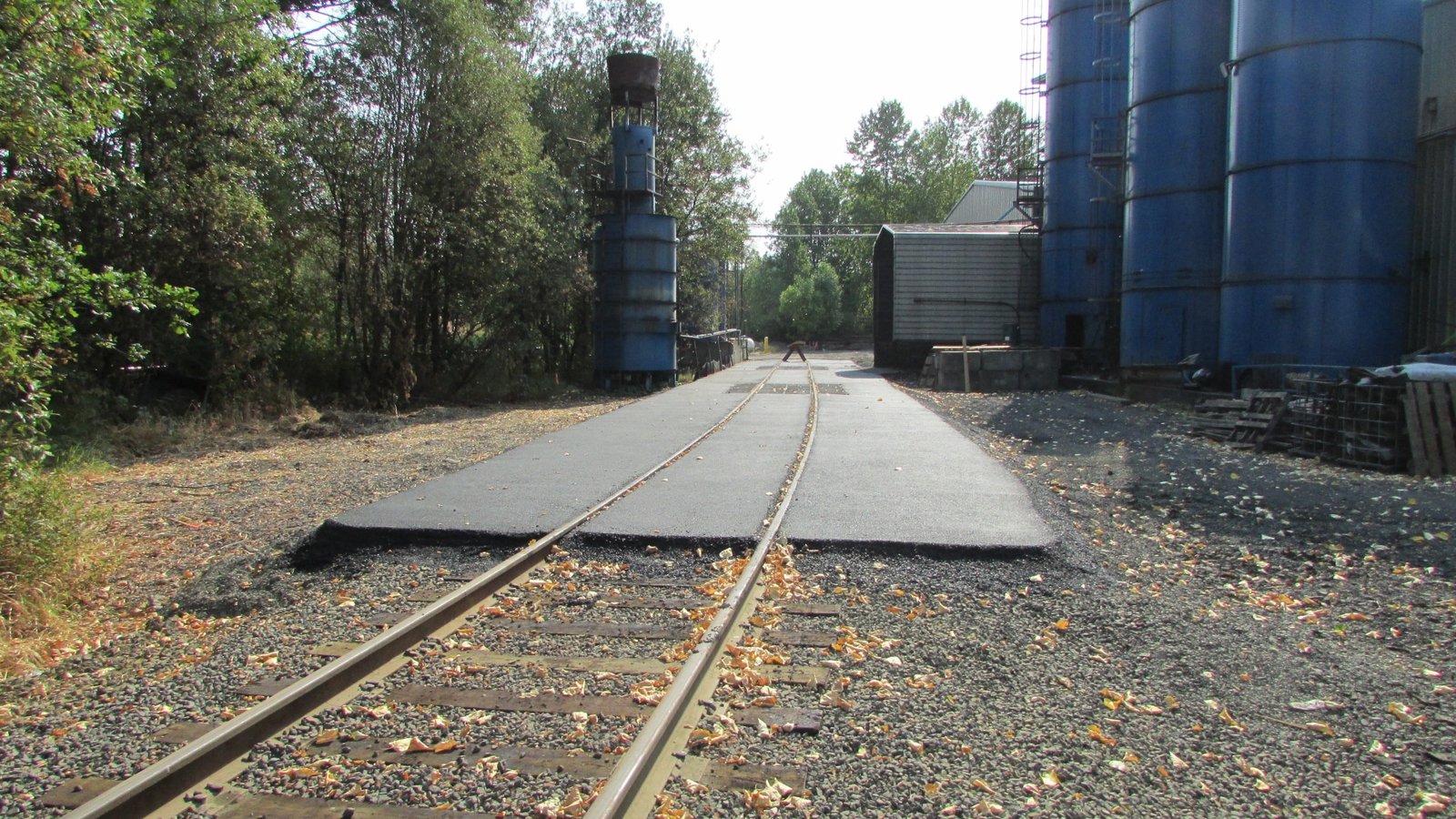
Before a railcar is ever spotted at a plant, the railroad reviews the grade. It checks the curve radius, the subgrade, the drainage and the crossings, and it will not accept track that does not meet its standard. For an industrial owner in New Mexico that review is the gate through which every rail-served project passes, and the civil work behind it is where most delays begin.
We build the site improvements that rail service depends on: the graded corridor, the subballast and the drainage, crossings over plant roads, loading pads beside the track, bumpers and derails, and the fencing and lighting around a rail yard. Track itself is laid to the serving railroad's standard by a qualified rail contractor under an industry track agreement, and we coordinate our work so that the corridor is ready when that contractor arrives.
Owners who have not run a rail project before usually ask the same thing: what will actually happen on my property, and in what order. The answer is a sequence of reviews, surveys, earthwork, a handover to the rail crew and a final inspection, and we explain each step before it begins.
Why rail-served land matters across the state
New Mexico has several places where the track already shapes industrial land. The Union Pacific Santa Teresa intermodal terminal is listed in a New Mexico Border Industrial Association presentation with 74,000 feet of trackage, expandable to 145,000 feet, and 1,266 container and trailer parking stalls, expandable to 4,380. Further north, the Clovis Industrial Park is described by Clovis Economic Development as shovel-ready and certified, with on-site BNSF railway.
In Belen, the BNSF rails cross the city and the rail yard is described as a major division point for the Southern Transcon. In Santa Teresa, the line between the terminal and the rail park is part of daily operations. Each of these places has a different railroad, different spur standards and different neighbors, which is why a truck terminal or cross-dock on a rail corridor gets its own review. We start every rail project by contacting the serving railroad's engineering group before drawing a line.
Railroad review, crossings and local permits
The spur has two sets of rules to meet. The railroad has its own design standards and a plan-review process, and the city or county has grading, drainage and building permits. We assemble the plan set to satisfy both, and we keep a log of review comments so the owner can see who is waiting on whom.
Crossings need special care. A plant road that crosses the spur must have a crossing surface rated for the road traffic, warning devices if the speed or volume demands them, and a drainage design that keeps water off the rails. Where the spur parallels a public road, setbacks and clear-sight triangles come into play. Electrical for crossing lights and yard lighting is permitted and inspected under the New Mexico electrical code, and we coordinate this with the trade partners for yard lighting and electrical site work.
How we prepare the corridor for the rail crew
We stake the centerline from the approved plans, strip and proof-roll the subgrade and correct soft areas. Then we place and compact the subballast to the thickness shown, and we shape the ditches that carry water off the track structure. A rail bed that holds water will move, so we confirm the ditch outfall before the first ballast is placed and not after.
Loading pads are built beside the track at the heights the equipment requires, and utility trenches that cross under the spur, such as those described under underground electrical duct banks, are installed before the track, with casing where the railroad specifies it. When the rail contractor arrives, they find a surveyed, compacted and drained corridor with benchmarks set and crossings marked. We join them for the first walk-through and fix any item that holds up track laying.
Working next to live track
Anywhere our work touches a live railroad, the railroad's own safety rules govern. That usually means a flagger supplied or approved by the railroad, a safety briefing for every worker who enters the right-of-way, and equipment kept clear of the track envelope at all times. We schedule work near live track within the windows the railroad gives us and stop when a train is coming.
Inside the plant, we write a permit to work for each activity that enters a rail area and brief the crews at the gate. Tool lanyards, spotters and lockout of any rail-served equipment, such as car pullers or unloading stations, are part of the plan. That discipline matters most for metals and heavy industry plants, where the cars are heavy and the yard is busy. No one on our site goes into a rail yard without an escort who knows the movements for the day.
The sequence from survey to first car
The schedule is driven by reviews more than by earthwork. The railroad's plan review, the industry track agreement and the permit for the crossing can each take weeks, so we submit them early and carry long-lead items such as turnouts, ties and rail in the owner's procurement plan. Earthwork then follows in a short window ahead of the rail contractor.
A well-run job reaches the first car in this order: agreement and design, review, corridor grading, drainage, subballast, track, crossings, signals and lighting, fencing and final inspection. The Belen Cutoff, built to let freight bypass the steep grades of the older line, is a reminder that rail corridors are planned for the long term, so a spur should be designed with expansion in mind, with room for a longer lead or a second track. A truck terminal or cross-dock that expects to add a second lead later should reserve that corridor now.
What drives the cost of a spur
For logistics and distribution owners, spur cost depends on length, the number of turnouts, the quality of the subgrade, the number of crossings and the track standard the railroad requires. Drainage is often underestimated. A long spur across flat ground may need large culverts or a detention pond, and a spur in an arroyo corridor needs protection from scour.
The track and turnouts are usually the largest single item, but they are priced by the rail contractor and the railroad. We price the civil work: grading, subballast, drainage, pads, crossings, fencing and lighting. We show them separately so the owner can compare bids. We also point out where building the corridor wider or longer now costs less than rebuilding it later, since moving a finished spur is expensive.
Start with the railroad and the survey
Send the parcel, the serving railroad and the car counts you expect. We will contact the railroad's engineering group, survey the corridor and give you a sequence from agreement to first spot.
Common Questions
Who lays the track, and what do you build?
A qualified rail contractor lays the track to the serving railroad's standard. We build everything that supports it: grading, subballast, drainage, crossings, pads, fencing and lighting. We schedule our work so that the corridor is ready on the day the rail crew arrives.
How long does the railroad review take?
It varies by railroad and by the complexity of the connection, and it often runs longer than the earthwork. We submit the plan set early and keep a log of comments. Owners should assume that approvals will drive the schedule, and we build the earthwork window around them.
Do we need a crossing at our plant road?
If the road crosses the spur, yes. The crossing surface must carry the road traffic and keep water off the track, and warning devices may be required depending on the volume. We design the crossing with the railroad and the local authority and build it to their specifications.
Can a spur be extended later?
Yes, if it is planned for. We leave room at the end of the lead, set the drainage for the longer length and avoid placing buildings or utilities in the future corridor. The extra cost now is small compared with relocating a finished spur.
Related
Related Services
Related Building Types
Related Industries
Ready to talk about your project?
Request a Project ReviewOne project team for the whole sequence
Industrial Contractors of New Mexico reviews the site, the loads, the schedule and the approvals before pricing, then schedules, coordinates and inspects the specialty trade partners from preconstruction through closeout.